On Finding Inspiration In A Place

A new place can be a fresh inspiration in art. It’s easier to see what’s really there and feel curious and interested in a scene which you’ve never seen before – there’ll be fewer existing assumptions or pre-conceived ideas about it. You can enjoy that child-like experience of exploring and discovering, and it’s also an opportunity to find out what you’re interested in, so that you can consciously pay more attention to that.

How to find out what interests you? Start by wandering, and absorb. Let yourself relax, let what’s there flood in without judgment. Be curious and playful and notice where you want to look more closely.
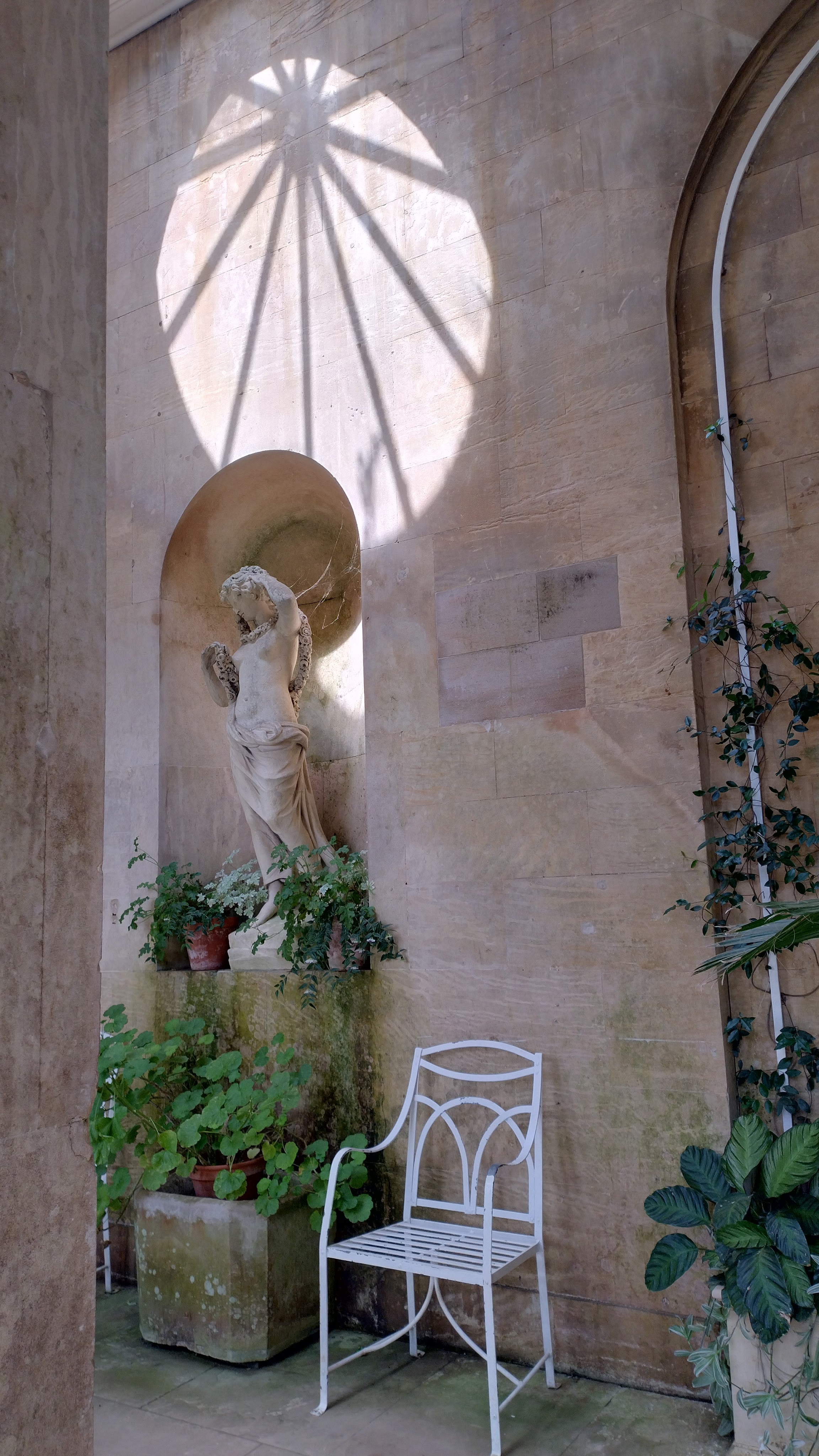
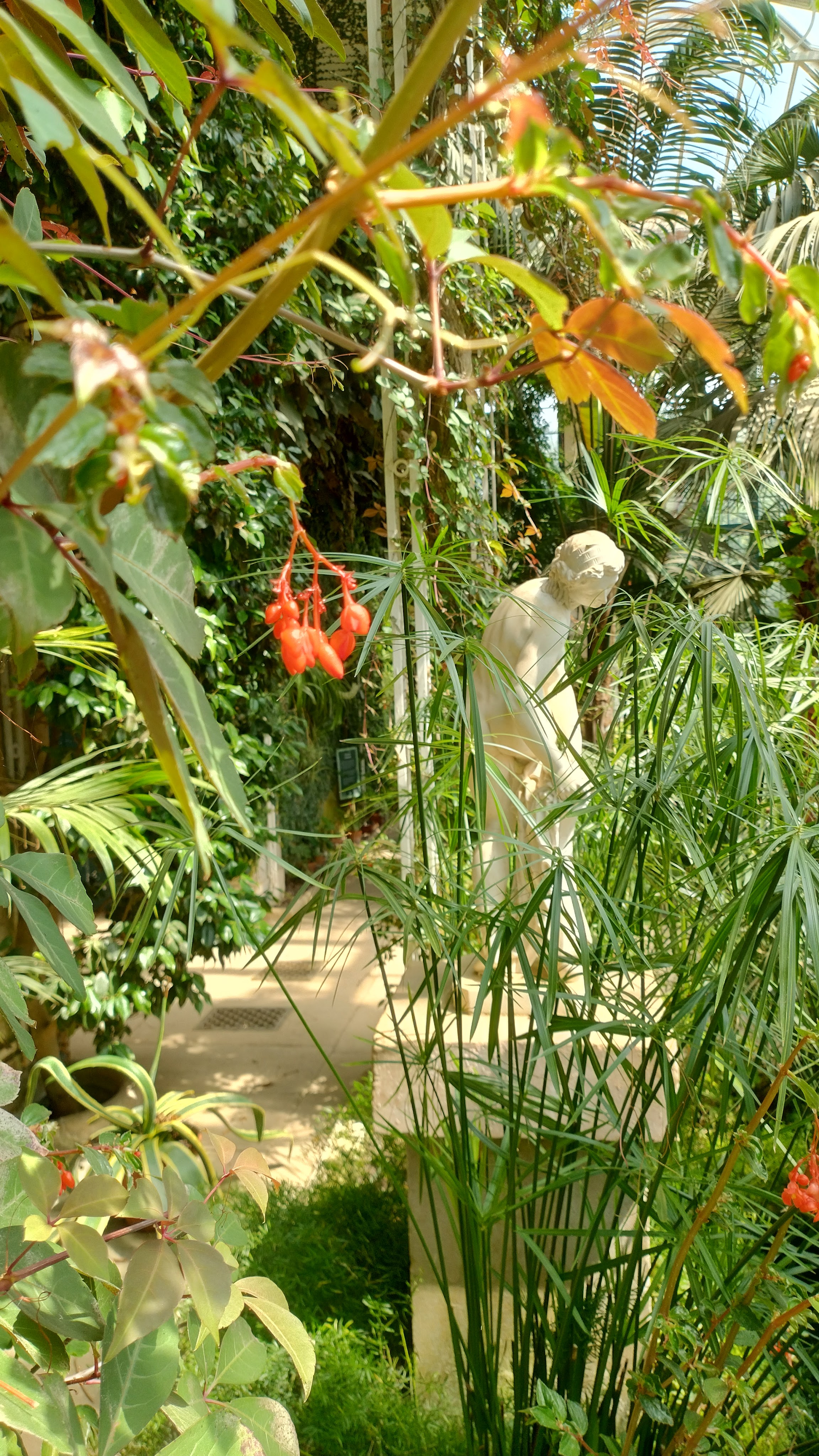
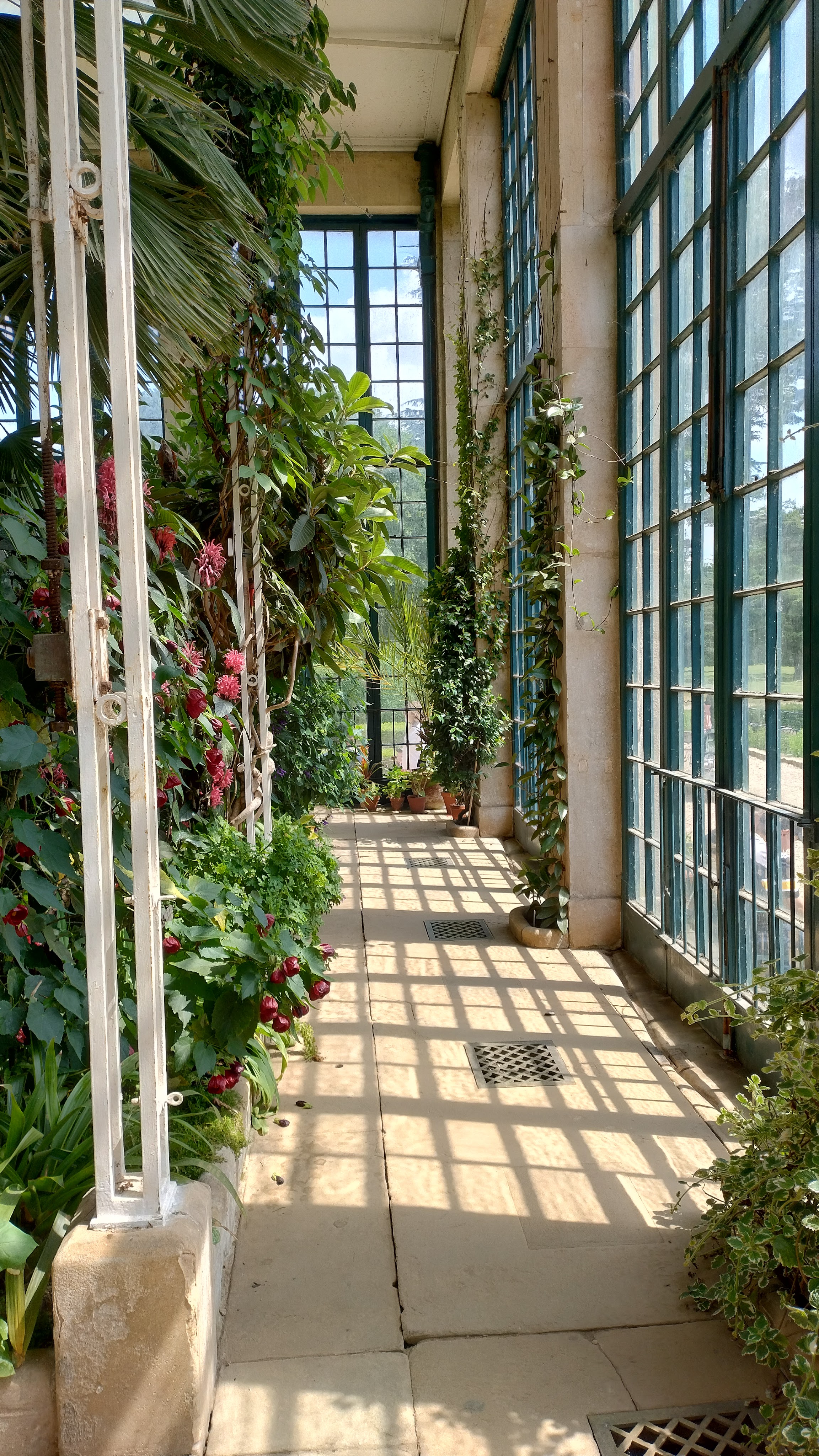
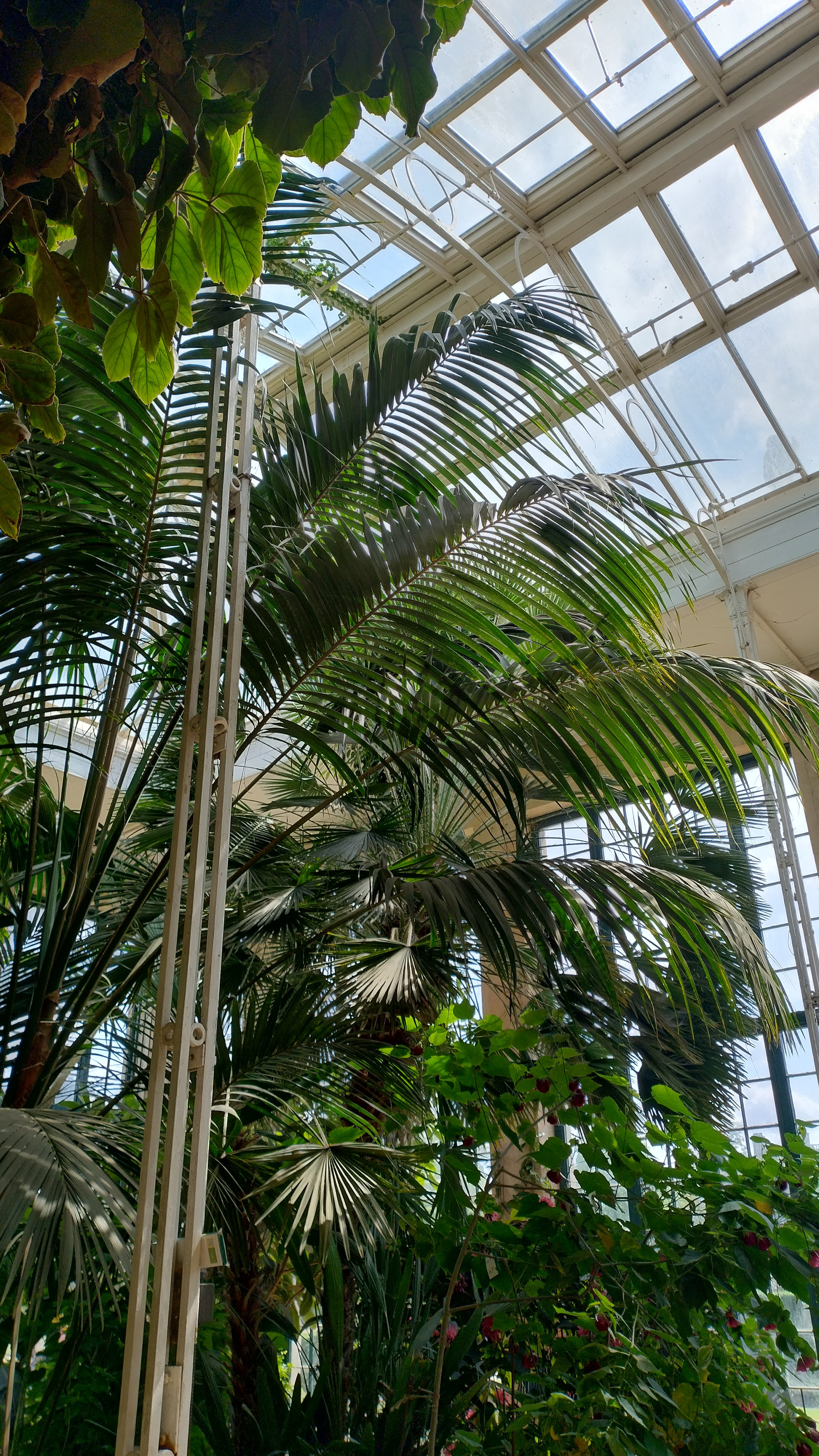
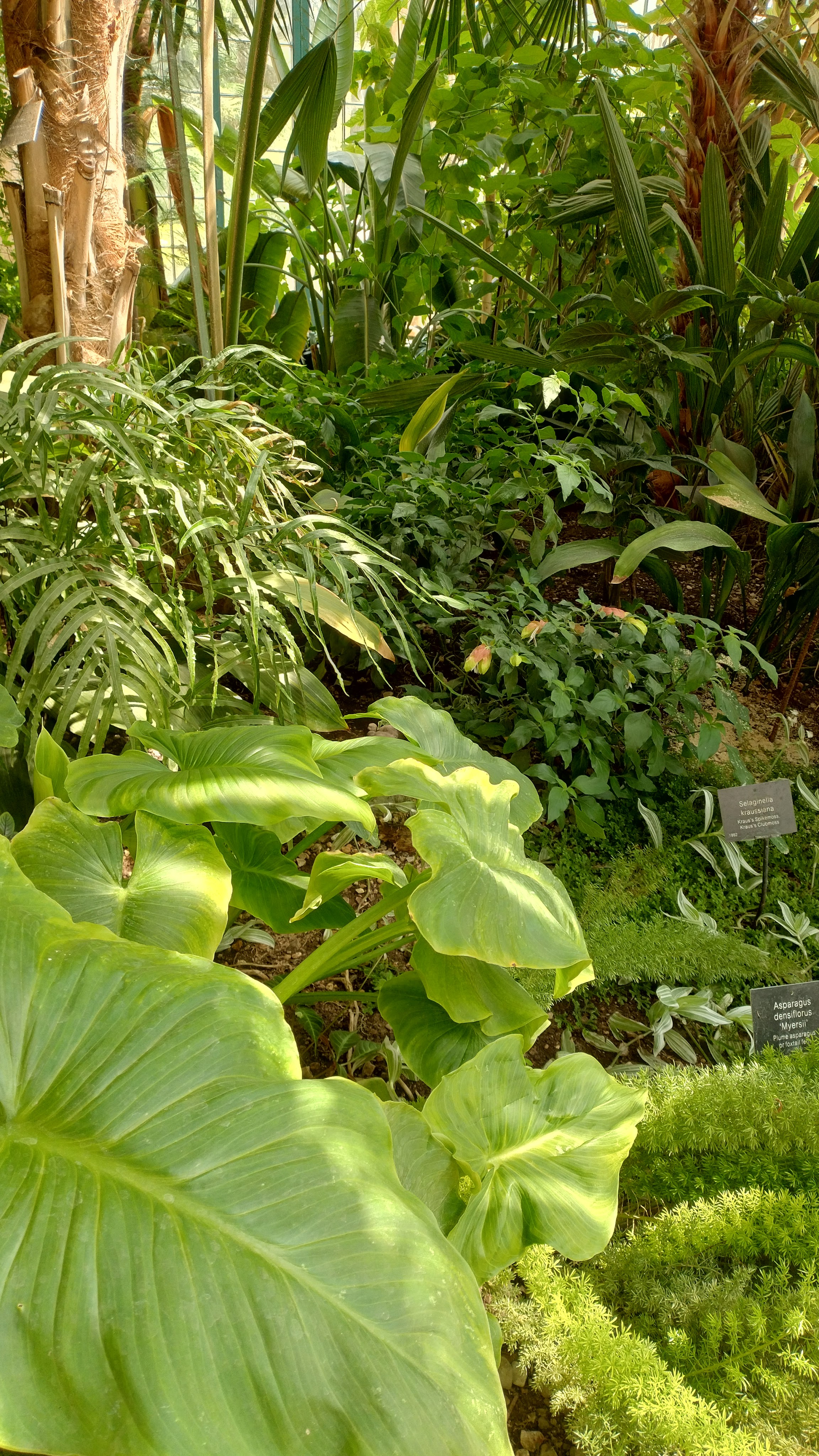
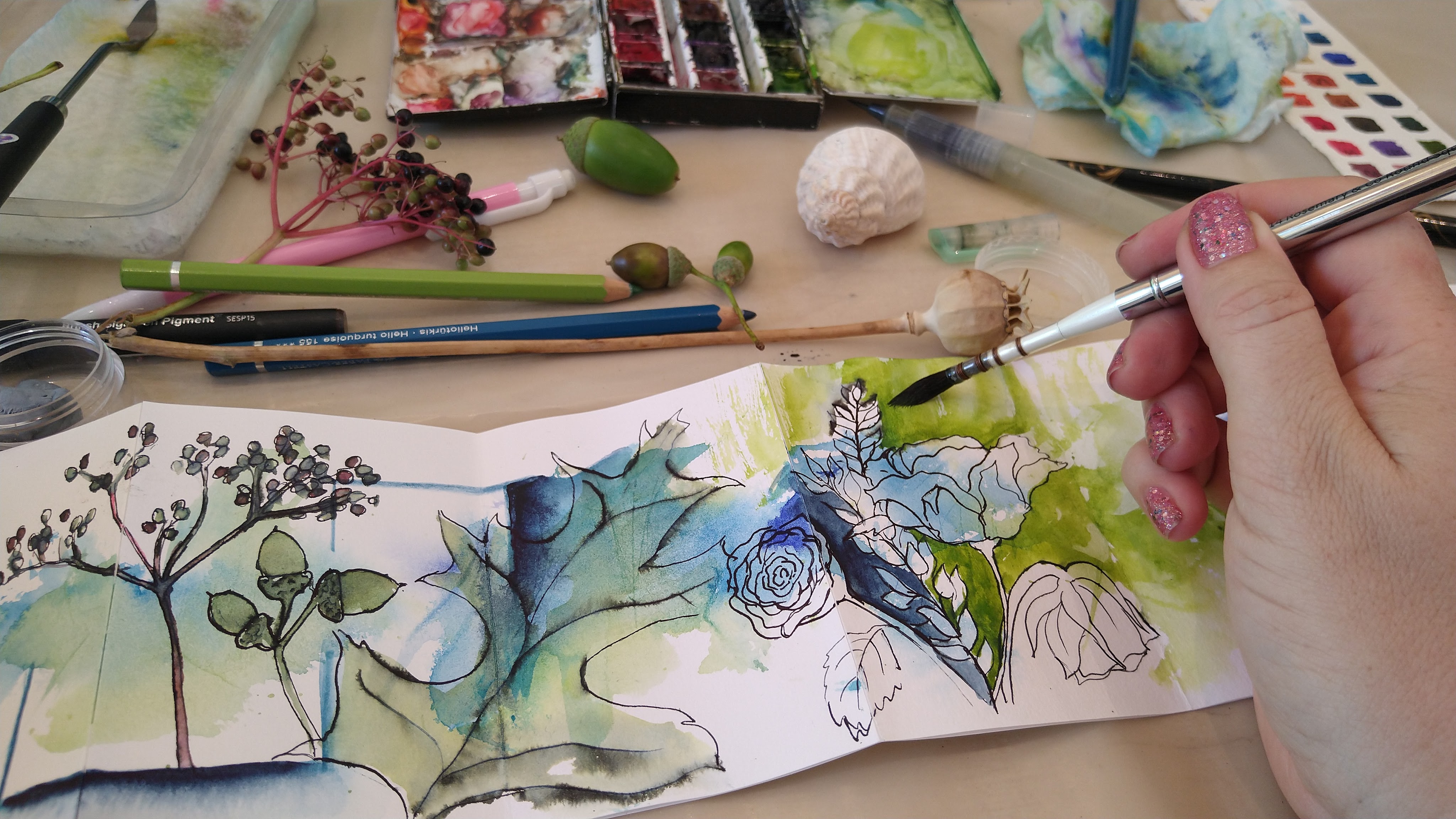
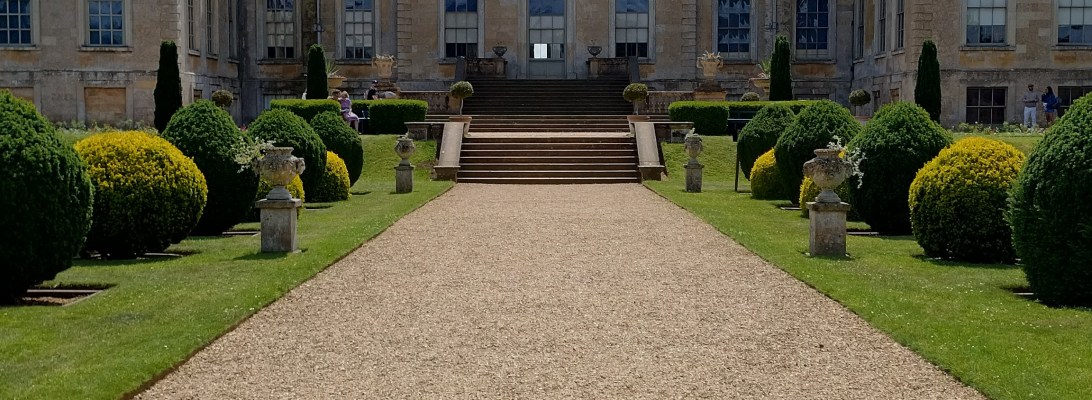
Wandering around the gardens at Belton, I found interesting contrasts and effects of light, patterns of foliage, shadows, different shapes, colours and strange things. The iron architecture of the conservatory gives structure to the green lushness and contrasts of the planting within. Windows give a frames work and let in light creating patterns on the walls and floor. It’s a sheltered indoor contained world of rare things, full of interest fro tiny details to how all the parts relate.

We will be playing with this process of drawing inspiration on the in-person drawing weekend I’m running in July. This year it’s located at Belton estate in Grantham, Lincolnshire. We’ll be based in the spacious and quiet venue of the old School in Belton village, and have access to the grounds and house of the estate.

Particpants in previous years have valued the time, space and supportive atmosphere of this yearly drawing event. It’s flexible so that your csan pursue your own interests throught eh weekend, but we will start together and you can get guideance on your develop through the weekend. There are opportunities to socialise as well.

To find out more, and register your interest, follow the link below.
on Taking time out, in order to change the view

Working as an artist means a lot of time spent not knowing. I get an idea, or I carry out some experiments, but often I don’t know where they’re going, and whether the result will be something I’m happy with. There’s a lot of taking the next steps forward and remembering to trust the process, usually working in isolation, without knowing if anything of worth will come out of it – or whether it will be of interest to anyone else. There are still times when it can all feel rather uncomfortable.

As an artist and a teacher, I’ve had to get used to not knowing – my own, and other people’s.

The most important part of my role as a teacher is to support others through their uncertainty, vulnerability, and fears. To do this it’s crucial that I support myself – by taking time regularly: time out, and to reflect, and to consider if I need to do anything differently. This has similarities with how I assess a piece of artwork as it’s coming along. I need to pause every now and then, step back from the active making, and look at it.

I get relaxed, -sit back on my chaise long (it’s the guest bed futon really, but dressed up with blankets and my special cushion), with my tea, and the piece propped up. I allow myself to pay attention, in a soft focus sort of way, to what’s going on – with the piece, and in myself. It’s a sort of attentive waiting, allowing the space to see what pops up in response – to find out what’s going on under the noisy surface of the cerebral mind.

I can reflect on formal elements: colour, composition, proportion, balance, harmony. It might become apparent what needs adding, altering or taking away. More than one relaxing and looking session might be needed to arrive at the insights needed to move forward. That could be solitary time, musing and journaling, or it could involve talking it through with another. I like a mixture. It’s about creating the right conditions for the insights to arrive.

When the moment is right and the ideas appear, I feel a little surge of energy to take the next step, because I’ve got some clarity and confidence about what that should be. Quite often not beyond that, but the next step is enough. If, eventually, I am happy with what has appeared on my paper, canvas or fabric, then there’s the next step of putting it out in the world and finding out what others think. Putting myself out there, which is often scary.

Being an artist or maker of any sort has valuable lessons for living: in dealing with uncertainty, finding authenticity, finding out out what one wants to envision. It also involves dealing with fears that might block, and finding the courage to be fully oneself. Finding ways to cope – and to thrive- for myself has gone hand in hand with finding ways to support my students in whatever it is they want to achieve. It’s not possible to talk about art and not talk about life. Creativity is not only for artists. Those ideas and strategies for creating a vision and removing the block towards it are useful whatever you’re wanting to move towards

Finding ways to cope – and to thrive- for myself has gone hand in hand with finding ways to support my students in whatever it is they want to acheive. It’s not possible to talk about art and not talk about life. Creativity is not only for artists. Those ideas and strategies for creating a vision and removing the block towards it are useful whatever you’re wanting to move towards.

As a result, I’m bringing my experiences to a new venture. Next April, my friend Laura and I will be running a retreat day designed to give space, away from the noise of everyday life. We’ve chosen to set our day in the tranquil surroundings of a beautiful retreat house in Surrey. There’ll be time to relax, and settle into the beautiful surroundings of the studio. We’ll take time to reflect: with each other, talking, listening and journalling. There will be space to dream, using paper and colours. You will leave with tools to help you make choices and move forwards with whatever you want to grow in your life, as Spring surges into growth.

It’s just £60 to attend for the day. See below for more details and to register for a place.

On Learning new things and sticking with it

It’s a common experience: there’s something you love doing, but you struggle to find the time, or the motivation, and you can get discouraged and then feel disappointed. There are some ideas from study about how people change which might help.

Image: ©Sarah Homfray 2022. Caroline’s Summer Drawing School, 2022.

I learned recently that to change things you need to be consistent in what you’re aiming for, flexible in how you get there, and persistent in your efforts. There will be lapses and changes of direction, but continual steps and trying different ways of doing things will keep you moving forward, however small your actions are.

Of course, learning a skill is going to involve changing a number of things in your life. You’ll need to review and make decisions about in how you spend your time, perhaps change your priorities a little to make room for your interests, and if the skill involves a physical element like learning a musical instrument or making something, spending time developing it will create changes how you use your body .

So what is it you want to learn? How do you make space for it, and encourage it? And how do you keep motivated after the initial burst of enthusiasm or effort?

I’ve been learning to play the harp over the last 18 months. I had a burst of enthusiasm when I acquired it, and was less busy at the time (April 2021) so I did lots of research, found different teachers and resources online, and spent time getting to know it. I found a place to keep my harp to hand, so that I could just pick it up and play whenever I had a few minutes. Although I’m enjoying playing it by myself and experimenting, I wanted to check I was getting the basics right – you can hurt yourself playing an instrument if you dont take care about how you’re doing the repetitive actions. I decided to go on a weekend course. It was amazing to be in a great big room full of harps, talk to the owners, and hear very different styles of playing. That really opened up my eyes to the potential of this instrument. I came away with renewed enthusiasm and curiosity, still mostly playing by myself but now looking for ways to connect with other harp players.

I’ve realised more and more since the pandemic just how important it is to mix energy with other people, in positive, fun, friendly and supportive environments. It’s very important to me in my work too, and why I like to teach groups. We’re usually learning drawing and aspects of art together; the ‘together’ bit is really important. In a recent class for the Royal School of Needlework, we had a wonderful difference of interests and experiences, not to mention different cultural knowledge as well.

At the end of these classes I try to persuade people to think realistically about how to carry on with their learning. Set realistic goals: choose two or three short times a week to practise, keep your materials to hand and then review what happened after a few weeks. Have some intention about what you’re practising, which means think about it occasionally and choose what to practise baed on what you are most interested in and want to develop. Be prepared to change the timing, frequency and circumstances of when you practise. Accept that in busy times you may have to reduce or let go of your practice temporarily, and that’s ok. Return and renew the commitment when the time allows. Just don’t stop. Keep taking little steps. Consistent, flexible, persistent.


I run a regular drawing class online each week, for just this sort of encouragement. Short courses in drawing are also available, directly through me or oriented towards stitchers via the Royal School of Needlework. Click here to find out more: https://carolinehomfray.co.uk/drawing/

On really seeing, and expressing.

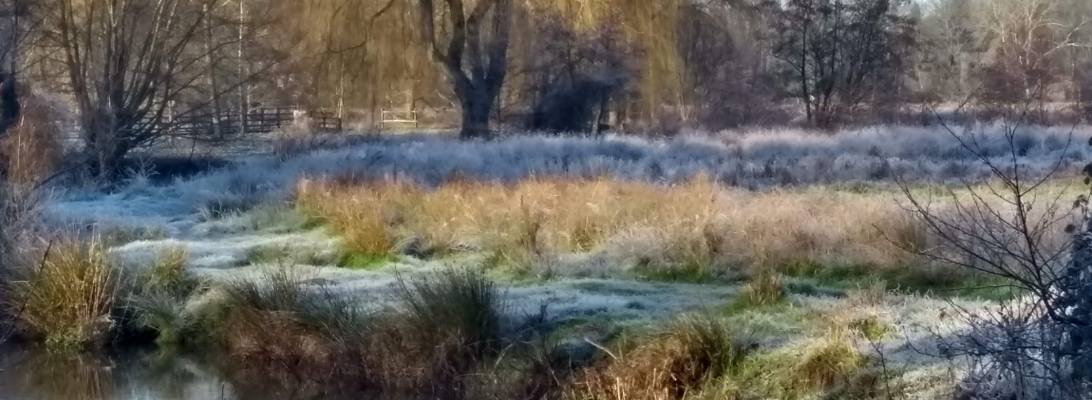
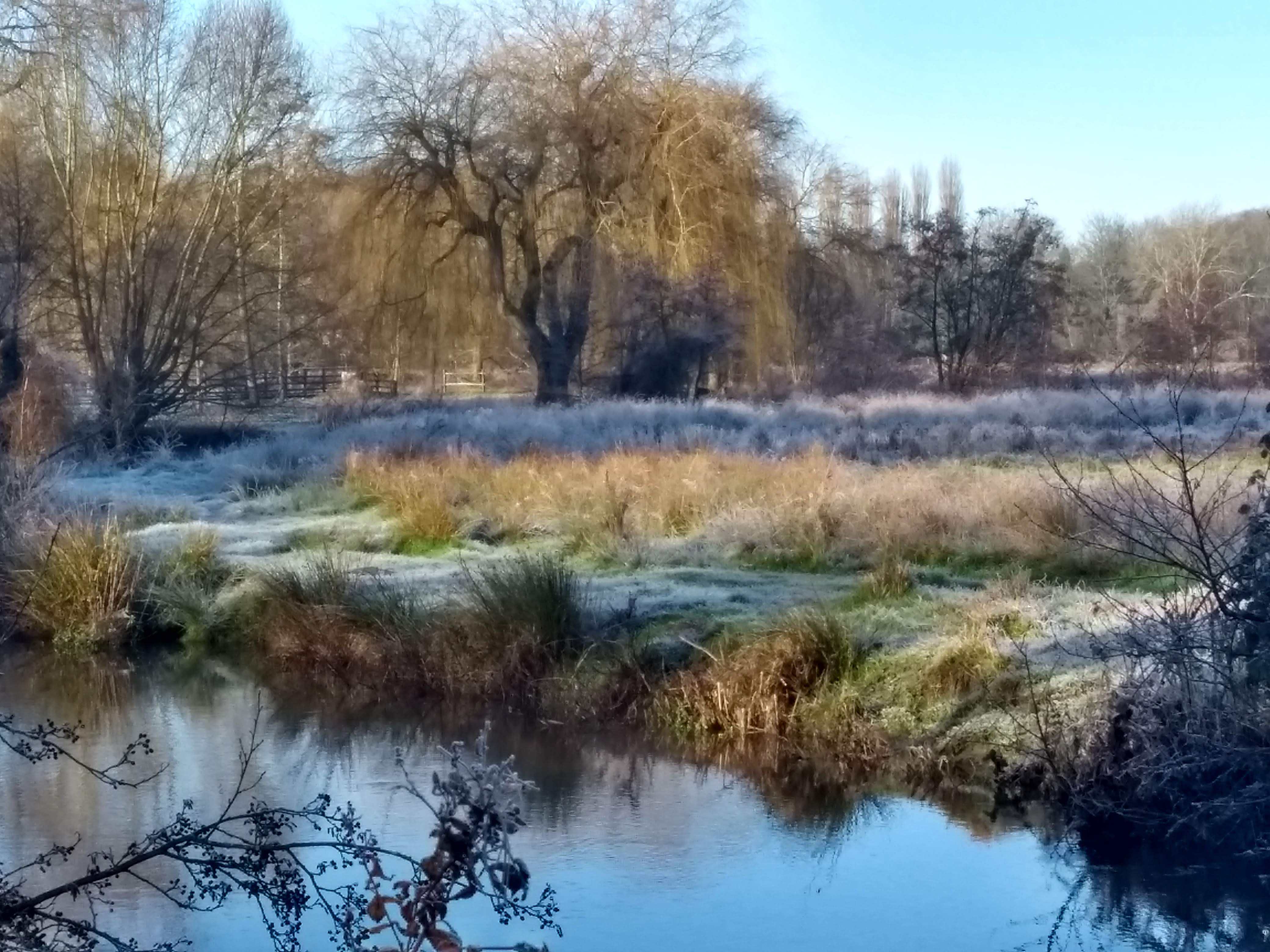
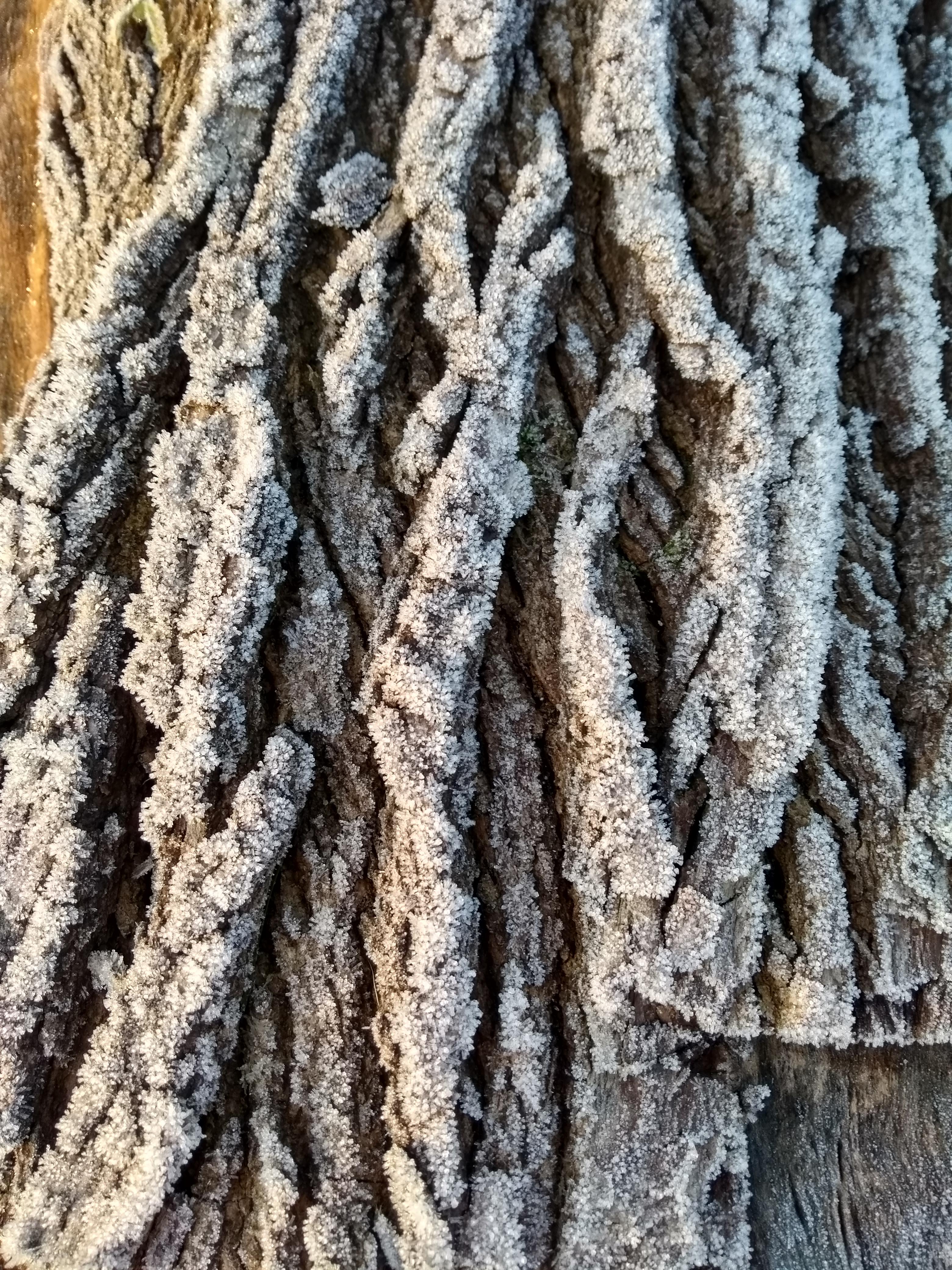
It’s chilly out this morning. Across the river, the grass is a very pale blue-ish green with its coating of frost. The bare treetrunks are dark umber browns, with a surprising cast of purple around the haze of twigs at the ends of their branches. The deep browny purple is lifted by the golden ochre colour of the grasses nearby. Behind, the soft, indistinct masses of hedgerows and trees are the stubtlest hues of blues and purples.

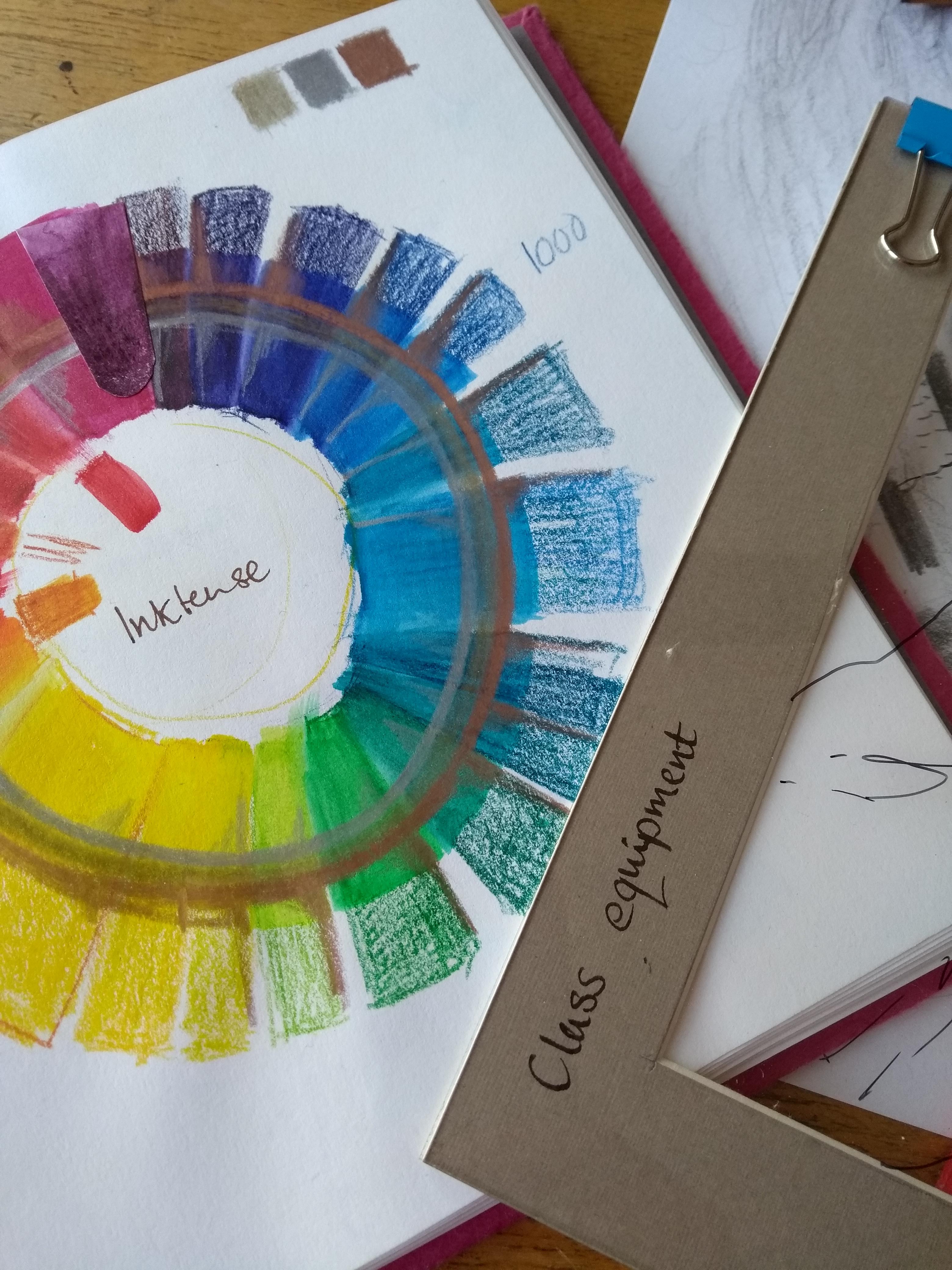
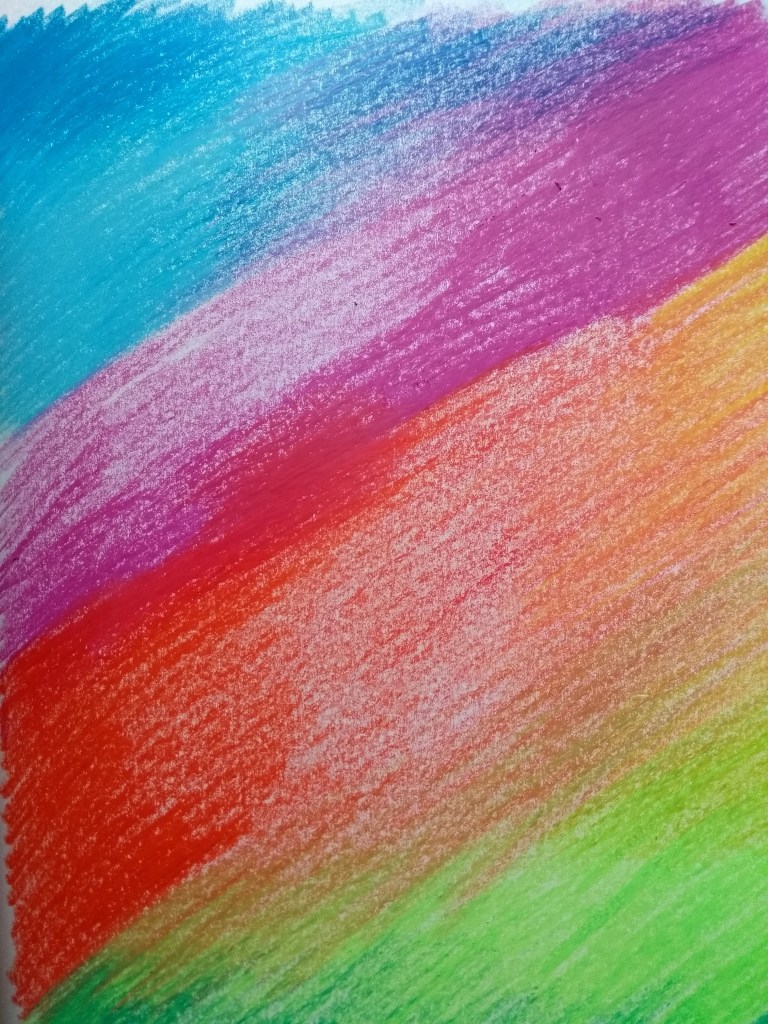
I’m surveying my selection of coloured pencils, tuning in to find the ones which will enable me to create the right hues for the landscape I’m in, how they look to me at this point in the day, in these conditions of light and cold. This red-violet, this ochre, this turqouise blue… how will they work together? I’m absorbed, and even though I’ve seen this view many times a week over the last ten years, I haven’t seen this version of it before.

That’s one of the things drawing does for me; gives me a way to be present, to really look, and look again. It stops me assuming I know what things are, prevents me from getting stale and becoming bored by my surroundings – and how important has that been, since our lives have been circumscribed by the pandemic and kept close to home? What a gift, to have a way to see the familiar afresh.

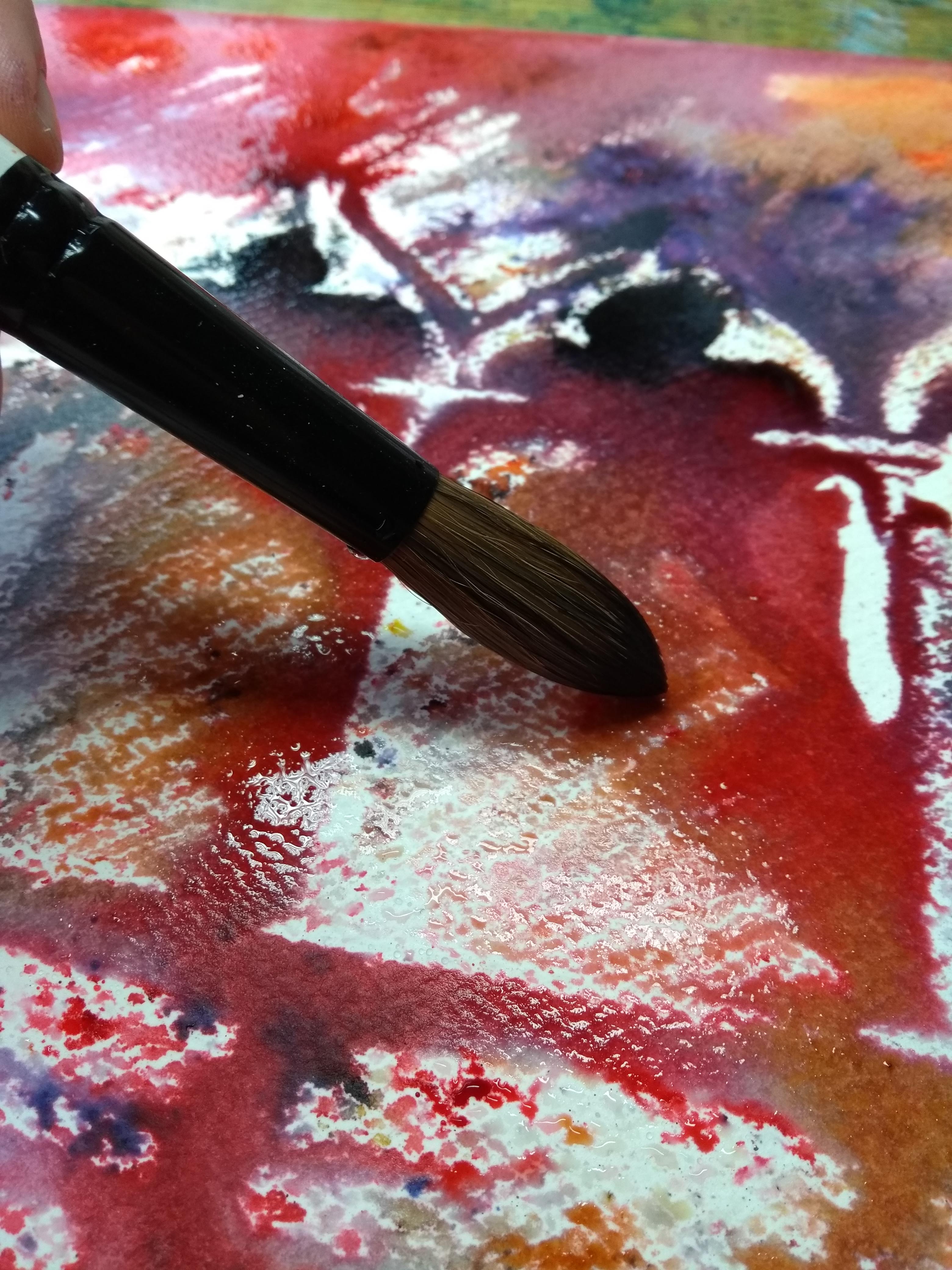
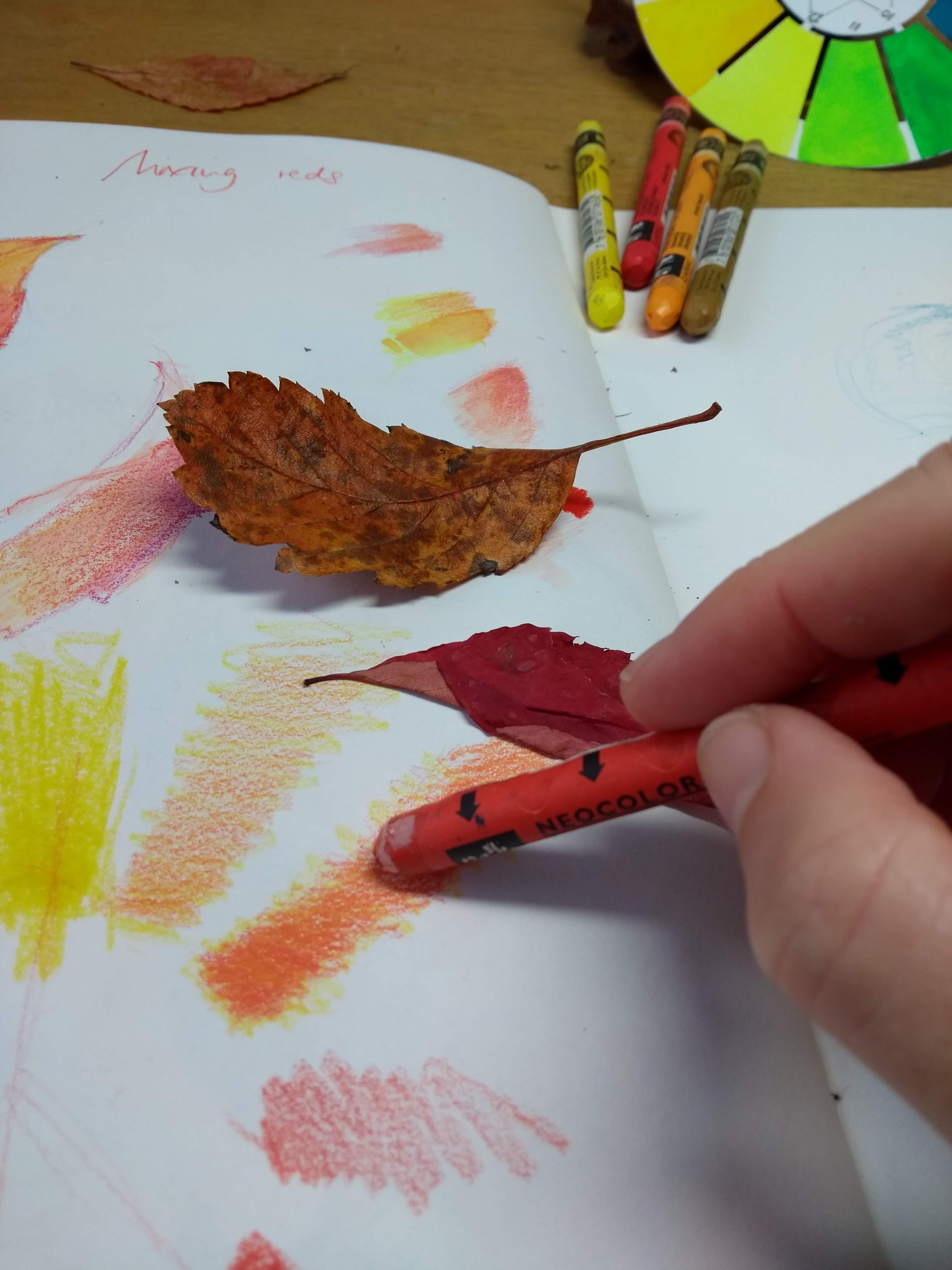
It’s also a tactile process. I love to focus on the feel of soft, creamy pencils or paint sticks; the sudden burst of colour as water brings a solid paint block to life; the feel of a paint-loaded brush moving across the sandy texture of a heavy watercolour paper. Do I like how the paint sits on this paper, or that paper? Do I prefer the feel of this pencil, as it leaves a trace of pigment from the stroke I make, or that one? Finding materials which feel right is part of the process, grounding and comforting, connecting me with my own tastes in a small but crucial way.

Since March 2020 drawing has become a mainstay, and I am lucky to have been able to share it with my students. Real-life classes which I taught before the lockdowns became virtual, and instead of constricting my world, running them live online has enabled me to connect with others across the country and the world. I’ve had students from the US, Australia, New Zealand, Canada, Spain, Brussels, Germany, and Russia join me and share their drawing journey together, many through the classes I teach at the Royal School of Needlework, and some from classes I run. I learn as much from students as they from me, and we have had moments of realisation, empowerment, joy, and laughter as we try things out, explore basic principles, find out what we like and don’t like, discover what we want to express, and how to encourage ourselves in the cradle of a supportive group.

I love to share what drawing gives to me, and to hear what it does for others, so I’m running another class for total beginners live online, starting on Janury 19th. It runs over three weeks on a Wednesday evening, via Zoom, and will be a small and supportive group. There will be plenty of opportunity to share and ask questions, but also no requirement to share if you don’t want to – after all, participants are at home and one of the benefits of that is that you can control your privacy. There wil be some suggestions of things to try between the sessions, and the chance to join one free Thursday evening or Monday morning drop-in session for free after the course, should you wish to. More information is available below on the learning page, and a link to book.

On Drawing: Why it Matters.

‘I feel like I have new eyes – when I’m out for a run I keep stopping to look at shapes and colours I didn’t see before’. ‘I hadn’t realised just how intricate that shell is and how many colours there are in it.’ ‘I really have to concentrate, to look’…. just a few of the things students have said to me in drawing classes over the last few years.

My sister Sarah and I have been running drawing classes for about 3 years at the Royal School of Needlework in Hampton Court, Surrey. Sarah had initially designed the course for embroiderers who wanted more confidence to design their stitched pieces; we offered it at Hampton Court with great success, succeeding in giving students confidence, tools and the courage to experiment and believe in their own vision.

In the teaching I’ve bcome more aware find drawing has a great value for itself, for centring my focus, calming me and above all helping me to really pay attention: to the moment I’m in, to what’s in front of me right now, and following my observation down a path of curiosity and discovery.

The three-day classes are an intense blast of information and activity, and both students and ourselves as teachers are often exhausted by the end of it. It’s great fun but intense! I wondered what it would be like to run a class where we have time to relax into drawing, that anyone, whatever their background in art, can enjoy.

Now I’ve started running a class once a week in Godalming, for two hours of drawing in a very relaxed and supportive environment. There’s no aim other than this: to observe, to draw, to play with materials, to explore colour. There’s certainly no pressure to produce finished works. It matter because for me observational drawing is about connecting with the world, by trying to see as truthfully as possible what is in front of us and attempting to capture this. We normally see so little of what’s around us, being inundated with demands on our attention. Taking the time to pay close attention has really enriched my life; taking up some colours grounds me in times of stress and helps me to stay present in myself.

I also wonder if taking the time to be present, to overome visual assumptions about what the world looks like and to check in with our own response is connected to being able to ‘see’ more clearly in other ways as well. It’s a practise of gaining clarity, and can often show me something about what I’m thinking and feeling that nothing else can.

NEW! Drawing, once a week, Mondays 10-12 in Godalming. £27 a session, pay on the door. Please contact me if you’d like to come! it’s a small class.