A summer of Art

Teaching, Jousting, eating and drinking, drawing…
It’s been a busy few months; I’ve run two drawing summer schools this year, of very different sorts, and met some diverse and interesting people in each setting. One was more informal, the other more structured, but both about developing confidence and allowing people to grow their belief in themselves and their own creativity. I feel so lucky to spend time with my students, and their questions and conversations really stimulate and inspire my own thinking about art.

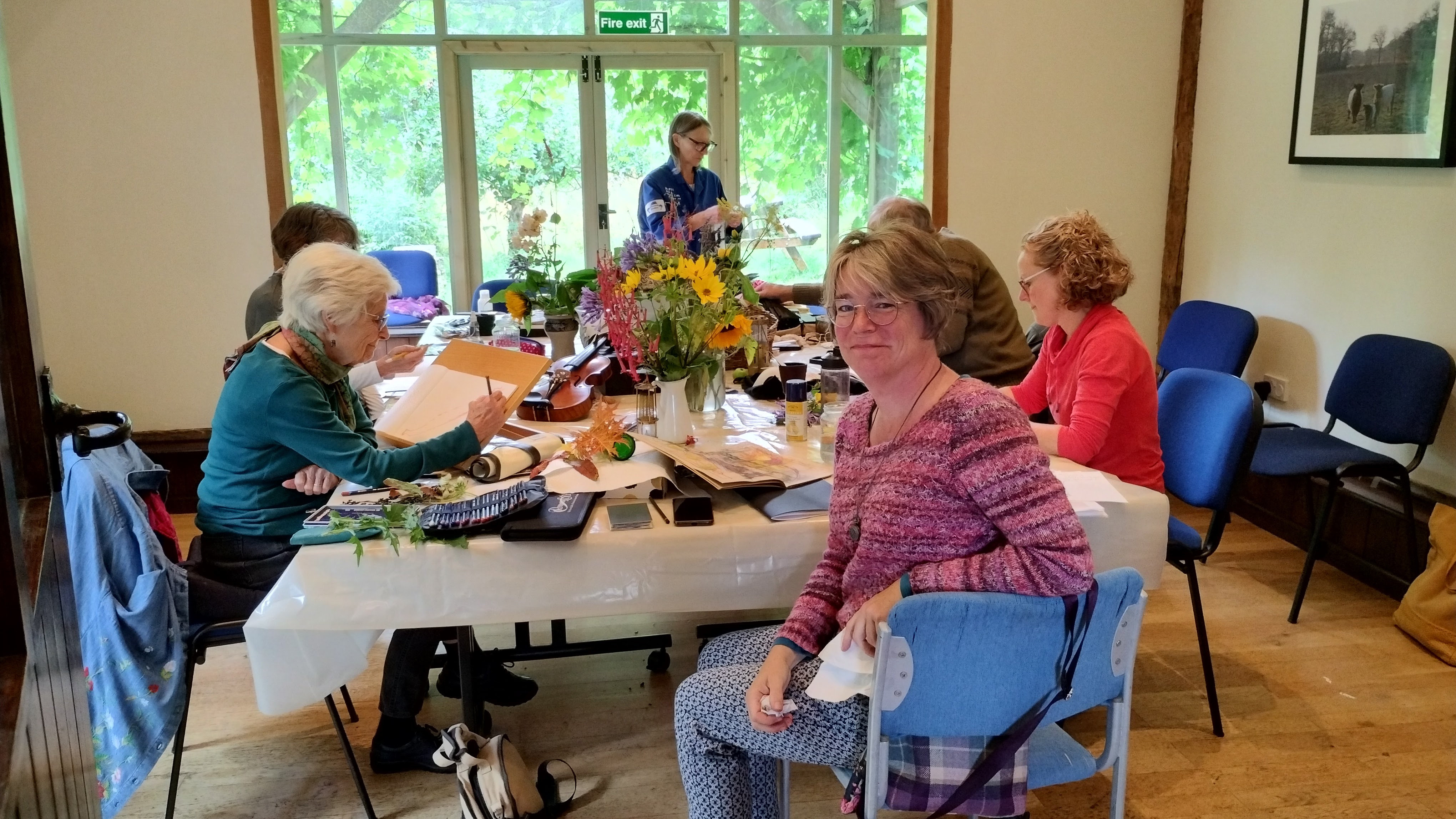
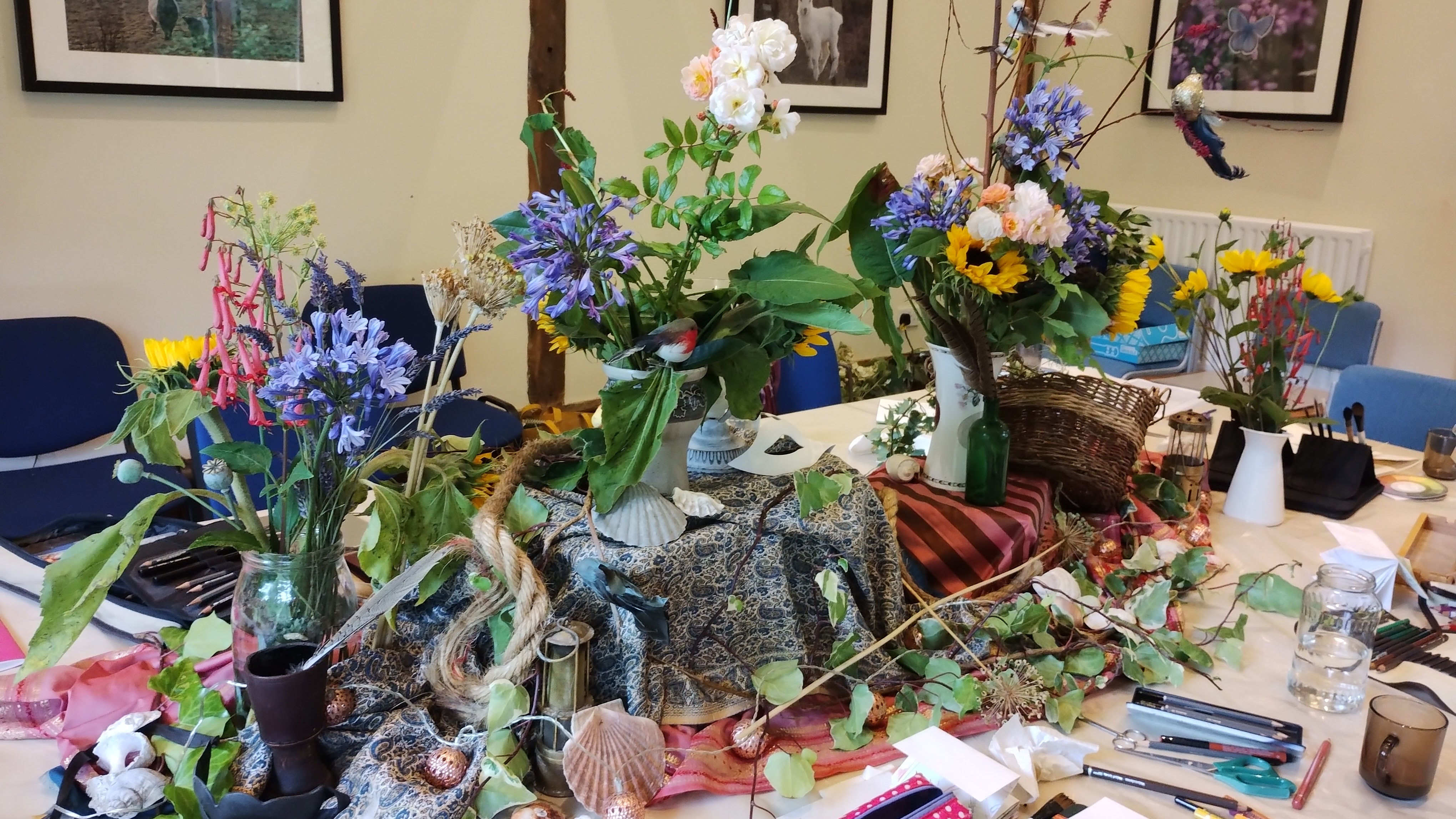
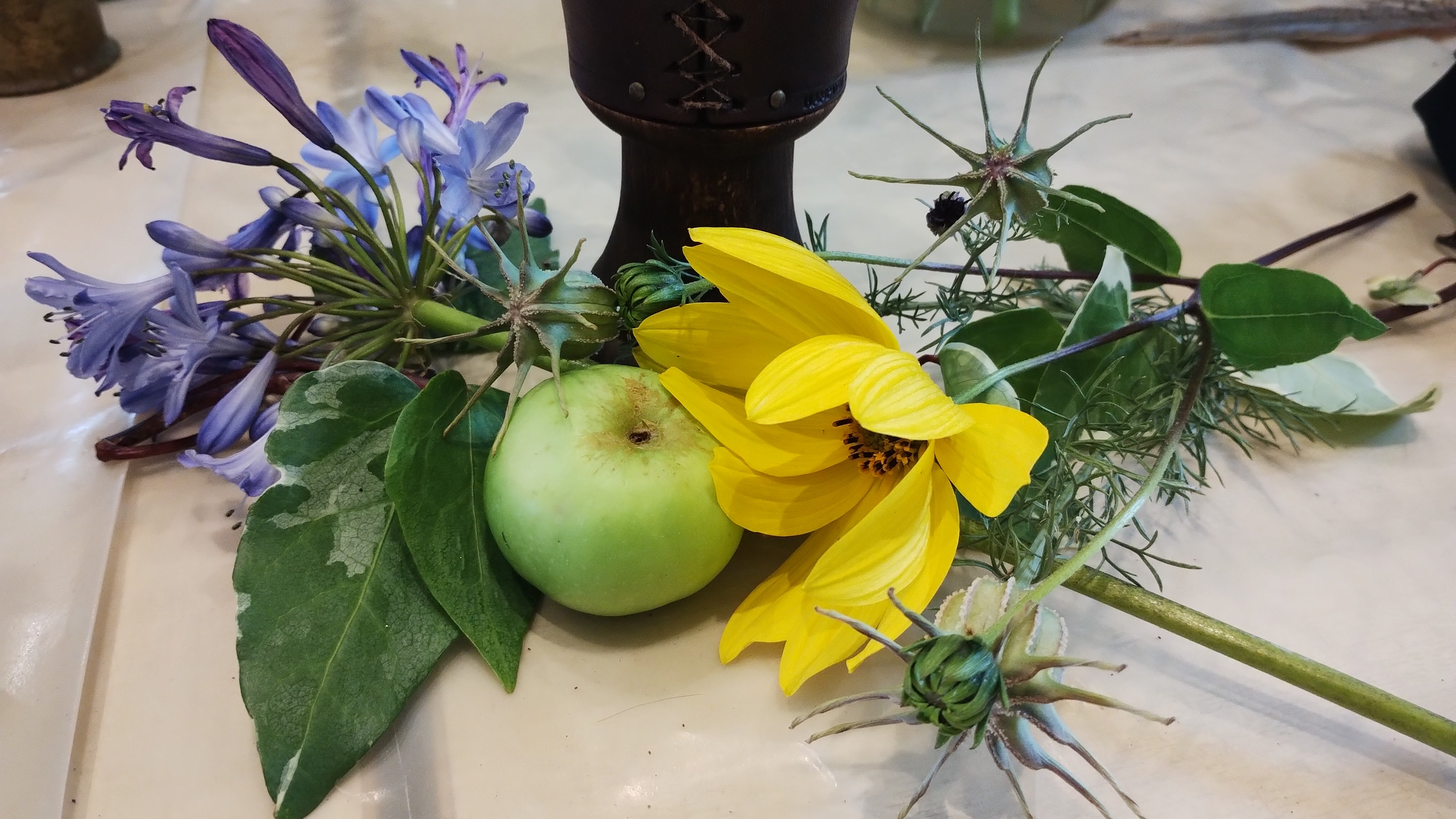
For the third year running, in July I hosted a small group in the lovely surroundings of Pucks Oak Barn in Compton, Surrey. It’s a beautiful green space surrounded by a woolly and wild community orchard, buzzing with insects and all sorts of plants; the weather was kind enough to allow us outside on Sunday, where particpants collected also sorts of interesting things from sensations to seedpods.

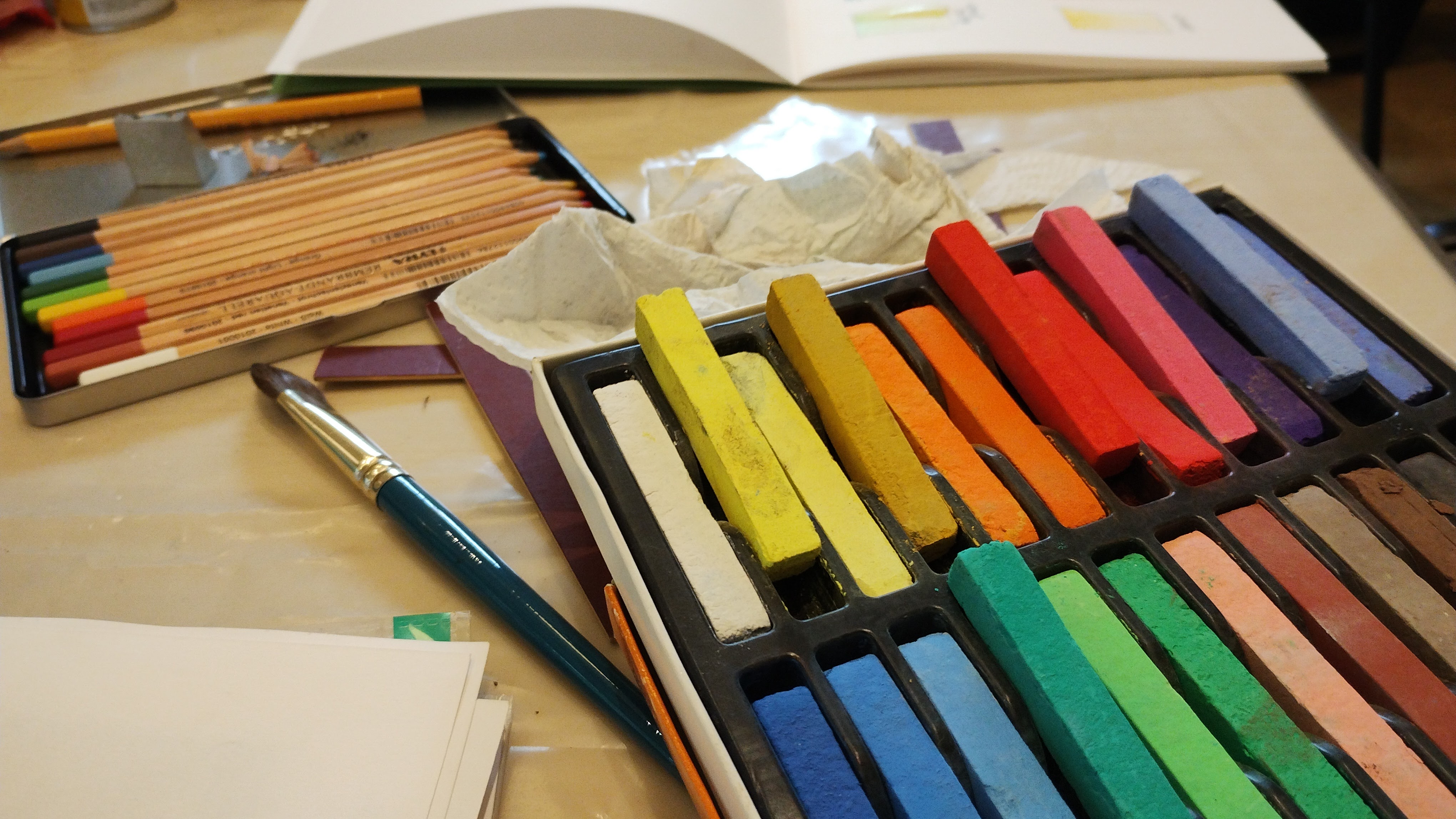
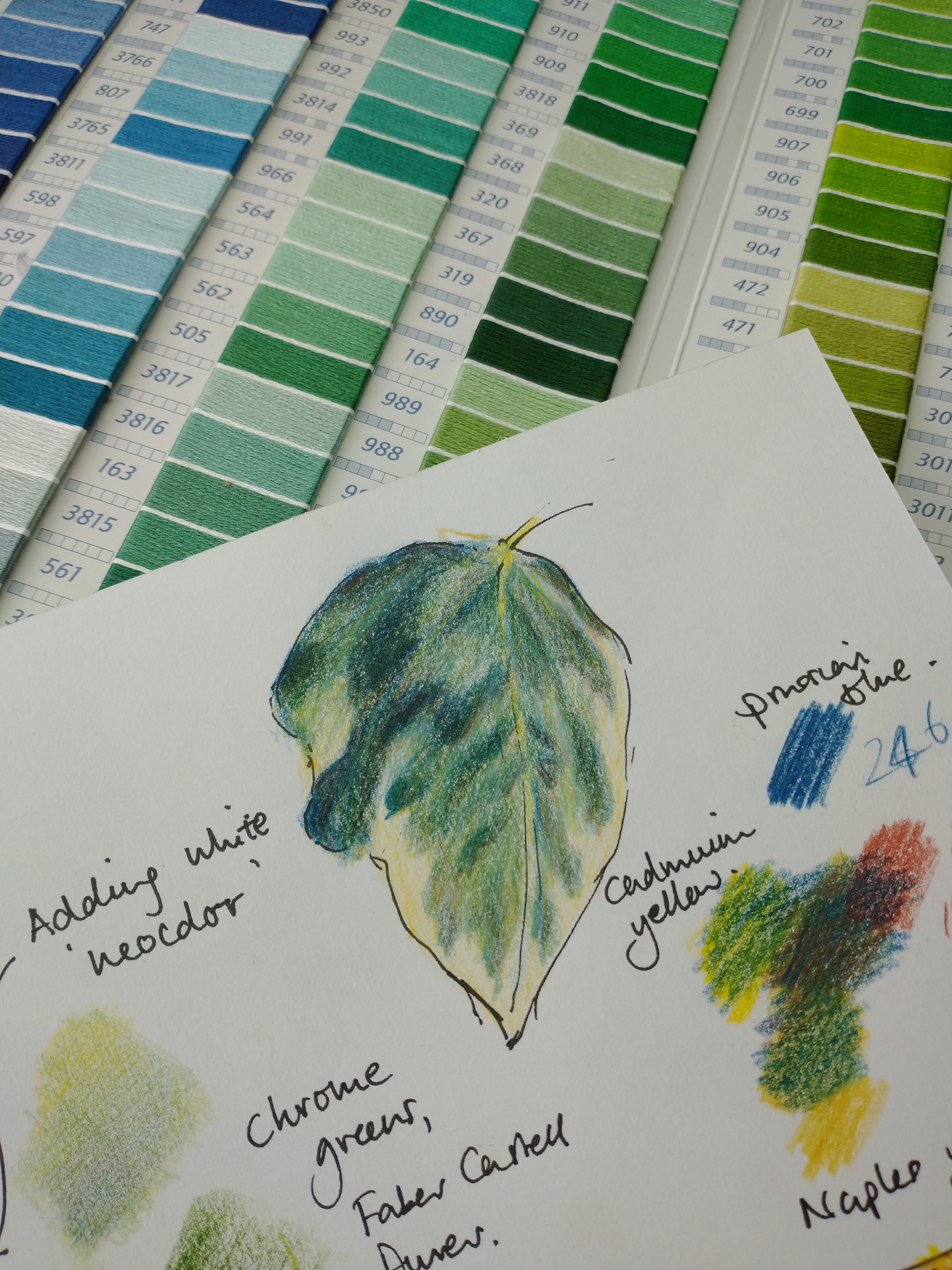
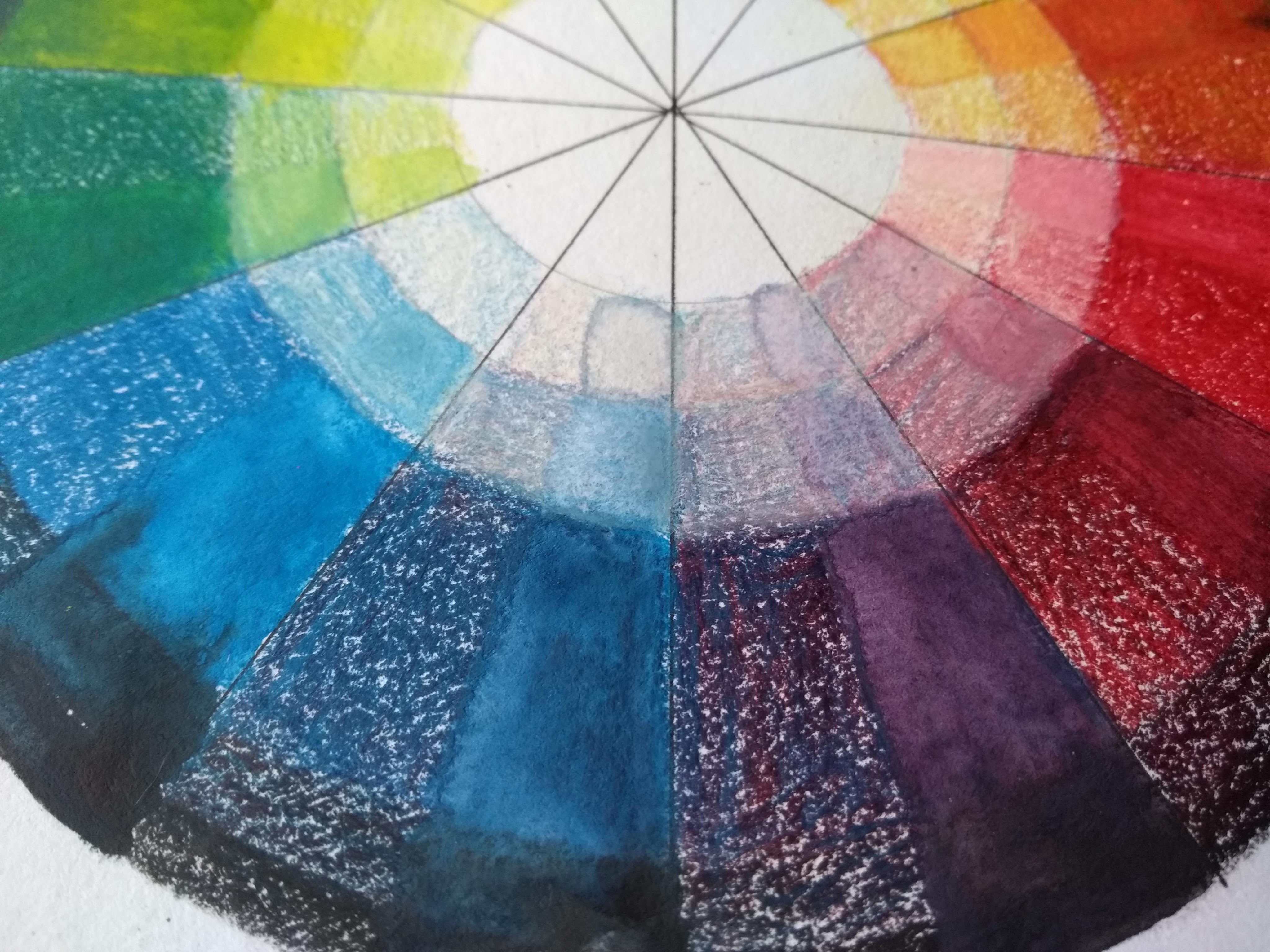
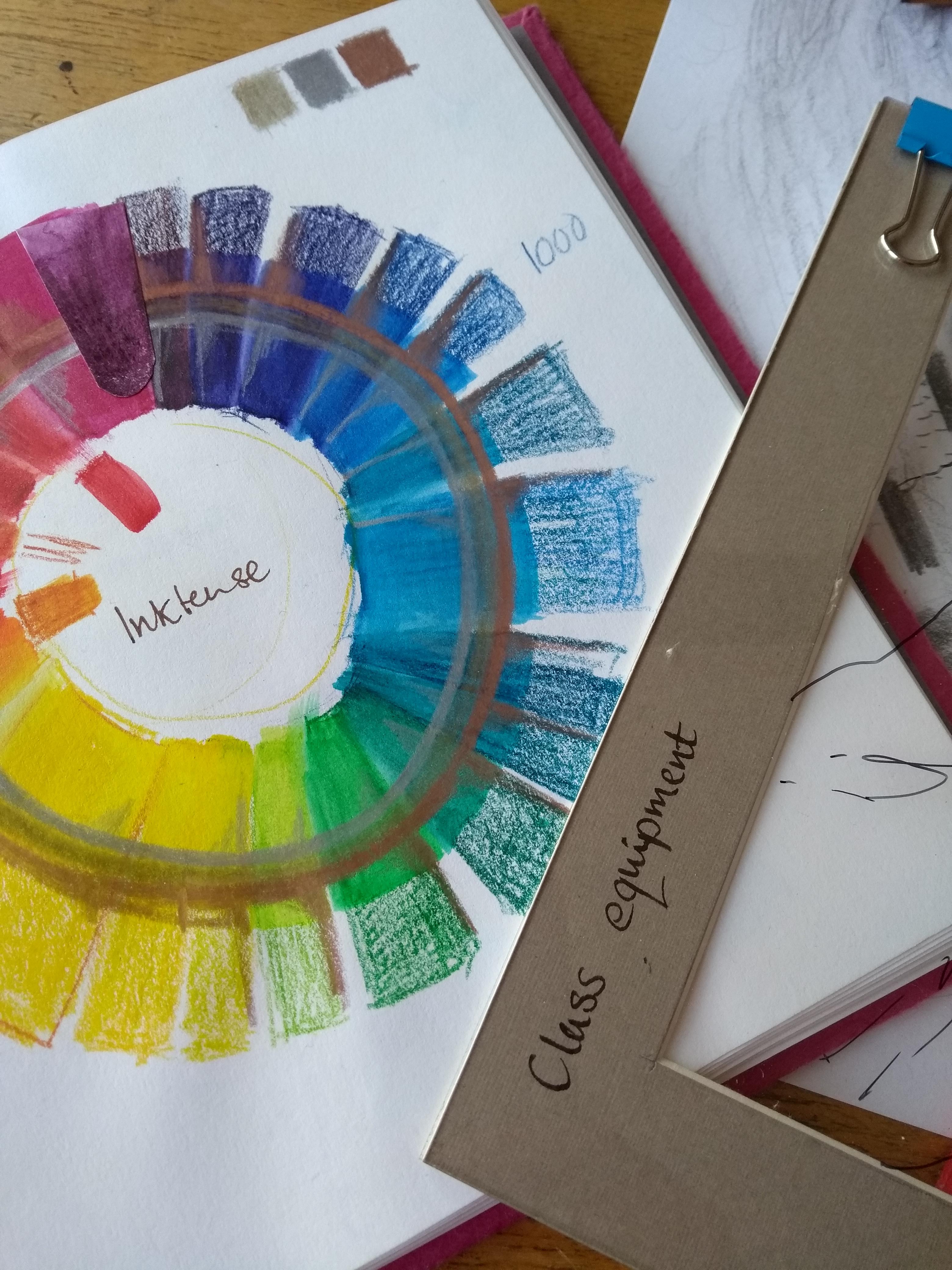
The focus was on creating space for each participant’s own practice, whatever they might need at this point – and we had a diverse group with varying levels of experience and wishes for what each wanted from the time. With such a small group I could work with each person and give individual guidance, so each could follow their path – and we had quite different results from the weekend: small folded books made of drawings, a giant collaged painting, colour charts and collaged concertina books.
It was a very relaxed time with lots of permission and encouragement to do whatever one felt like doing, including rest and chat!

For the first time this year I participated in the Royal School of Needlework’s International Summer School, the first to feature an art class. It was also my first time taching this back on site at Hampton Court since March 2020. A week later that year the country was locked down; the last session of that course was delivered on Zoom, and was the pioneer for live online classes for the RSN.
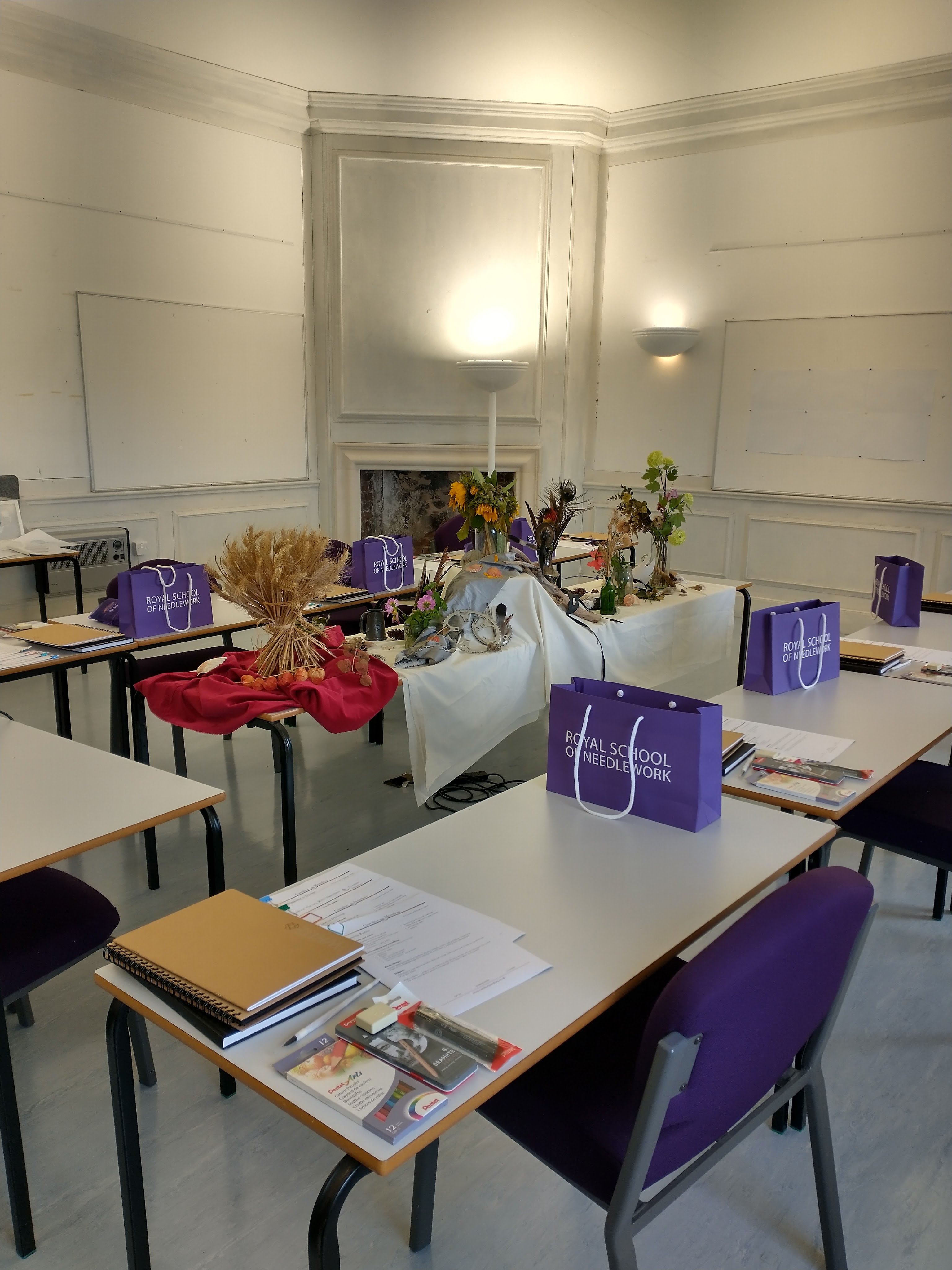
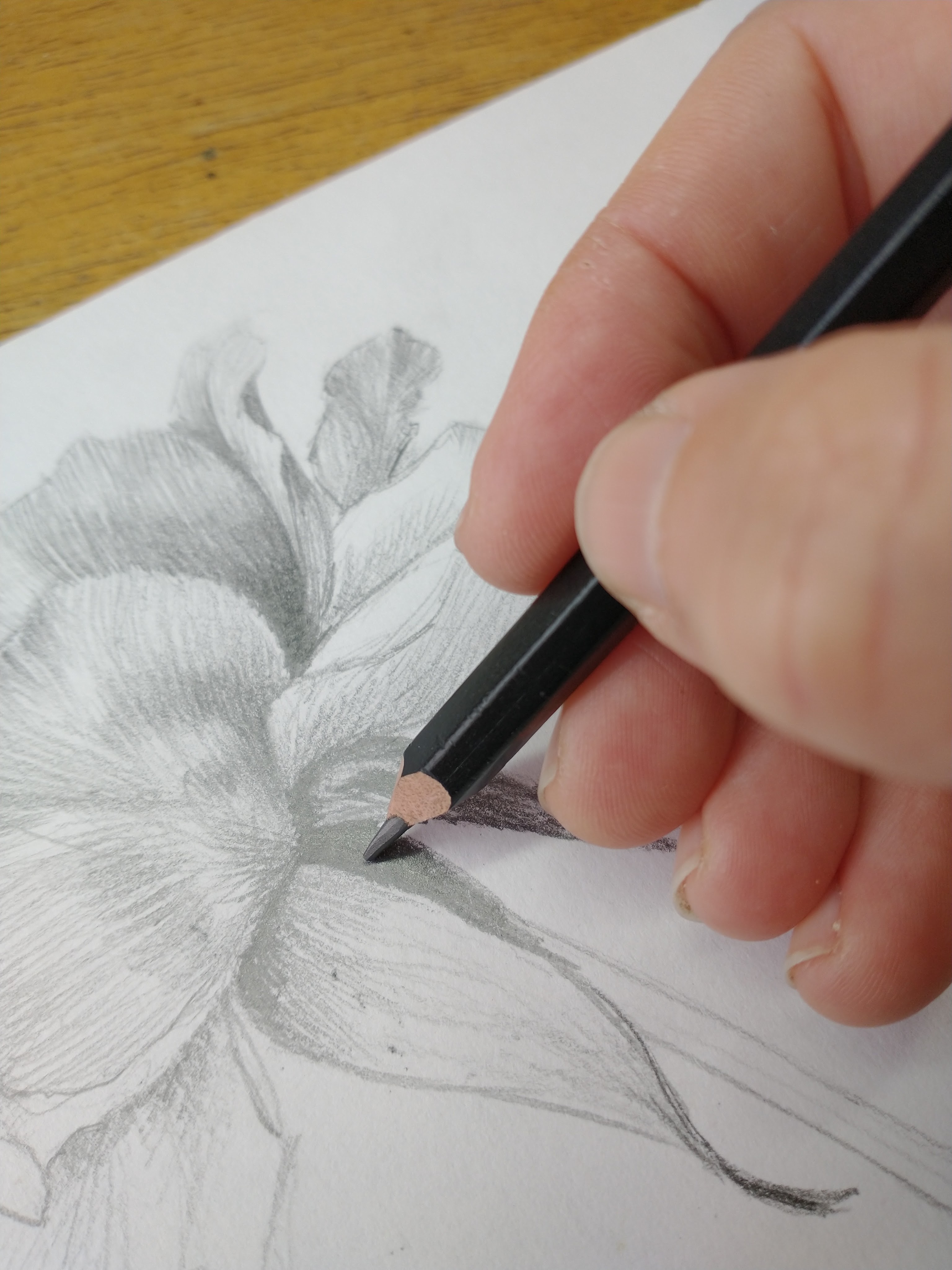
The classroom was beautifully prepared by Noleen, Education Manager, and I was very ably assisted by RSN graduate Future Tutor Sonia Lee. We had an intense week with eight students, looking at drawing principles from the beginning with lots to learn and lots of experimental processes amongst the more traditional artistic principles and processes. People are often surprised to discover that there are learnable structures and principles behind art, it’s not a magic process which you can do or not.

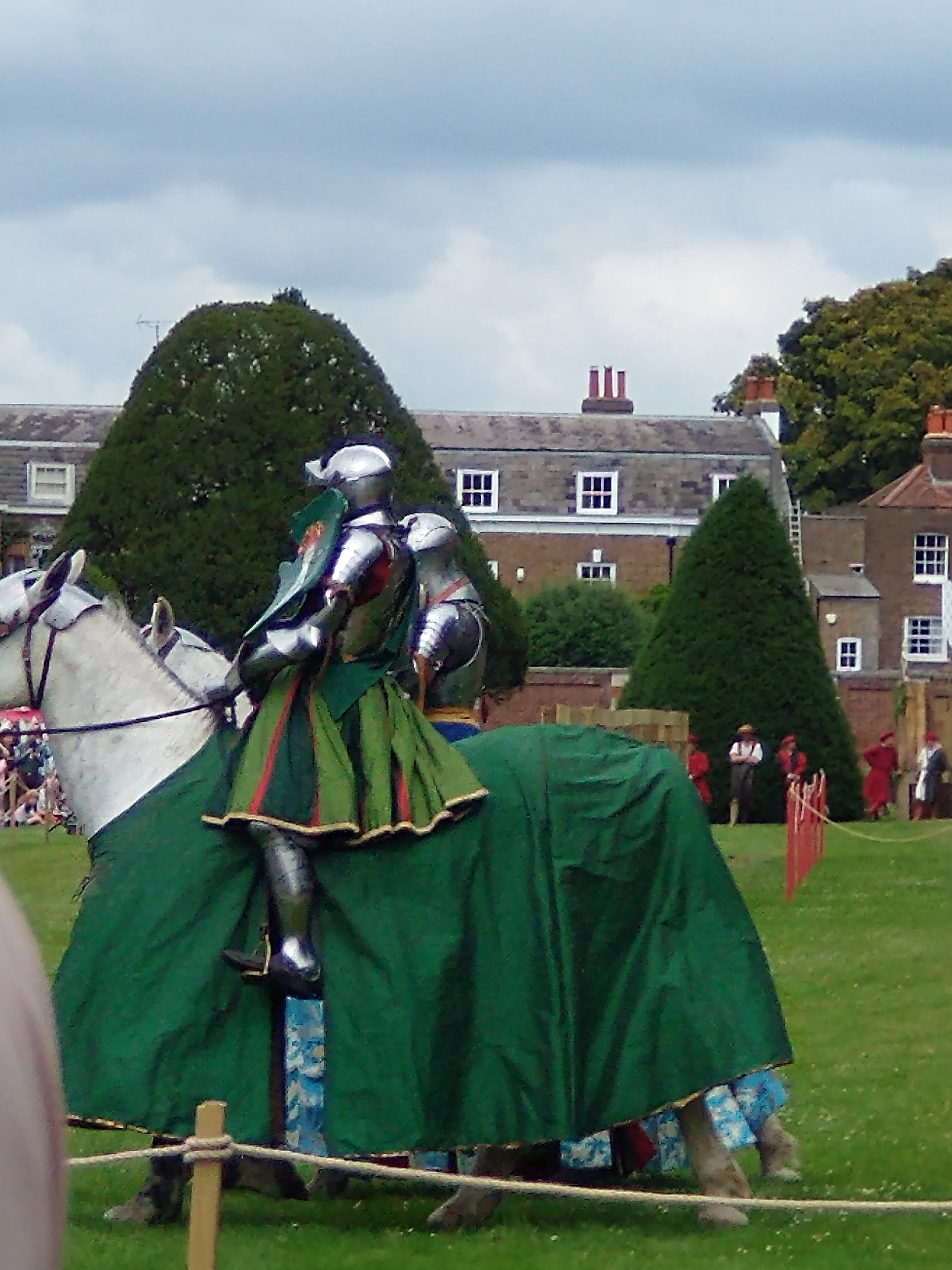
There’s always a lot going on at Hampton Court in the summer, with costumed intpreters and re-enactors doing their stuff in the kitchens, walking about the palace and jousting in the grounds. RSN staff and students had a special trip to Buckingham Palace to see the Coronation exhibition and the robes and screen on which RSN staff and students had worked. It was in all a super busy week with lots to learn, lots of complicated travelling arrangements and much to see and digest.

For me what tied both quite different teaching experiences together was the goal of enabling confidence and excitement for the students. I aim always to give encouragement to see more clearly, to experiment and to play, and permission, to follow wherever curiosity might lead, and believe in one’s own inner creative voice.

My greatest reward is when someone says: ‘I realise I can just do whatever I want with my art and try things, it doesn’t matter’. When they say ‘I believe now I can draw’. When they say ‘I see new things I didn’t notice before’.

Upcoming classes:

RSN: The online drawing course is running twice through the autumn, timed for UK and American students. https://royal-needlework.org.uk/courses/day-classes/

Thursday evenings Live Online drop in Class starts again on 14th September.

A new course Exploring Watercolour will be offered in January 2024, Tuesday evenings starting on 10th, 7-9pm UK time. Booking information to come.
On Learning new things and sticking with it

It’s a common experience: there’s something you love doing, but you struggle to find the time, or the motivation, and you can get discouraged and then feel disappointed. There are some ideas from study about how people change which might help.

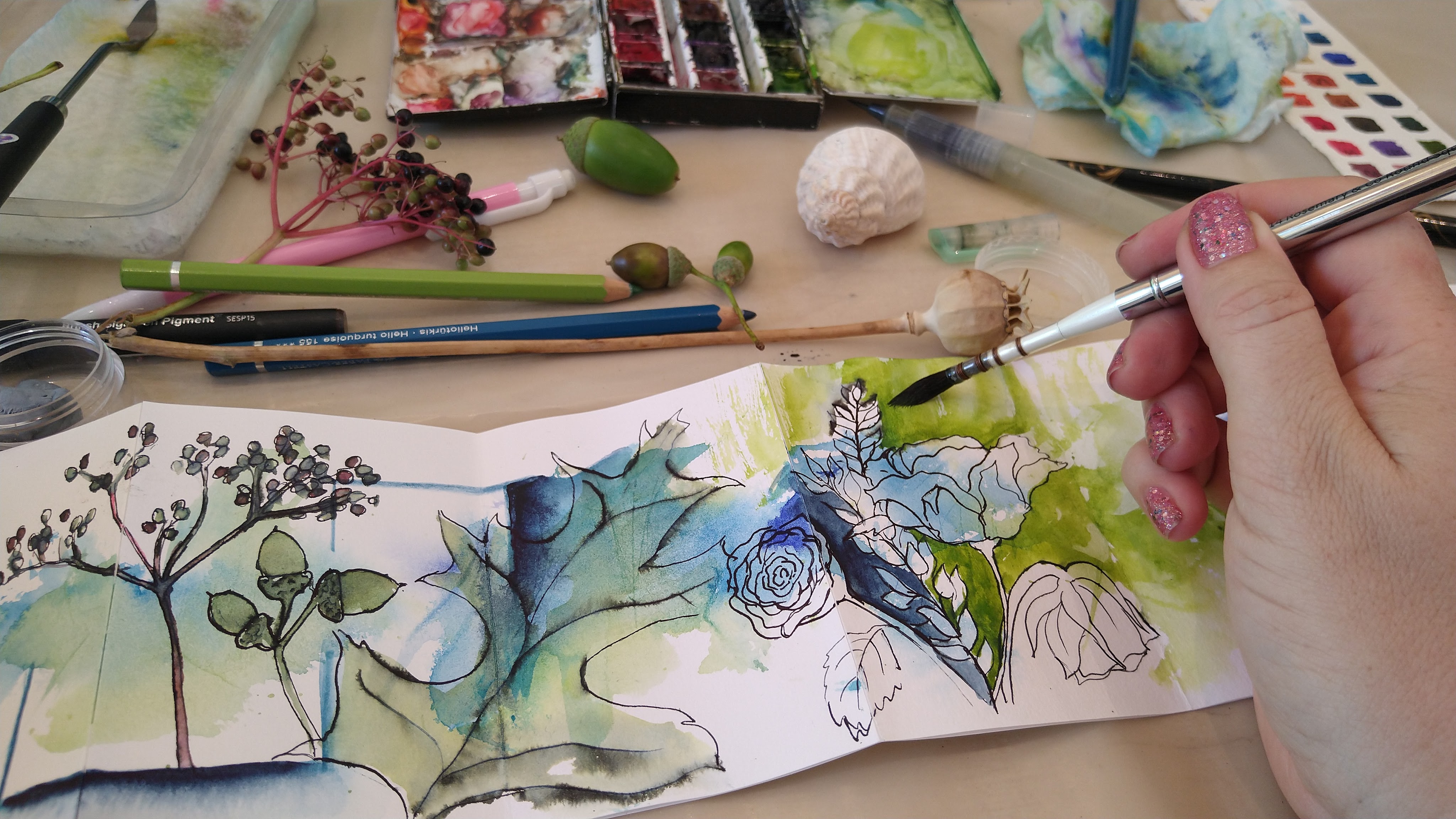
Image: ©Sarah Homfray 2022. Caroline’s Summer Drawing School, 2022.

I learned recently that to change things you need to be consistent in what you’re aiming for, flexible in how you get there, and persistent in your efforts. There will be lapses and changes of direction, but continual steps and trying different ways of doing things will keep you moving forward, however small your actions are.

Of course, learning a skill is going to involve changing a number of things in your life. You’ll need to review and make decisions about in how you spend your time, perhaps change your priorities a little to make room for your interests, and if the skill involves a physical element like learning a musical instrument or making something, spending time developing it will create changes how you use your body .

So what is it you want to learn? How do you make space for it, and encourage it? And how do you keep motivated after the initial burst of enthusiasm or effort?

I’ve been learning to play the harp over the last 18 months. I had a burst of enthusiasm when I acquired it, and was less busy at the time (April 2021) so I did lots of research, found different teachers and resources online, and spent time getting to know it. I found a place to keep my harp to hand, so that I could just pick it up and play whenever I had a few minutes. Although I’m enjoying playing it by myself and experimenting, I wanted to check I was getting the basics right – you can hurt yourself playing an instrument if you dont take care about how you’re doing the repetitive actions. I decided to go on a weekend course. It was amazing to be in a great big room full of harps, talk to the owners, and hear very different styles of playing. That really opened up my eyes to the potential of this instrument. I came away with renewed enthusiasm and curiosity, still mostly playing by myself but now looking for ways to connect with other harp players.

I’ve realised more and more since the pandemic just how important it is to mix energy with other people, in positive, fun, friendly and supportive environments. It’s very important to me in my work too, and why I like to teach groups. We’re usually learning drawing and aspects of art together; the ‘together’ bit is really important. In a recent class for the Royal School of Needlework, we had a wonderful difference of interests and experiences, not to mention different cultural knowledge as well.

At the end of these classes I try to persuade people to think realistically about how to carry on with their learning. Set realistic goals: choose two or three short times a week to practise, keep your materials to hand and then review what happened after a few weeks. Have some intention about what you’re practising, which means think about it occasionally and choose what to practise baed on what you are most interested in and want to develop. Be prepared to change the timing, frequency and circumstances of when you practise. Accept that in busy times you may have to reduce or let go of your practice temporarily, and that’s ok. Return and renew the commitment when the time allows. Just don’t stop. Keep taking little steps. Consistent, flexible, persistent.


I run a regular drawing class online each week, for just this sort of encouragement. Short courses in drawing are also available, directly through me or oriented towards stitchers via the Royal School of Needlework. Click here to find out more: https://carolinehomfray.co.uk/drawing/

5th May: Two years of Zoom Art for the RSN

On 5th May 2022 it will be two years since I ran the first pilot Zoom session for the Royal School of Needlework – it was the last of a three-day drawing course, of which the first two days were delivered in person at Hampton Court.

The virus moved fast. By 23rd March we were in lockdown, a word I had not been aware of before the arrival of Coronavirus. I had one final drawing session to run of that three day course, as well as a ragular class of my own and a monthly ukulele group session I was responsible for- so lots of things which I wanted to keep going if I could find a way. I ran the first ukulele group session on 24th March 2020, with quite a bit of anxiety and finding the lack of feedback strange – I remember it felt very one way, me projecting outward. But it was better than not meeting at all.

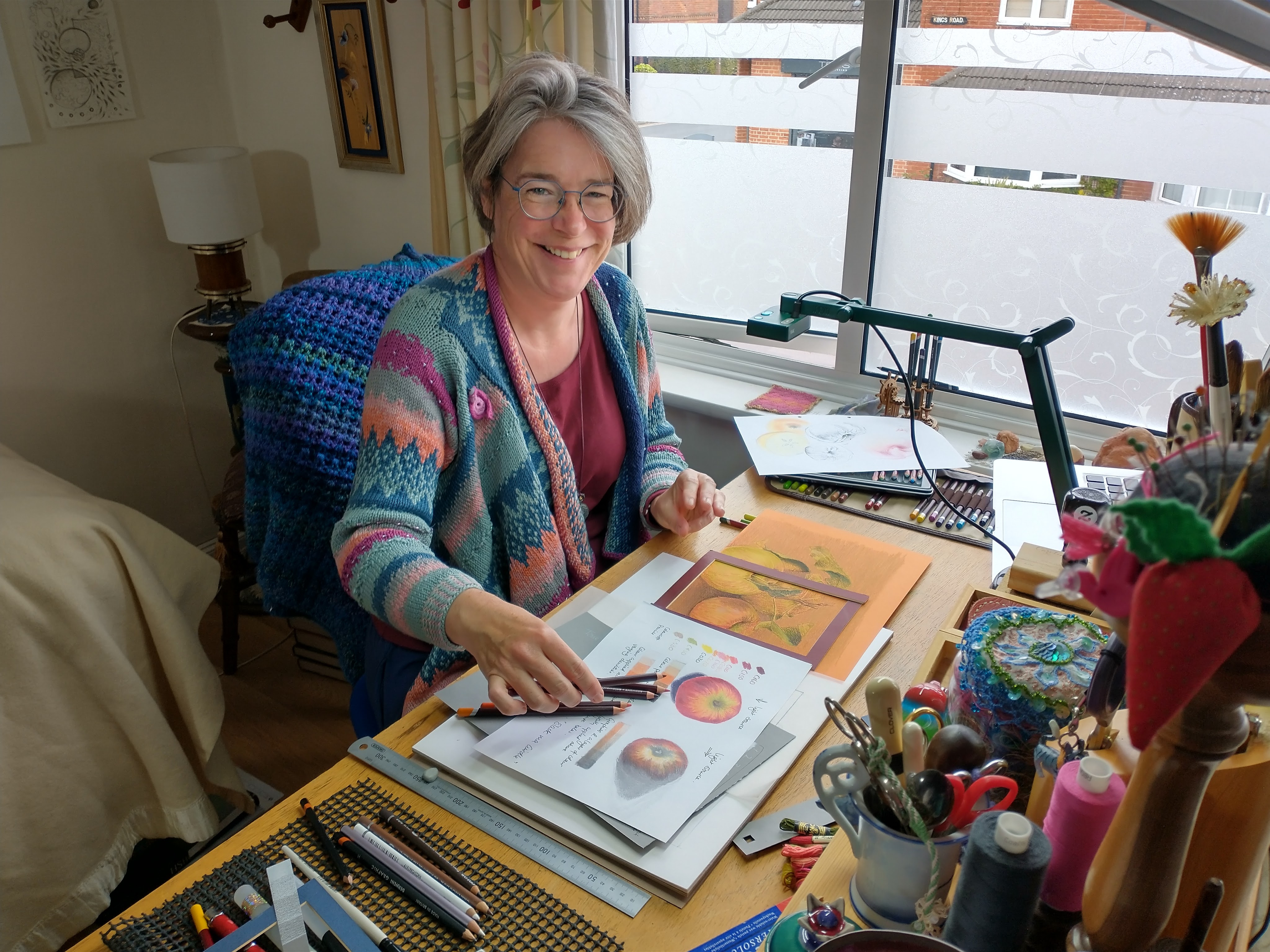
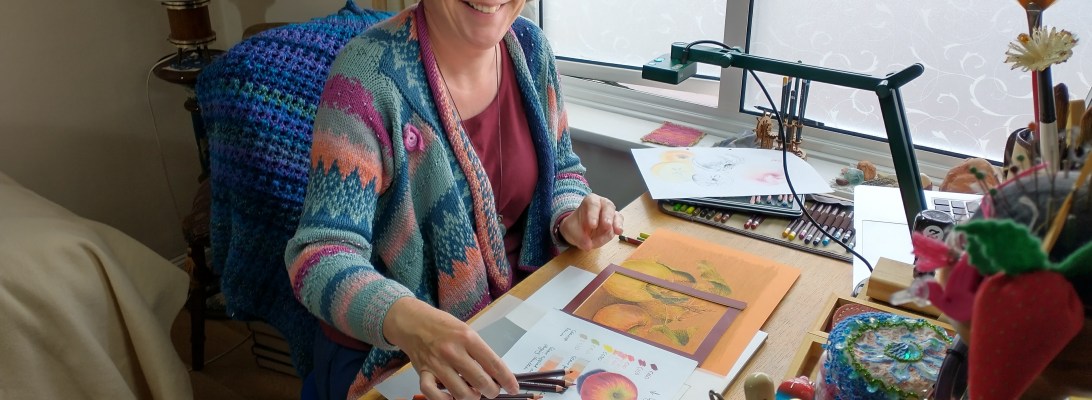
As I remember, I’d spent April getting used to Zoom and training my various students and ukulele group members how to work it. I got my own local drawing class going online on 30th March. I’d run a few sessions for the ukers and my own class weekly so I was in a good position to respond when Noleen, responsible for organising day classes at the Royal School of Needlework, asked me to try the remaining drawing session online on 5th May. I had an old webcam strapped onto an overhead lamp with a bit of masking tape, which I used to show my paper and the exercises during the session, and I used my facilitation skills to help everyone feel engaged and get them all interacting, which can be a challenge in Zoom. Students were so appreciative of the chance to go on learning online. Noleen was very enthusiastic and encouraging about trying it out, and very positive about the results.

The 5th May 2020 final drawing class session worked well enough on Zoom for the RSN to go forward with advertising and running online classes.

Over the next few months I upgraded my tech to a visualiser with high quality definition, organised my space at home more carefully for teaching and redesigned the RSN drawing classes in the summer of 2020 into the current series of 4, which offer a drawing pathway right from the beginning. We ran a massive number of them through 2020. I think I ran the series twice in August, 8 classes in all, and about 4 of the RSN Drawing Flowers classes through May and June in 2020… I’ve lost count of how many classes I have run for the RSN since, and how many people have completed them.

It’s interesting to look back on it from this perspective; to remember that time and how strange it was, and what has become normal as a result. People have joined from many countries and continue to do so. I’ve counted students from the US, Canada, Australia, New Zealand, Spain, France, Belgium, Russia, and of course all over the UK and Wales, including a remote student in the Isle of Mull in Scotland.

Now, two years later, we are trying to find our way back towards normal life – but of course, some things have changed for ever. We can’t go back to the world we had before, but it turns out that the pandemic provided an opportunity as well as a crisis. One of those unforeseeable changes is that the RSN now has a permanent programme of online learning -for those who would never have come to Hampton Court in the UK, for those who can’t leave home very easily, and for those who are still shielding ‘online’ has opened up a new world.

For myself, my local class going online resulted in a community of students, who met in person at my Drawing weekend summer school in August 2021. I have another drawing weekend planned for this August, and it’s been great to come full circle – to finally meet in person those whom we’ve met and got to know online. More details about that here: https://carolinehomfray.co.uk/

For the current Royal School of Needlework online classes, embroidery and design: https://royal-needlework.org.uk/courses/day-classes/

For my own drop-in classes : https://carolinehomfray.co.uk/drawing/

New: Thursday Evening Drawing Class, 21st Jan, 19.30 GMT

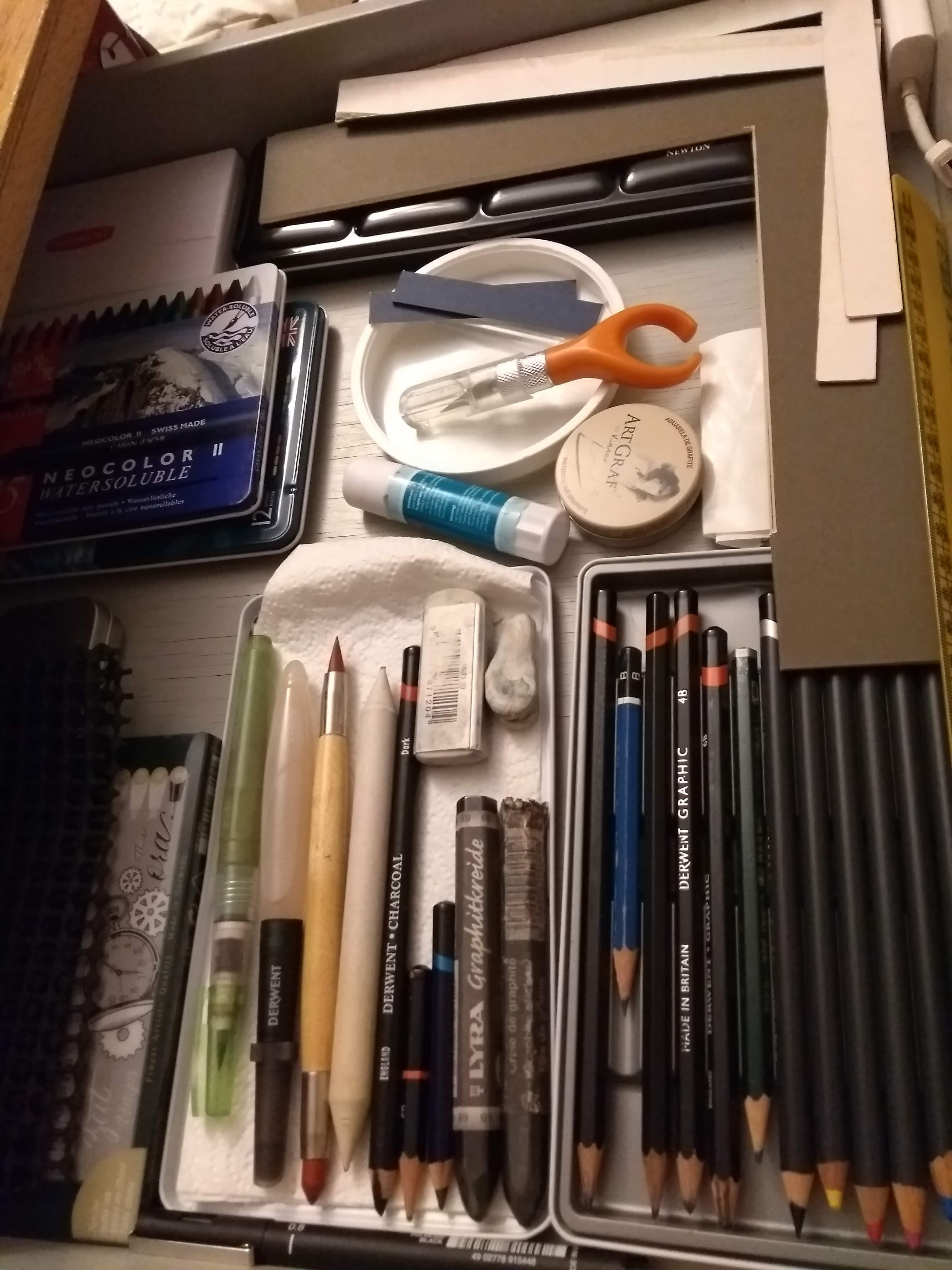
Now available to register your interest for. This is another drop-in drawing session like my Monday morning class, but timed for evening to suit workers and my American friends. Get your drawing gear, whatever you have – a biro and printer paper will get you started. Graphite pencils and some good quality coloured pencils will give you lots to explore. Check out the Drawing Page of my website for more information about materials, and use the contact form there to sign up.

These drop-in sessions are a chance to practise your skills, train your eye and also have a bit of fun. No outcome is required, you can choose the subject matter and what media you want to play with. We share the work of artists we like, think about how their work could influence us, experiment and doodle.

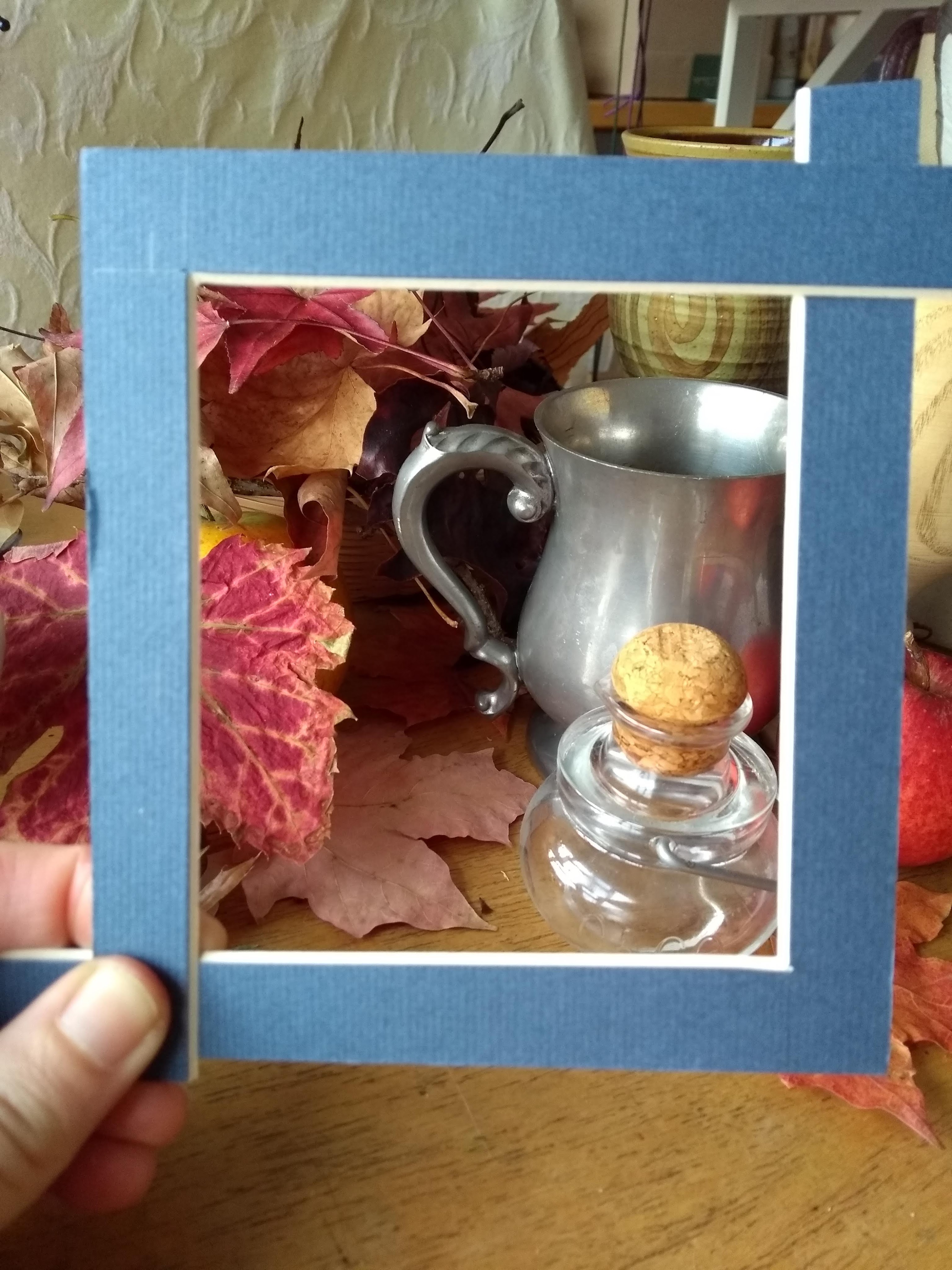
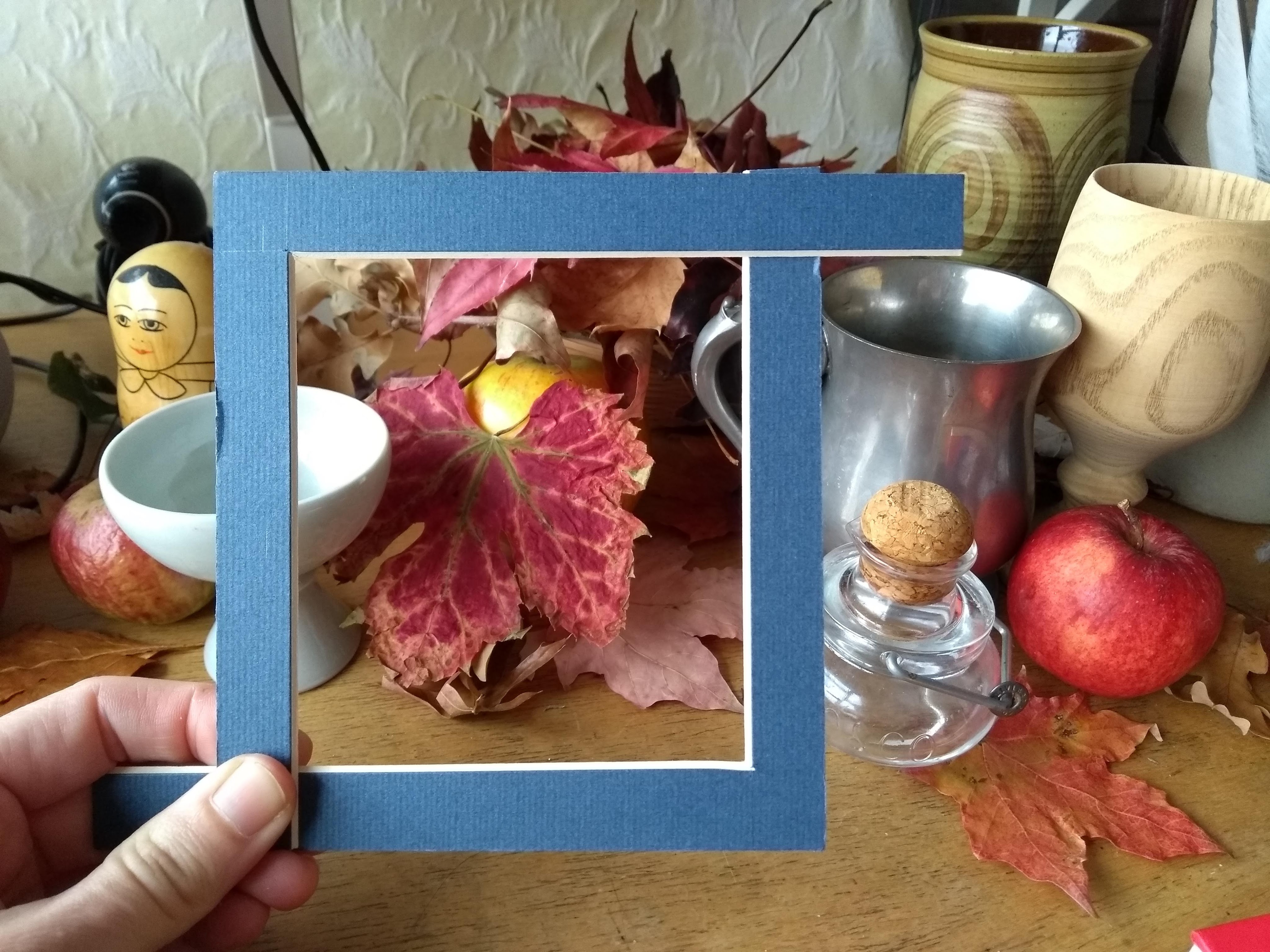
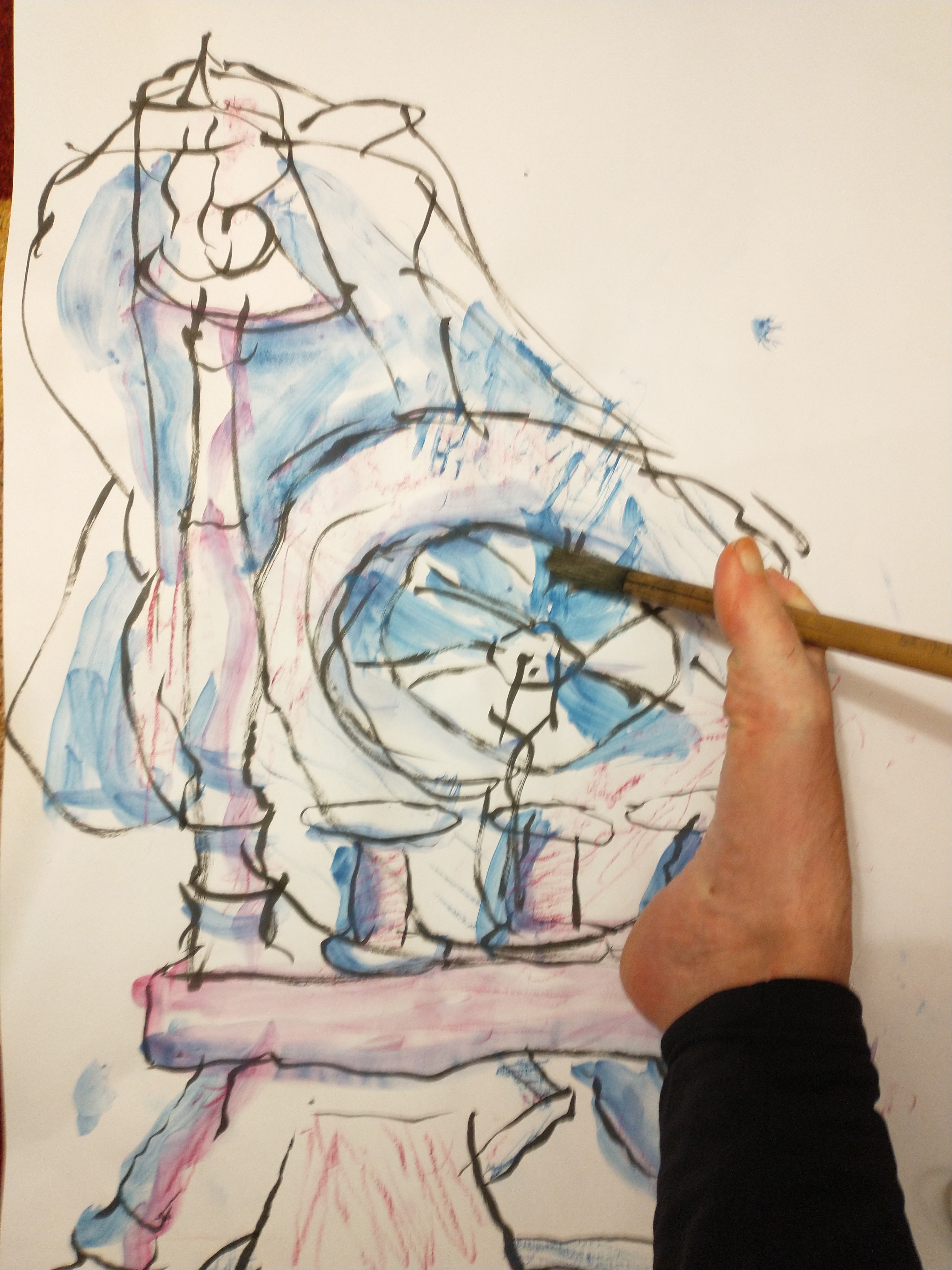
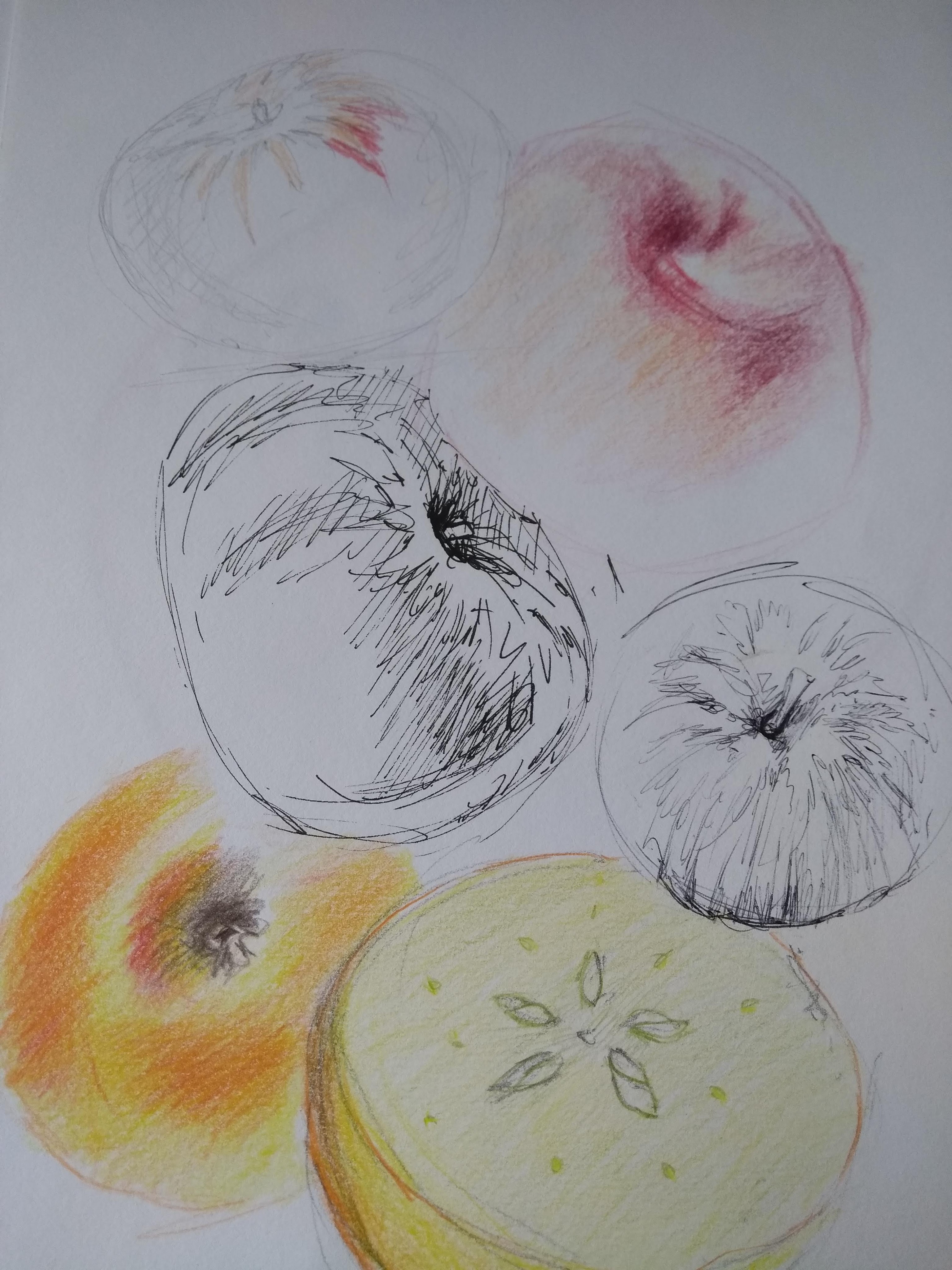
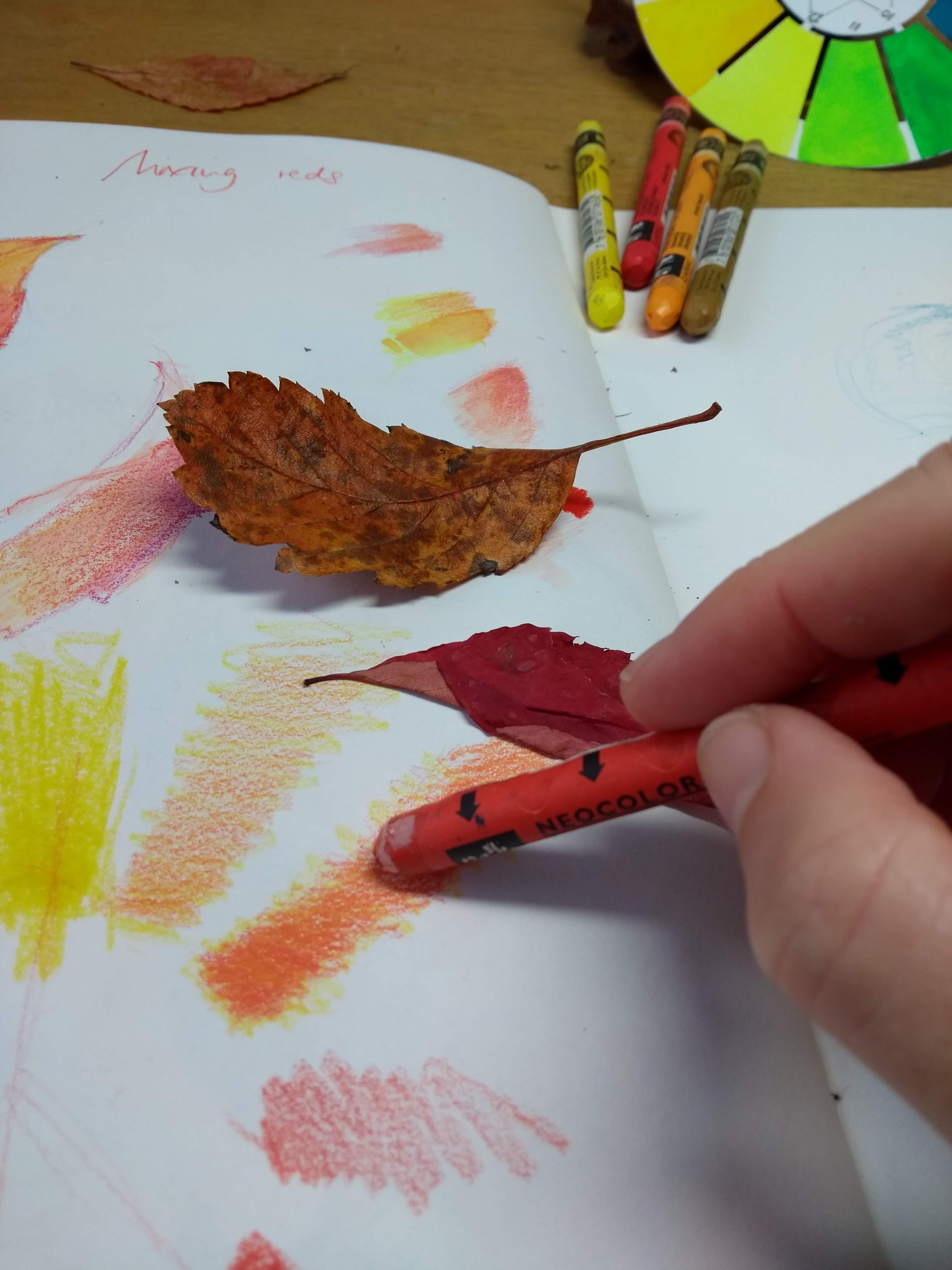
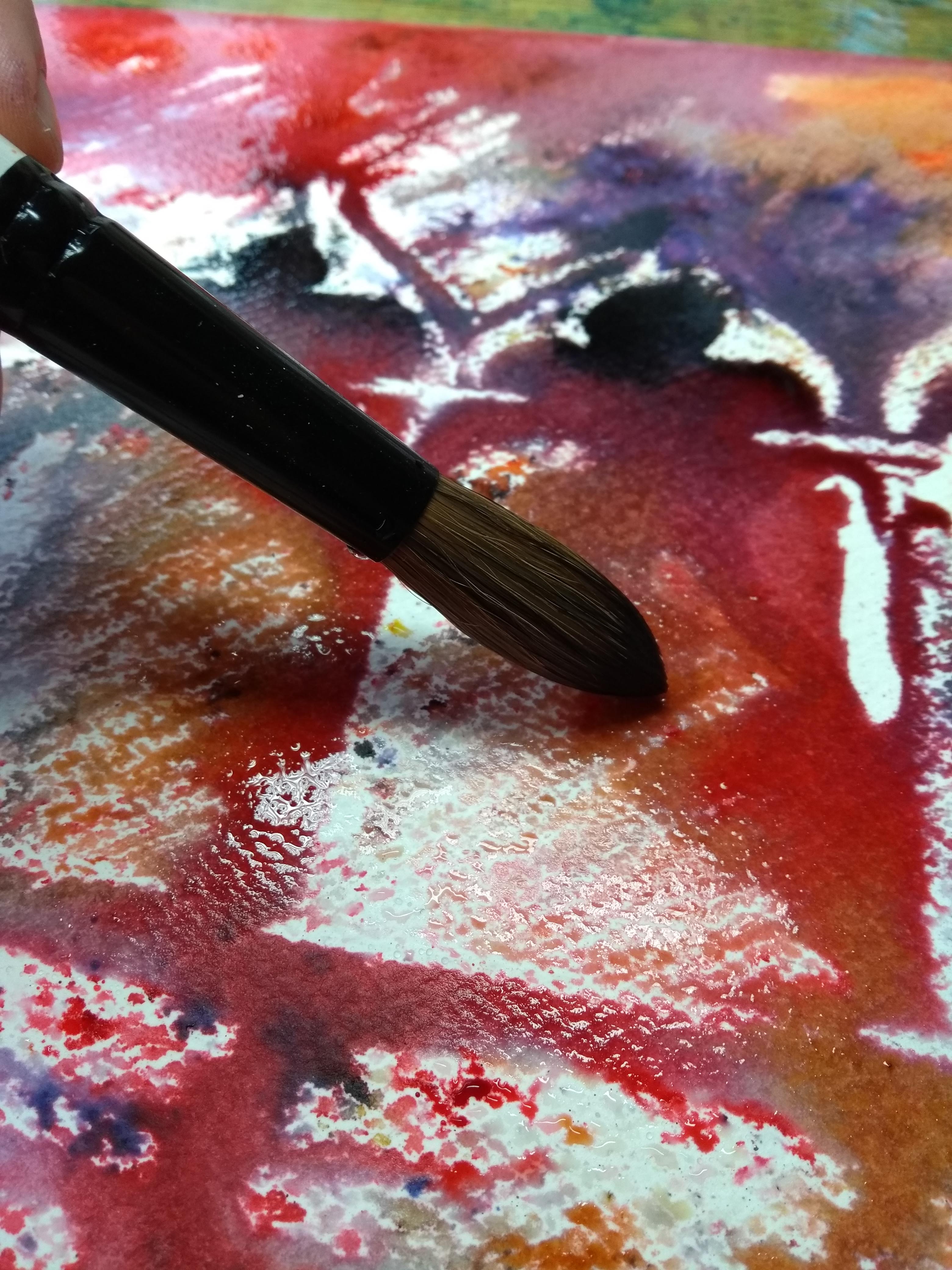
Just some things we’ve played with: ways of framing a composition, mark making experiments, measuring, perspective, colour theory, watery media, pens, doodling, choosing subjects, even drawing with our feet and mouth!

On Drawing: Why it Matters.

‘I feel like I have new eyes – when I’m out for a run I keep stopping to look at shapes and colours I didn’t see before’. ‘I hadn’t realised just how intricate that shell is and how many colours there are in it.’ ‘I really have to concentrate, to look’…. just a few of the things students have said to me in drawing classes over the last few years.

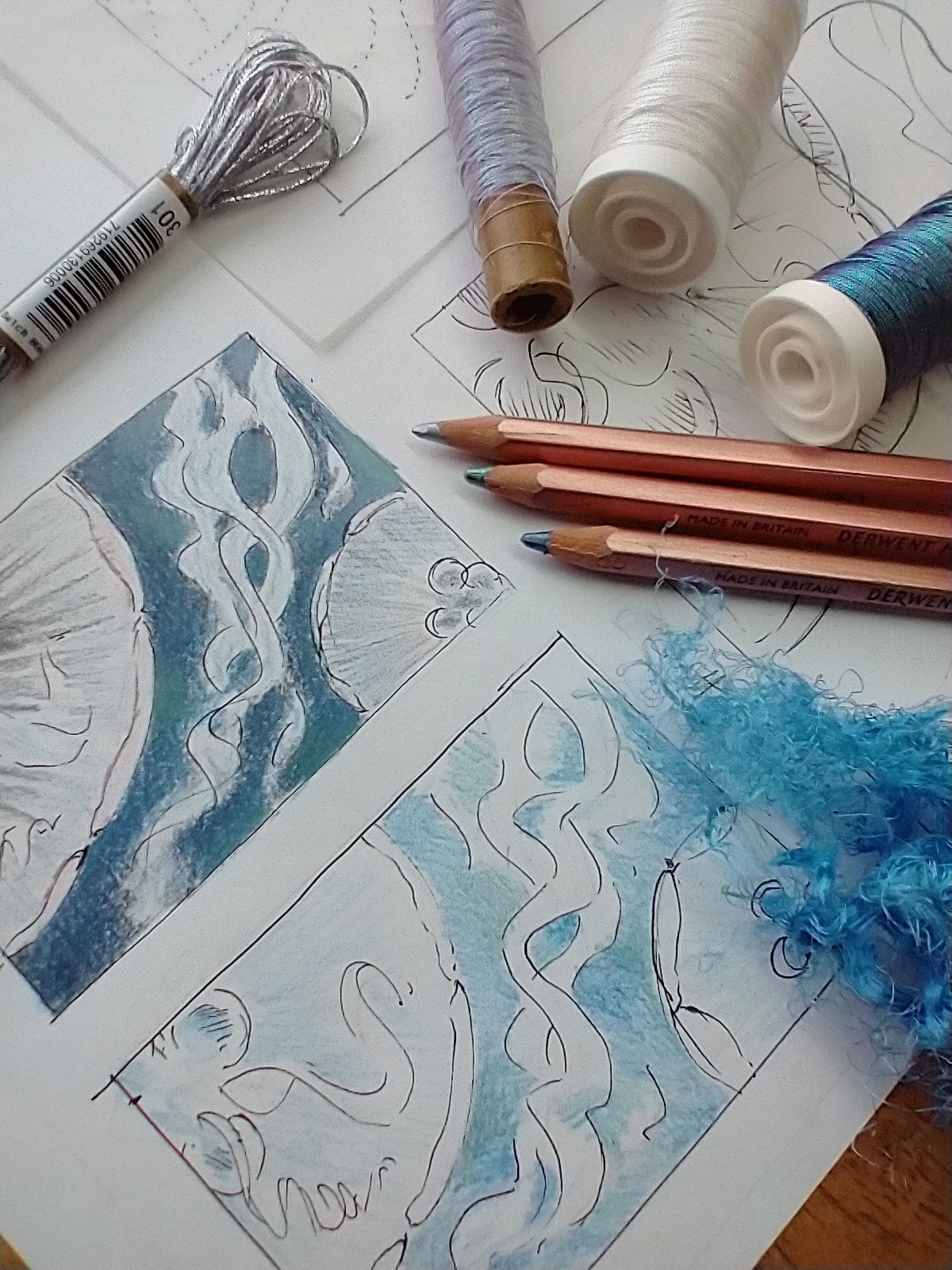
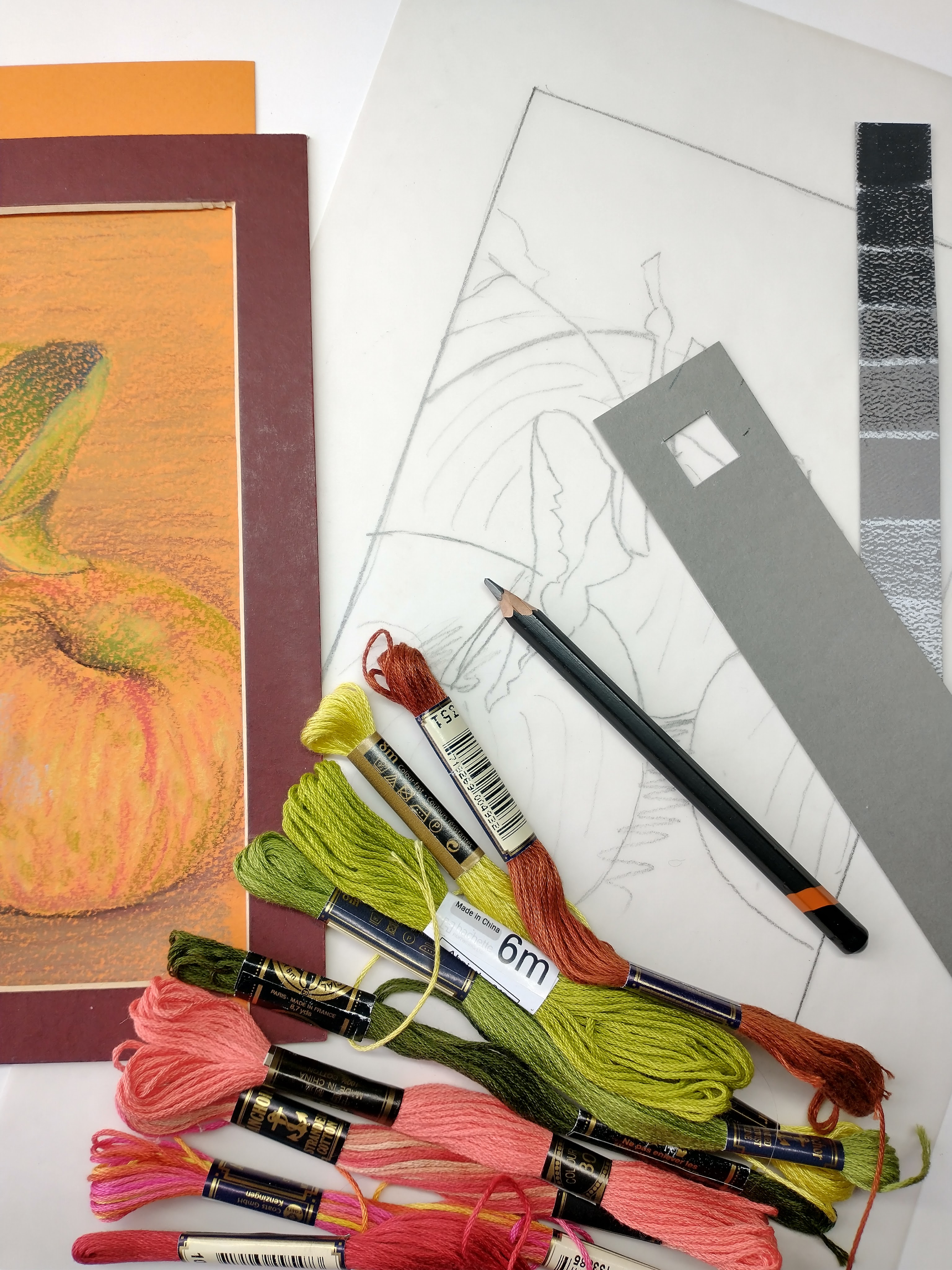
My sister Sarah and I have been running drawing classes for about 3 years at the Royal School of Needlework in Hampton Court, Surrey. Sarah had initially designed the course for embroiderers who wanted more confidence to design their stitched pieces; we offered it at Hampton Court with great success, succeeding in giving students confidence, tools and the courage to experiment and believe in their own vision.

In the teaching I’ve bcome more aware find drawing has a great value for itself, for centring my focus, calming me and above all helping me to really pay attention: to the moment I’m in, to what’s in front of me right now, and following my observation down a path of curiosity and discovery.

The three-day classes are an intense blast of information and activity, and both students and ourselves as teachers are often exhausted by the end of it. It’s great fun but intense! I wondered what it would be like to run a class where we have time to relax into drawing, that anyone, whatever their background in art, can enjoy.

Now I’ve started running a class once a week in Godalming, for two hours of drawing in a very relaxed and supportive environment. There’s no aim other than this: to observe, to draw, to play with materials, to explore colour. There’s certainly no pressure to produce finished works. It matter because for me observational drawing is about connecting with the world, by trying to see as truthfully as possible what is in front of us and attempting to capture this. We normally see so little of what’s around us, being inundated with demands on our attention. Taking the time to pay close attention has really enriched my life; taking up some colours grounds me in times of stress and helps me to stay present in myself.

I also wonder if taking the time to be present, to overome visual assumptions about what the world looks like and to check in with our own response is connected to being able to ‘see’ more clearly in other ways as well. It’s a practise of gaining clarity, and can often show me something about what I’m thinking and feeling that nothing else can.

NEW! Drawing, once a week, Mondays 10-12 in Godalming. £27 a session, pay on the door. Please contact me if you’d like to come! it’s a small class.

Drawing and Design for Embroidery Course

A student’s reaction to our recent embroidery class, taught with Sarah Homfray. I’m glad to see the Thinking Environment additions of ‘what’s going well?’ were a valued part of the course. Thanks, Marlous.

Marlous's avatarThe Stitching sheep

Last weekend I was back at the Royal School of Needlework. Not to continue with the next module of my certificate course but to attend a 3-day class on drawing and design for embroidery. This class was offered as one of the RSN-day classes but was specifically aimed at certificate & diploma students but anyone could attend.

The tutors for the 3 days were sisters Sarah and Caroline Homfray. As they are sisters they immediately created a relaxed atmosphere in the classroom with jokes and comments about each other. Both tutors have lots of experience in embroidery and art and they had brought lots of their own sketchbooks, art books and art materials with them for us to have a look at. They even decorated the central table with lots of different items (jars, masks, feathers, leaves etc.) that we could draw or be inspired by throughout the course. On…

View original post 706 more words