This year I will be running my first retreat day, with Laura Murphy of mtc2. I will be publishing regular posts and other material about it, on my new blog ‘Reframe the View’. This blog will continue to be focussed on art making and learning. There’s an extract below from today’s post. If you enjoy it and would like to read about wellbeing and ways to nurture and support yourself, please go to ‘Reframe the View’ by clicking the button below.
The Stillness of Midwinter
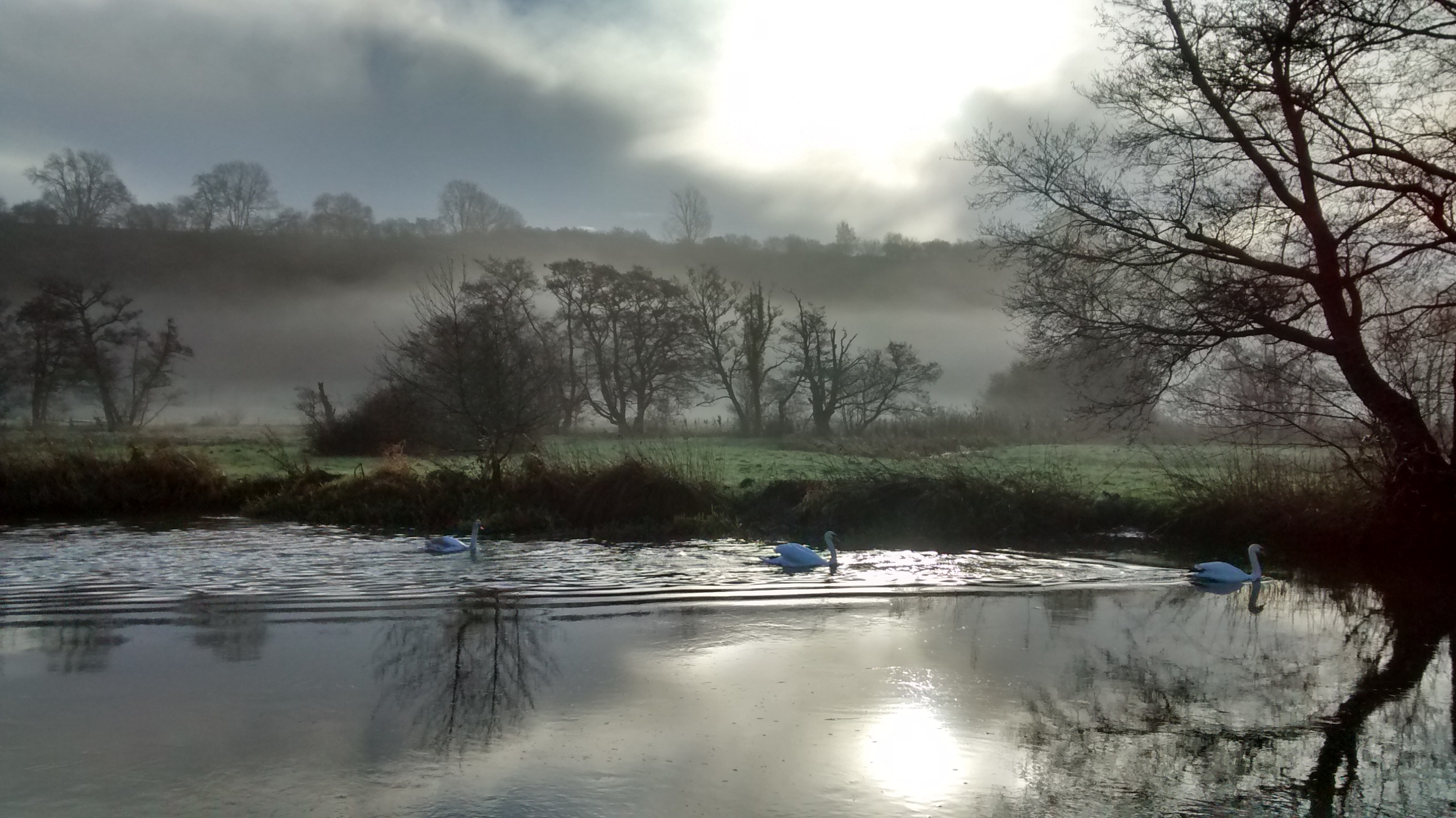
Today is a grey overcast day. It’s very quiet at home, with the sound of sporadic rain pattering against the glass and the ocasional breathy resonance of the windblown chimney. Not much is moving outside. Our feline neighbours are glimpsed darting across the garden and are gone -back home to curl up somewhere warm. Bulbs rest in the earth, their green spears nosing through when there’s a warmer day, but stopped when it’s cold and grey. Water is pooled on the meadows and lammas lands, with fleets of overwintering gulls, cormorants and the resident ducks and geese sailing in the shallow water. Twigs drip, tree trunks stained black with water. Their fat buds wait -for spring.
We are surrounded at the moment by stuff about renewal, reinvention, get fitter, get healthier and make resolutions. In the deep quiet of midwinter this increasongly feels out of step to me. Over recent years I’ve been paying more attention to the seasonal cycles and wondering how to align myself with them.
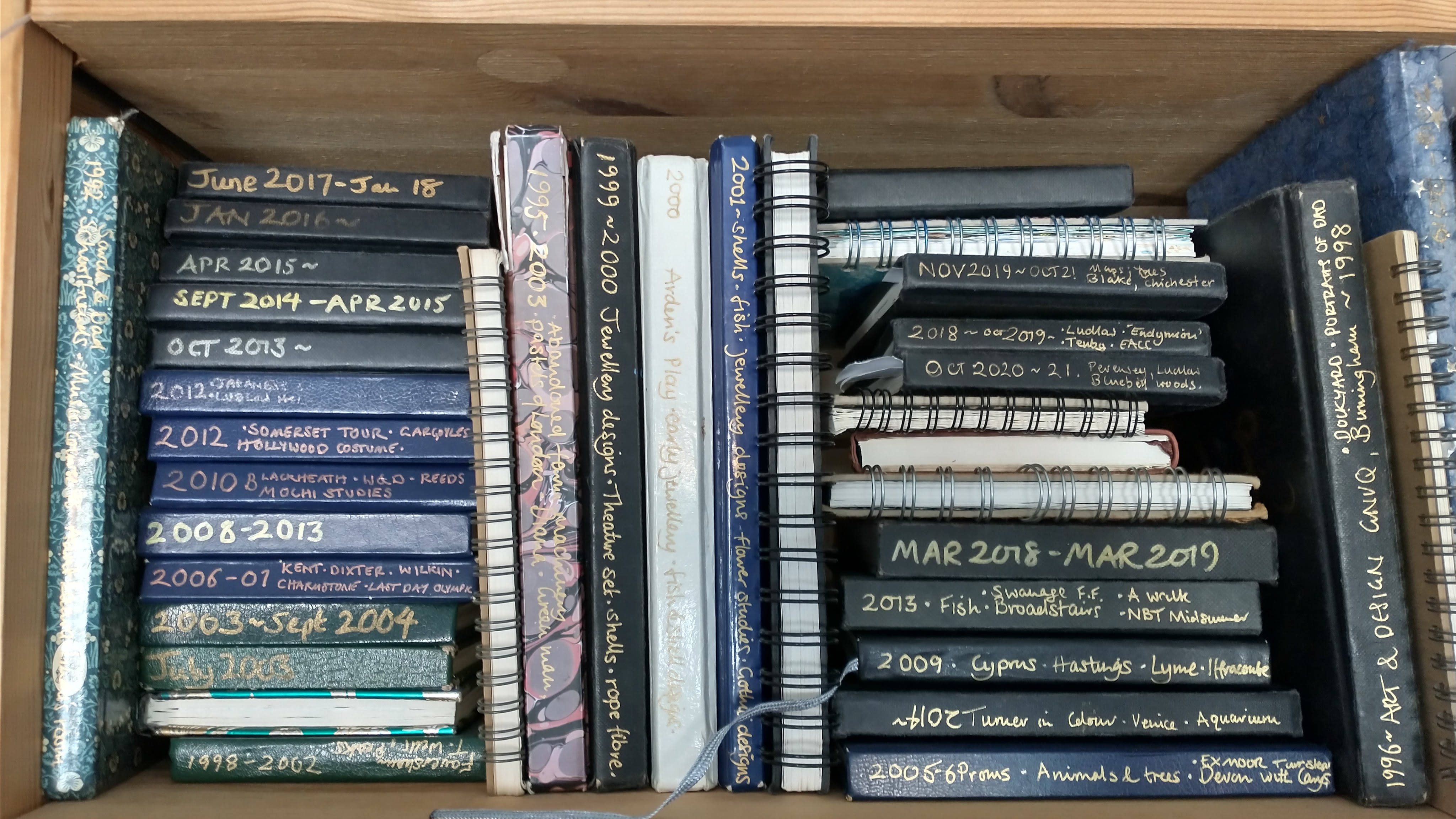
I effectively have two sorts of journalling: my sketchbooks which are very much drawn from and of the outside world, and written ones. There are lots more sketchbooks than written journals. The sketchbooks are on open shelves in my studio room, the journals are not. There are lots of drawings of places I’ve been, people I know (and sometimes people I don’t), some more detailed studies, rapid lines taken during a concert, studies made in museums, and sometimes written notes; it’s a place to record, remember and gather for future use. People look through my little sketchbooks sometimes but that’s ok because I don’t think they contain anything secret or controversial that I don’t want anyone to see. Most of the drawings were done in public anyway.
The journals are different. They are messy, written with no concern for spelling or grammar, not organised and sometimes illegible. These are not pretty journals; there’s no artwork or colour. Page after page of inky scrawl, which if you could unravel it, would be miles and miles of blue black thread which would probably go around the earth a few times. Often I write in a stream of consciousness which just goes wherever it needs to, and sometimes in more structured way around a question or a idea which has emerged. I write down reflections about my artwork: what I’ve tried and what I want to do next, which really helps me to pick it up again after a gap.
Sometimes I’m just dumping thoughts. I read them back later and that gives me some objectivity. It turns out that being able to do this for yourself has the added benefit of protecting your relationships from the strain of oversharing negative emotions (Kross, Chatter – The Voice in Our Head (and How to Harness It) p31, Vermillion 2022) without tiring the empathy of listeners.
I can then review it, giving myself the chance to consider it with some distance. Are there any negative assumptions underlying my reactions to something? Is there a different, more enabling way I could see it? What are the options for response, if any? Or do I need to just accept it?
Sometimes, on re-reading, I can find insights. if I repeatedly write about a problem, it flags up that there really is something I need to address. Coloured pencils come in for a bit of highlighting, things that pop out as important.
It’s also useful to write sometimes in a deliberate attempt to find the positive.What’s gone well today? what did I particularly enjoy, however small, or what am I grateful for? That can give me something to focus on when I wake up in the small hours ruminating.
Researchers are finding evidence of all these benefits in the practising of writing reflectively about one’s own experiences. It’s one of the practises being offered by Laura and myself on the Retreat Day we’re running next March. So if it’s new for you, give it a go and see how it changes things.
A few things to try:
setting a timer and writing in a stream for, say, 15 minutes.
writing down what you feel grateful for.
writing about an experience; who was there, what did you see, hear, smell, taste; what did you feel, what happened? Try writing it as if in the third person. Imagine you are observing yourself.
finding some affirmations and writing them down. This is very literally telling yourself that you’re worthy, deserving of love and affection, are capable, have talents – whatever it is that you need to hear to feel more safe, secure and supported, especially in areas where you feel vulnerable.
look up some journalling prompts. Specfic questions like: what behaviours do I want to grow? what do I want to stop doing? What new thing would I like to try? Who gives me support?
Research also shows that the benefit are felt over time, and that you don’t have to write every day to feel them. The important thing is to choose a way that suits you, and keep it private.



 Caroline Homfray