Reasons to Draw.

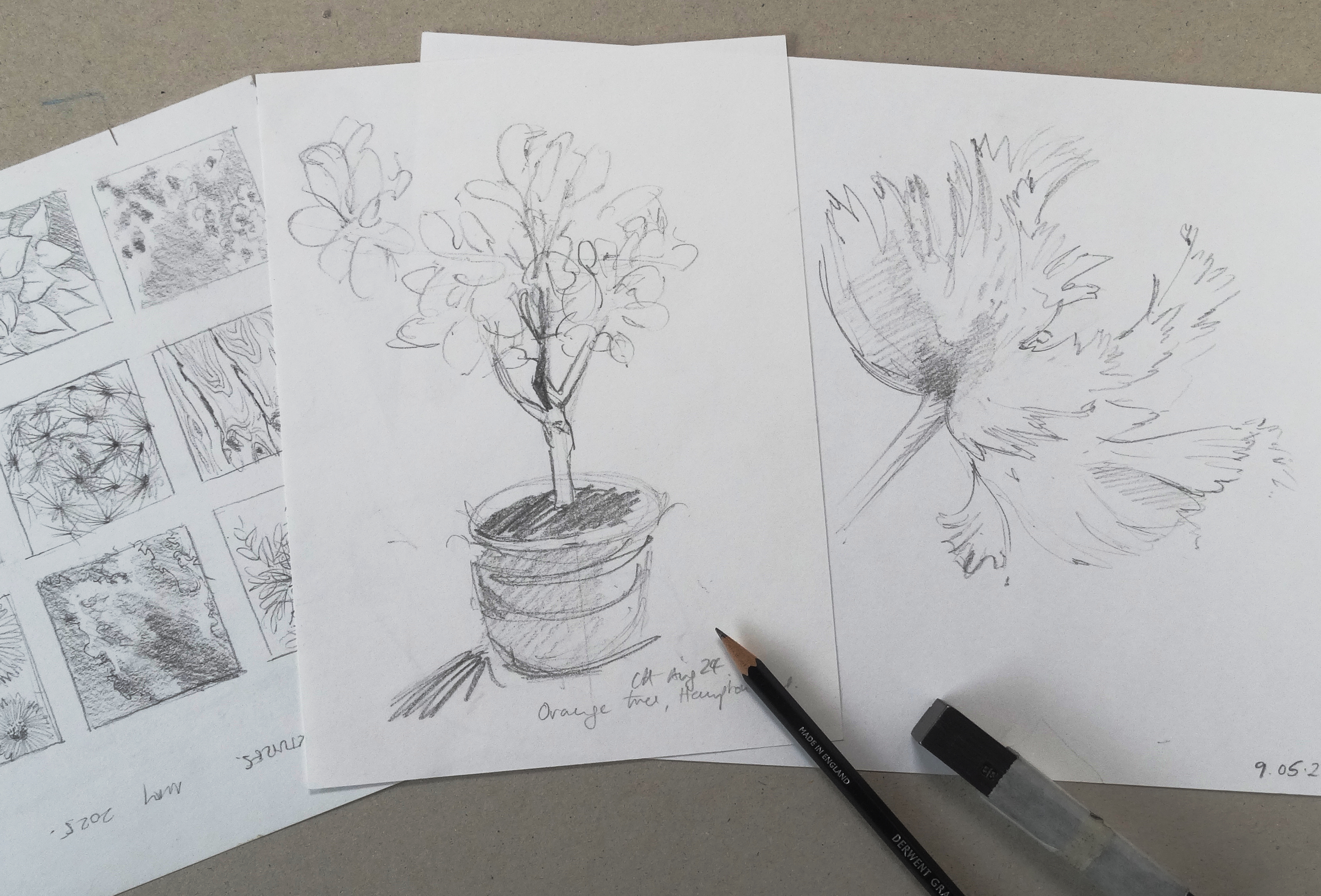
Drawing textures and outlines to capture the essence of things.

I’m about to start teaching again, and as I prepare for classes I’ve been pondering the reasons for drawing. This year I have taught drawing to both embroiderers and art groups, online, in webinars, visiting groups in person, and on location. As my teaching practice diversifies, I’ve also spent much time thinking and writing about drawing.

For the last nine years I’ve taught art and design for a very functional reason: as a tool for people wanting to produce their own designs for embroidery. There’s no doubt that whatever visual creative endeavour you’re engaged in, being able to draw it out really helps to work out what to do. Draw it out of your thoughts, bring it into being and adjust and play with it, and work out what it could be like with just a pencil and the back of an envelope or any other bit of paper to hand when an idea needs to be captured.(Here’s one of my favourite back-of-the-envelope workings out: the artist Holman Hunt’s sketch for his painting ‘The Light of the World’, in the collection of the Ashmolean museum, Oxford). This is using drawing as a tool, like writing can be, useful for working things out before deciding on a greater commitment of time, resources and effort.

However, if you can release the desire for an outcome, the process itself can become very engaging. As I carry my little sketchbook around (which sometimes I draw in and sometimes I don’t) I look at what’s around me in the moment and what I might want to note down. Looking back through these little books, many only the size of a postcard, I find architectural details drawing with care, a rapid sketch of someone in movement, observations of clouds, colour notes. These aren’t made for any particular purpose, but arise from curiosity about the world and how the energy of it or the essence could be captured.

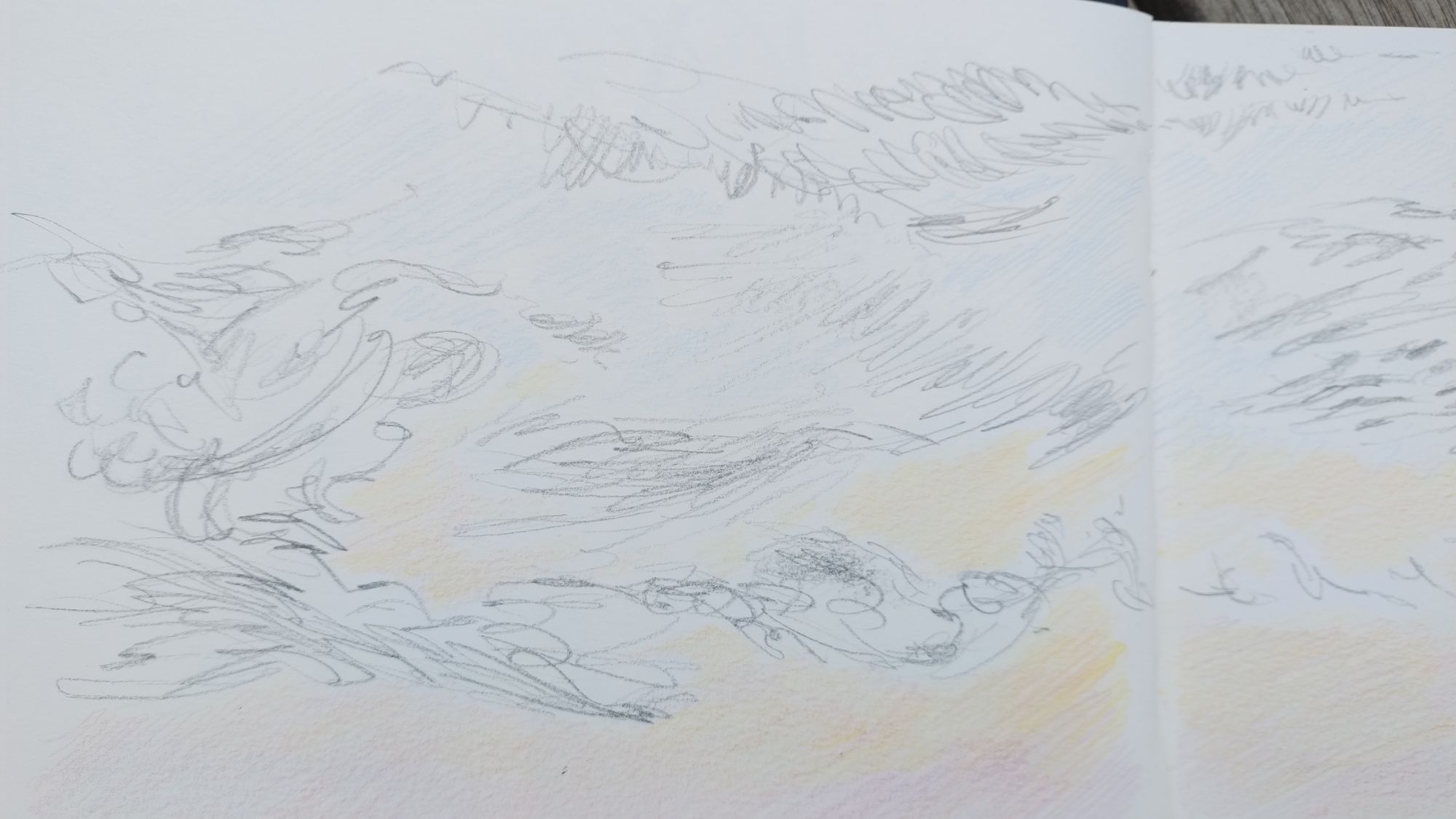
On a recent trip away from home, with some time and space, I spent the evening looking at the sky and wondering how the clouds could be captured with lines. The sky was wide, the landscape flat, and the shape of the cloud system could be seen swirling around the changes of atmospheric pressures.
img_20260922_09350317028517373046366267136.

‘The world is a more beautiful place now’. ‘I’m seeing things in a different way’. ‘I’m noticing things more’. These are some of the comments I’ve most treasured from my students, as they’ve learned to draw; to look for shapes and spaces, play with lines and textures and find ways to express what matters to them.

For me that’s the key thing. Here are the tools, the materials, the methods; take them and find out what you want to do with them. Drawing is a language, and if you allow it, in a spirit of excitement and exploration, delightful and surprising things can emerge.

Whatever your motivation for wanting to draw, come and join me this Autumn.

Drawing for Beginners, starting on Wednesday 7th October.

Thursday Drop-in Drawing, starts 24th September.

Develop Your Watercolour Skills, starts 4th November
On Finding Inspiration In A Place

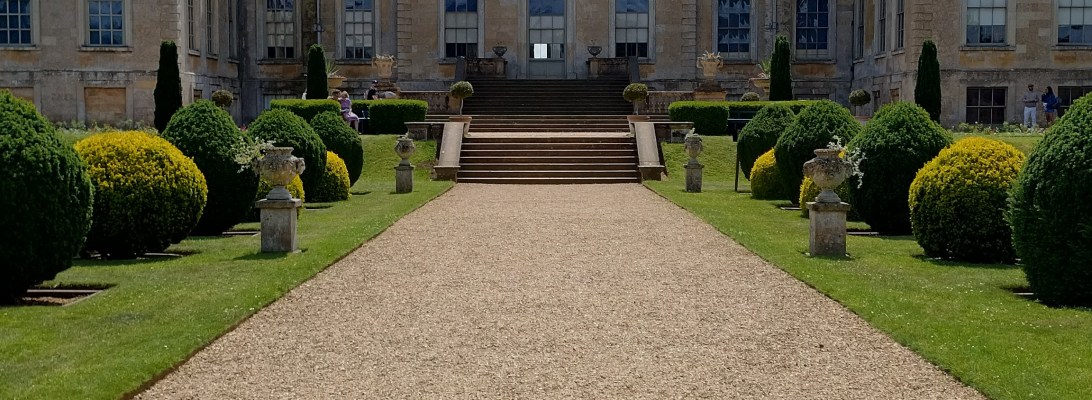
A new place can be a fresh inspiration in art. It’s easier to see what’s really there and feel curious and interested in a scene which you’ve never seen before – there’ll be fewer existing assumptions or pre-conceived ideas about it. You can enjoy that child-like experience of exploring and discovering, and it’s also an opportunity to find out what you’re interested in, so that you can consciously pay more attention to that.

How to find out what interests you? Start by wandering, and absorb. Let yourself relax, let what’s there flood in without judgment. Be curious and playful and notice where you want to look more closely.

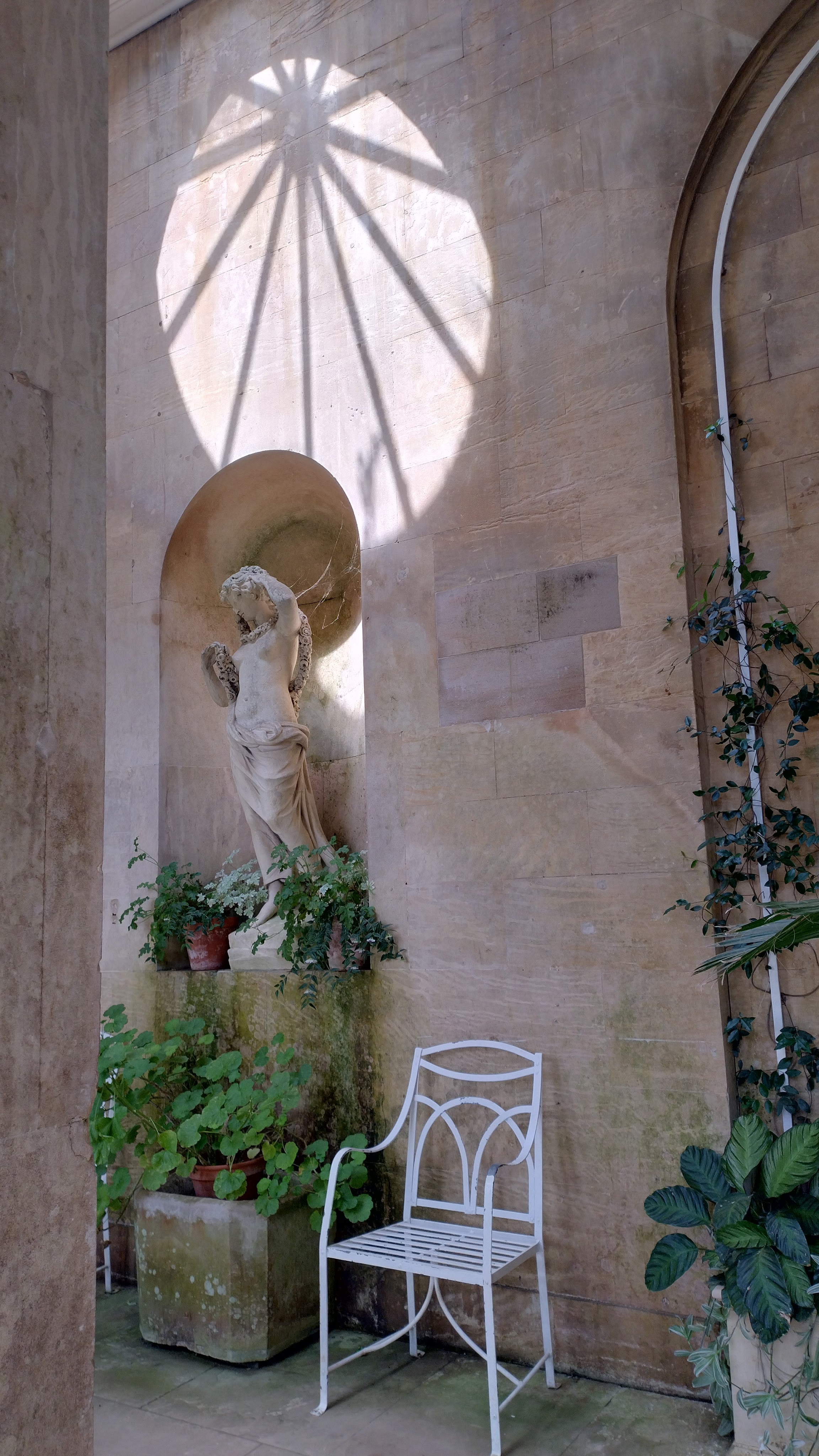
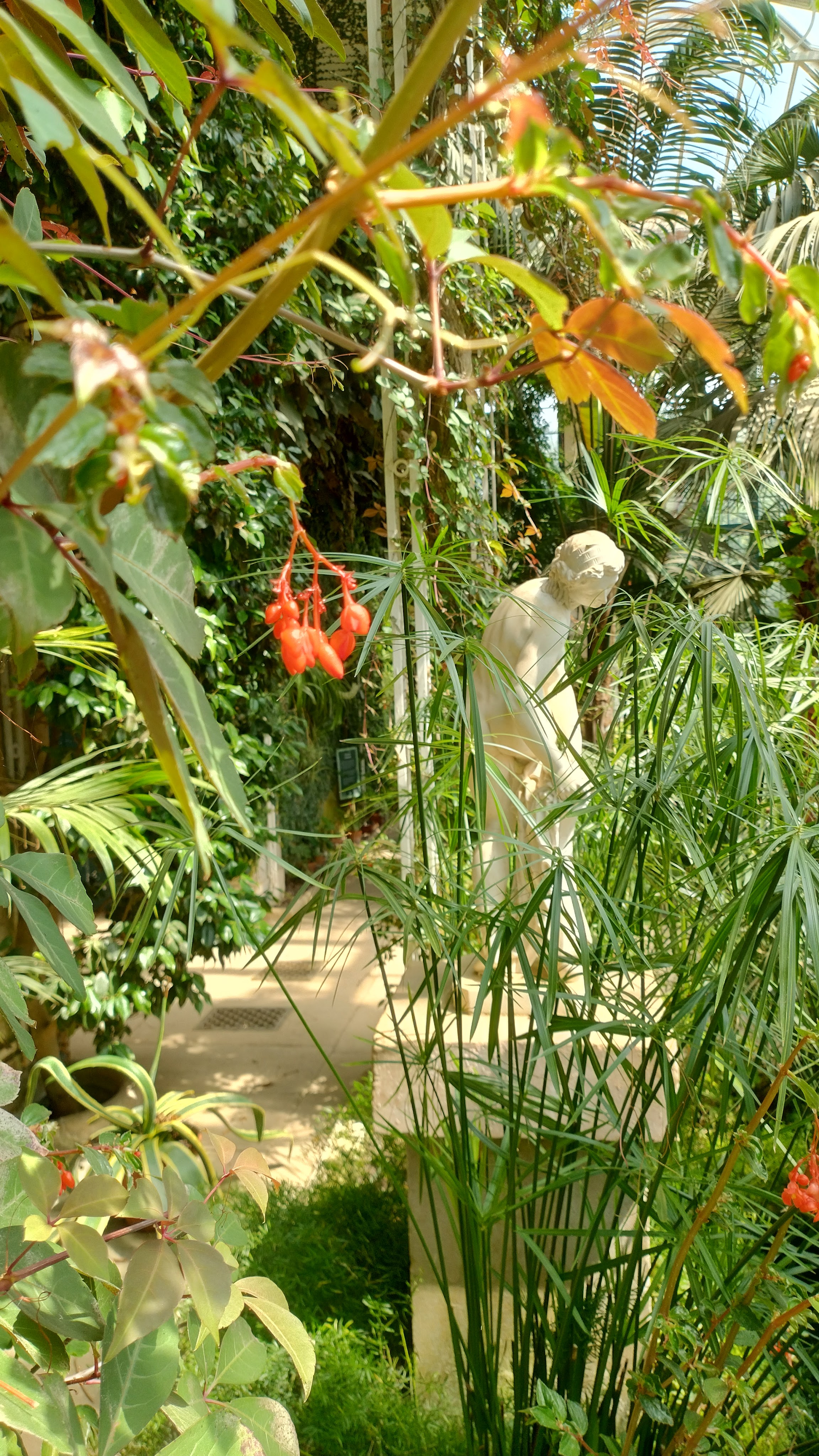
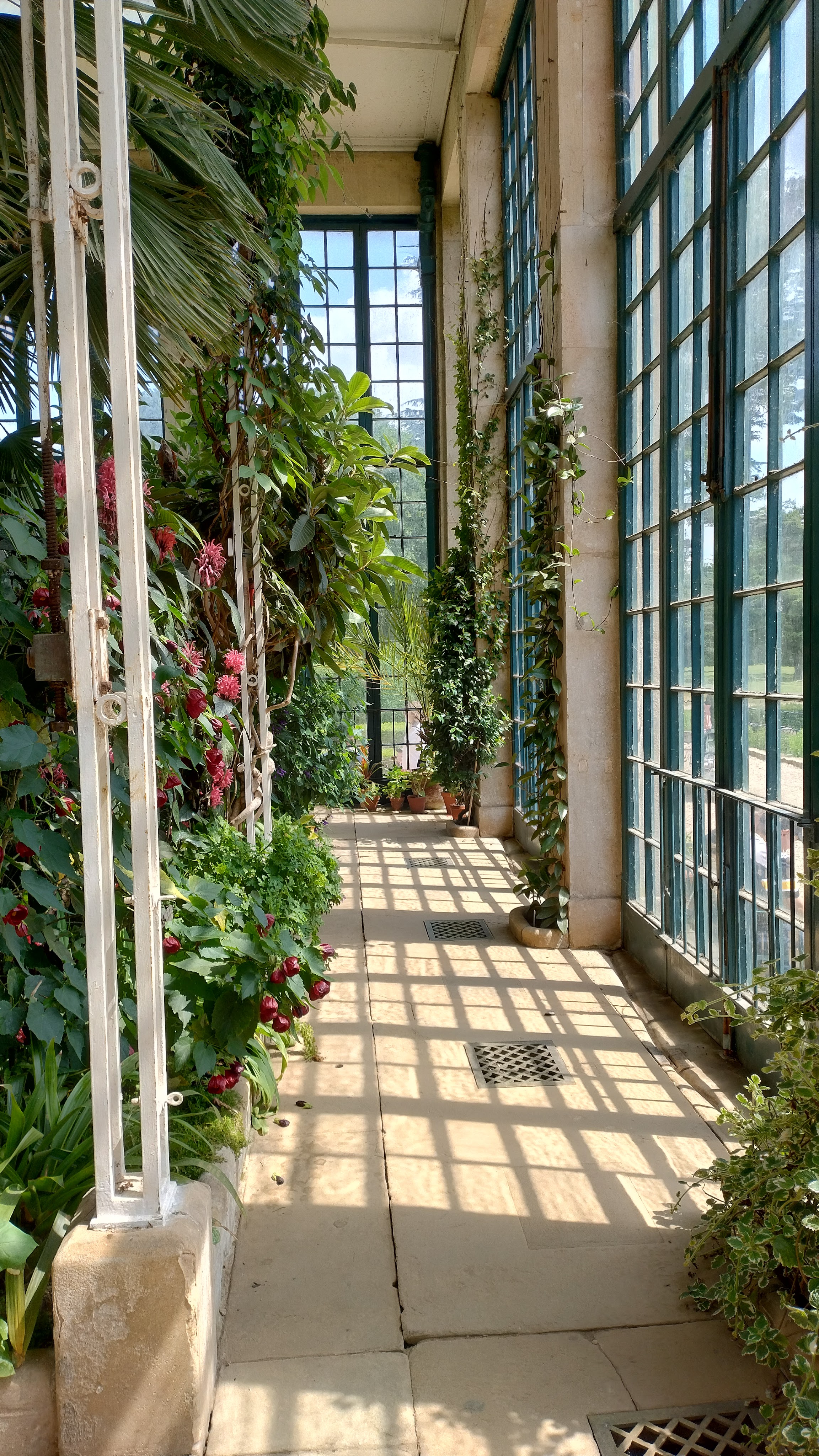
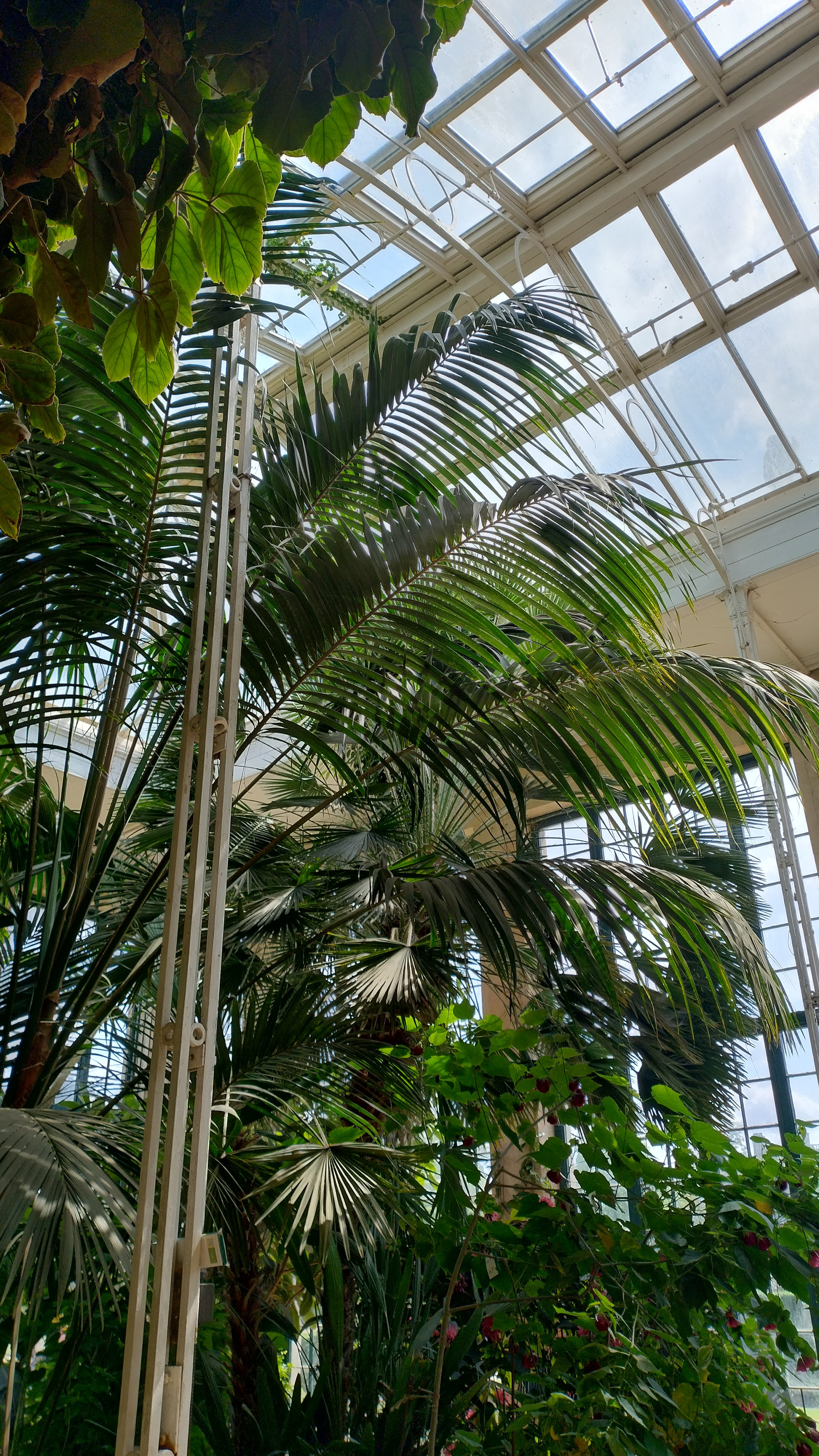
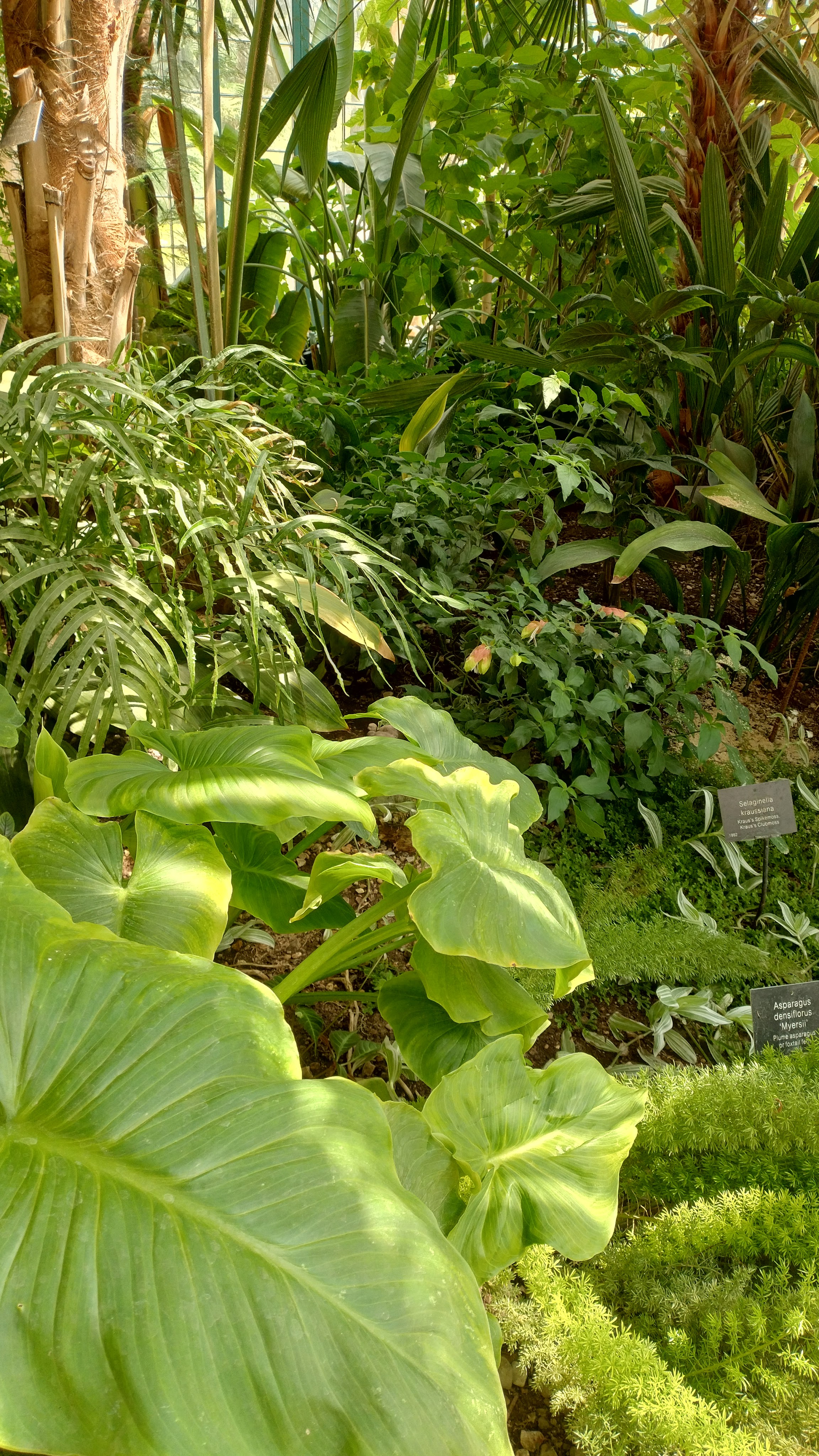
Wandering around the gardens at Belton, I found interesting contrasts and effects of light, patterns of foliage, shadows, different shapes, colours and strange things. The iron architecture of the conservatory gives structure to the green lushness and contrasts of the planting within. Windows give a frames work and let in light creating patterns on the walls and floor. It’s a sheltered indoor contained world of rare things, full of interest fro tiny details to how all the parts relate.

We will be playing with this process of drawing inspiration on the in-person drawing weekend I’m running in July. This year it’s located at Belton estate in Grantham, Lincolnshire. We’ll be based in the spacious and quiet venue of the old School in Belton village, and have access to the grounds and house of the estate.

Particpants in previous years have valued the time, space and supportive atmosphere of this yearly drawing event. It’s flexible so that your csan pursue your own interests throught eh weekend, but we will start together and you can get guideance on your develop through the weekend. There are opportunities to socialise as well.

To find out more, and register your interest, follow the link below.

A summer of Art

Teaching, Jousting, eating and drinking, drawing…

It’s been a busy few months; I’ve run two drawing summer schools this year, of very different sorts, and met some diverse and interesting people in each setting. One was more informal, the other more structured, but both about developing confidence and allowing people to grow their belief in themselves and their own creativity. I feel so lucky to spend time with my students, and their questions and conversations really stimulate and inspire my own thinking about art.

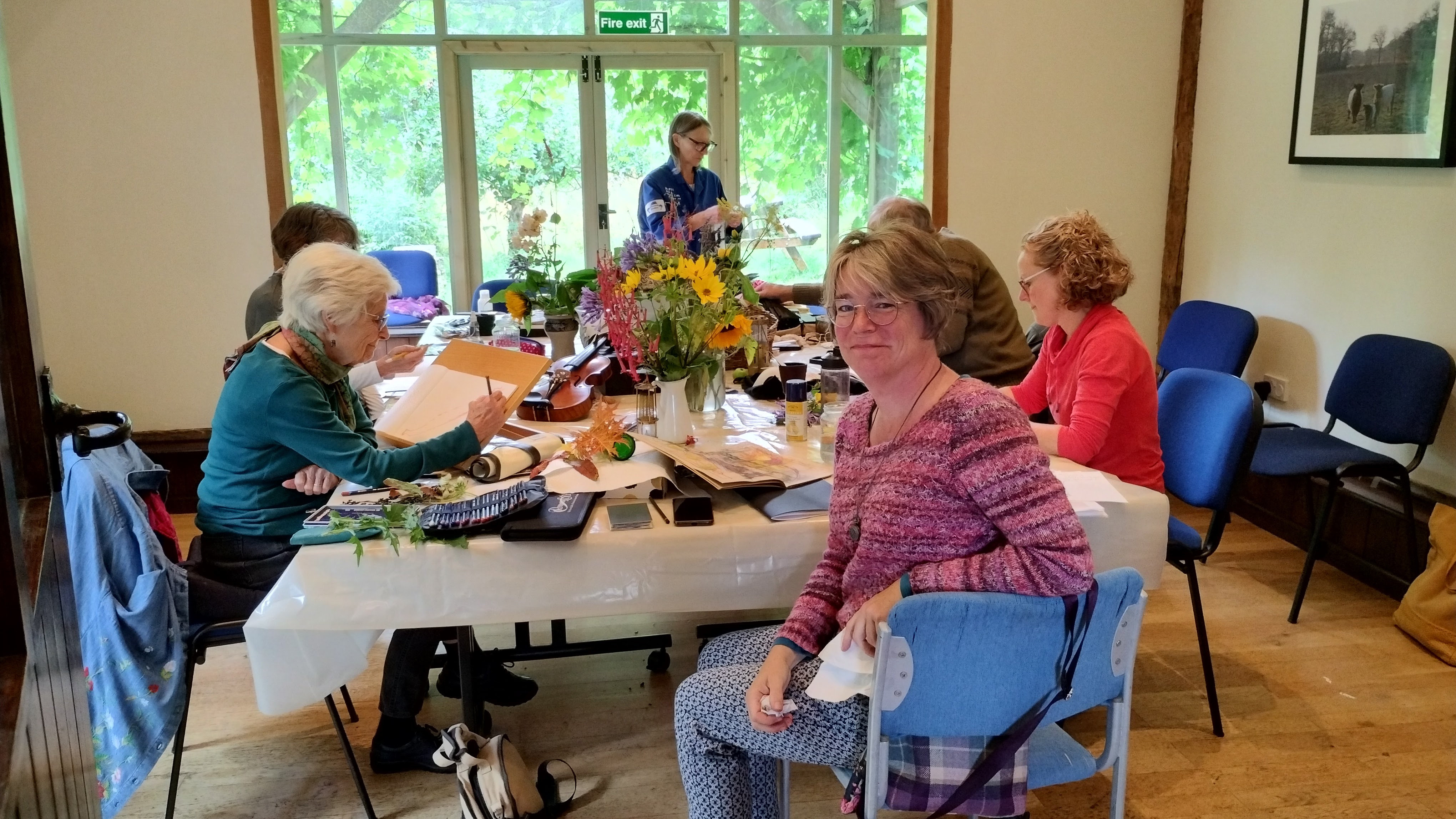
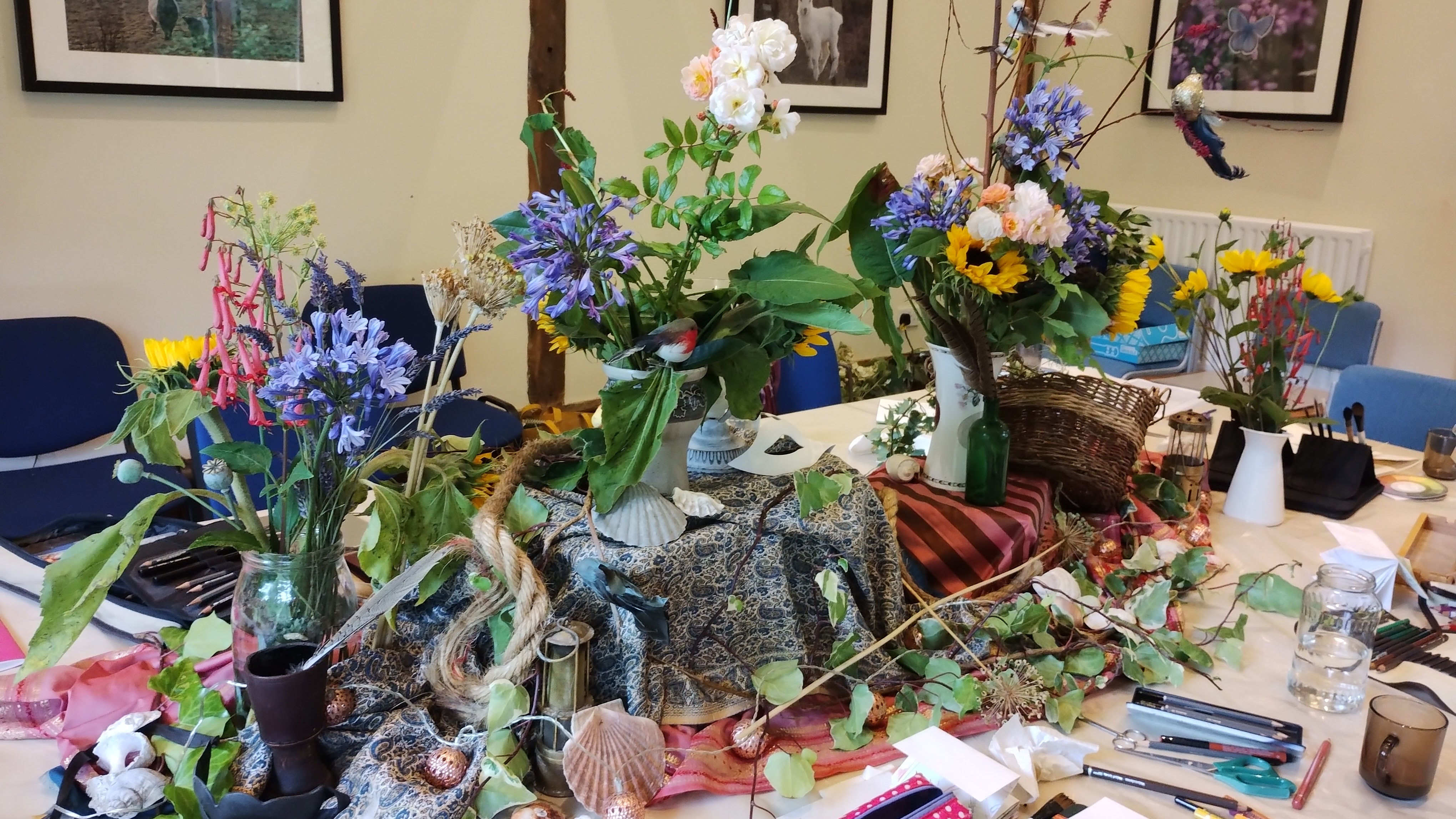
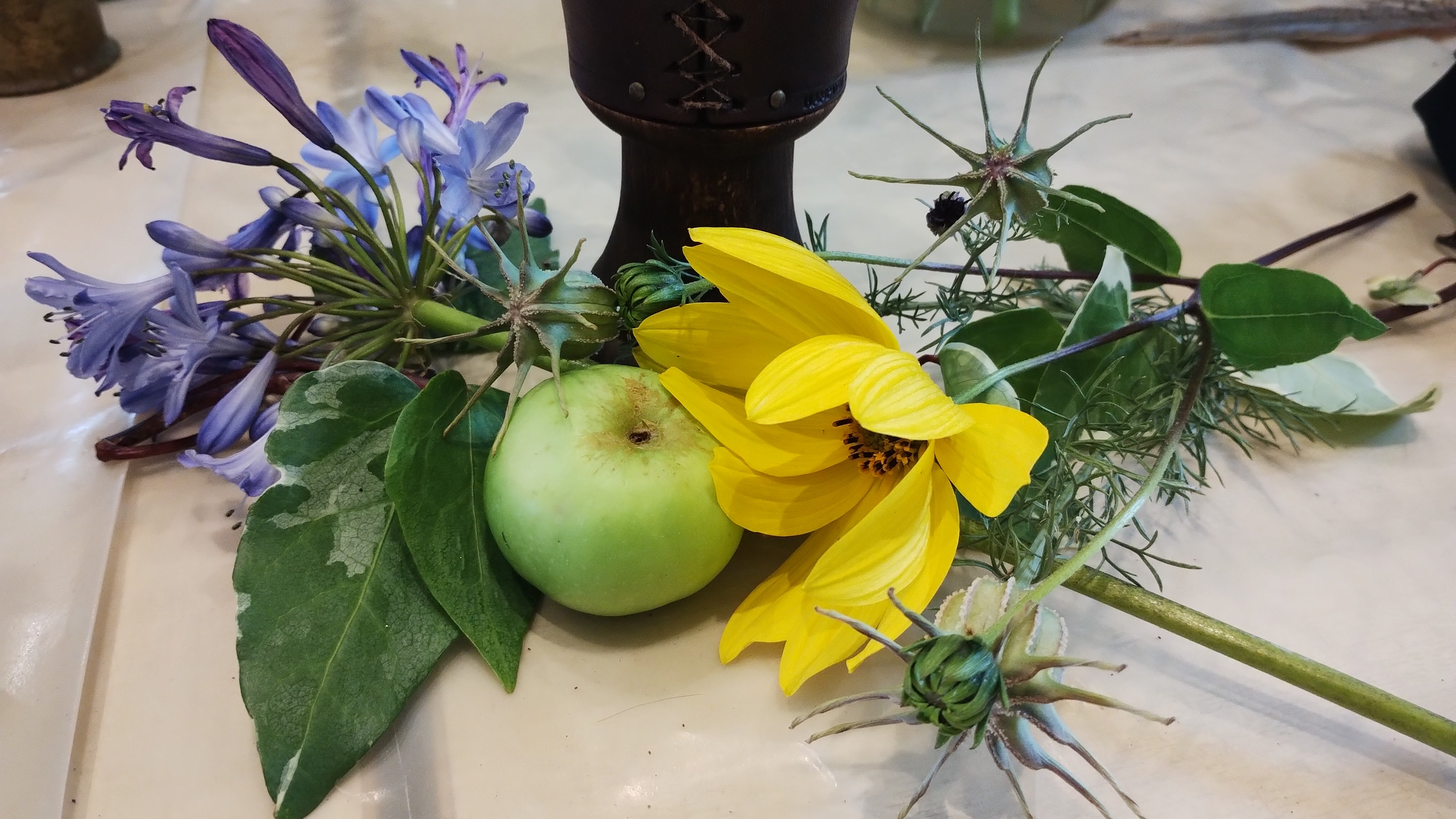
For the third year running, in July I hosted a small group in the lovely surroundings of Pucks Oak Barn in Compton, Surrey. It’s a beautiful green space surrounded by a woolly and wild community orchard, buzzing with insects and all sorts of plants; the weather was kind enough to allow us outside on Sunday, where particpants collected also sorts of interesting things from sensations to seedpods.

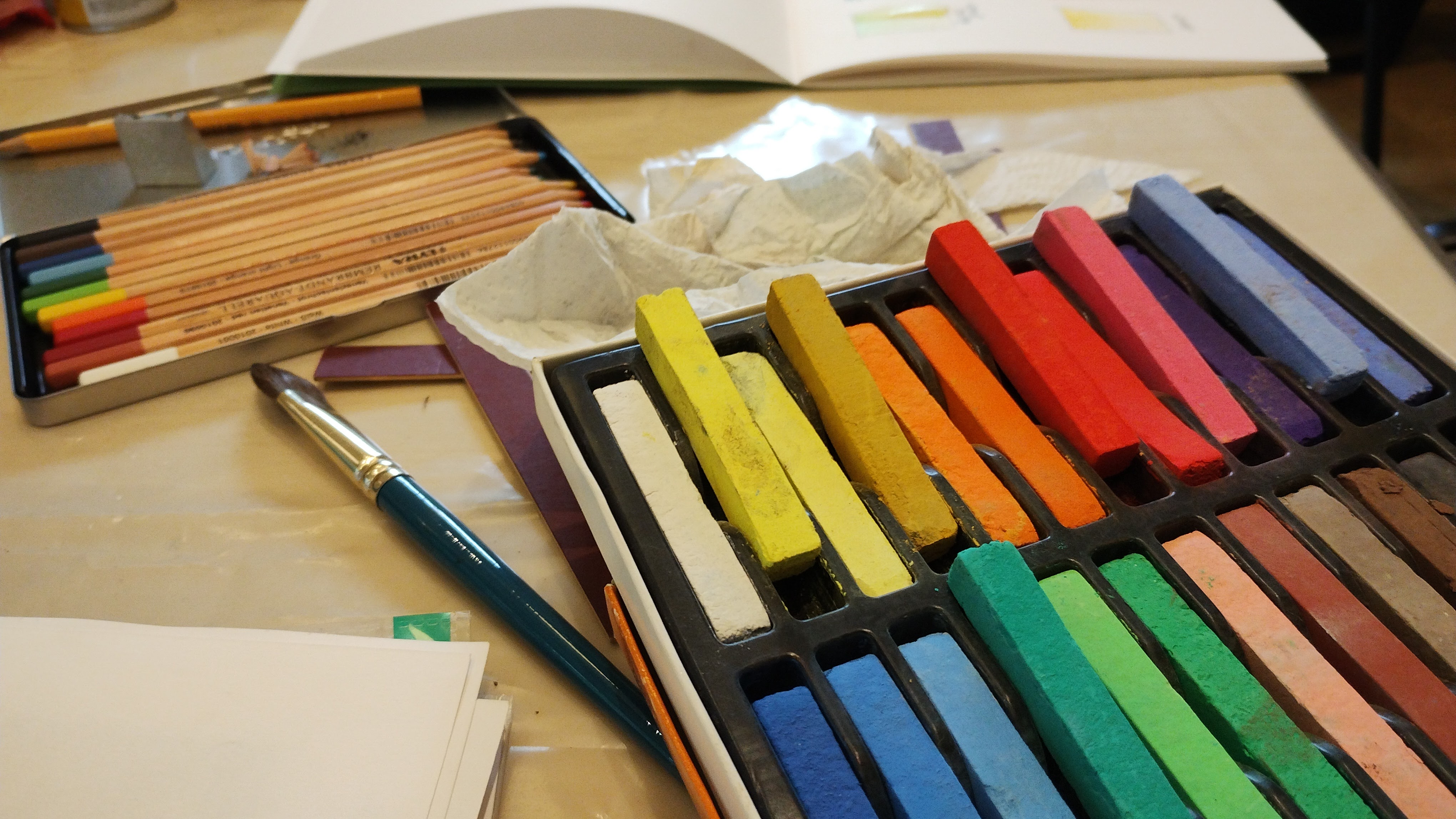
The focus was on creating space for each participant’s own practice, whatever they might need at this point – and we had a diverse group with varying levels of experience and wishes for what each wanted from the time. With such a small group I could work with each person and give individual guidance, so each could follow their path – and we had quite different results from the weekend: small folded books made of drawings, a giant collaged painting, colour charts and collaged concertina books.

It was a very relaxed time with lots of permission and encouragement to do whatever one felt like doing, including rest and chat!

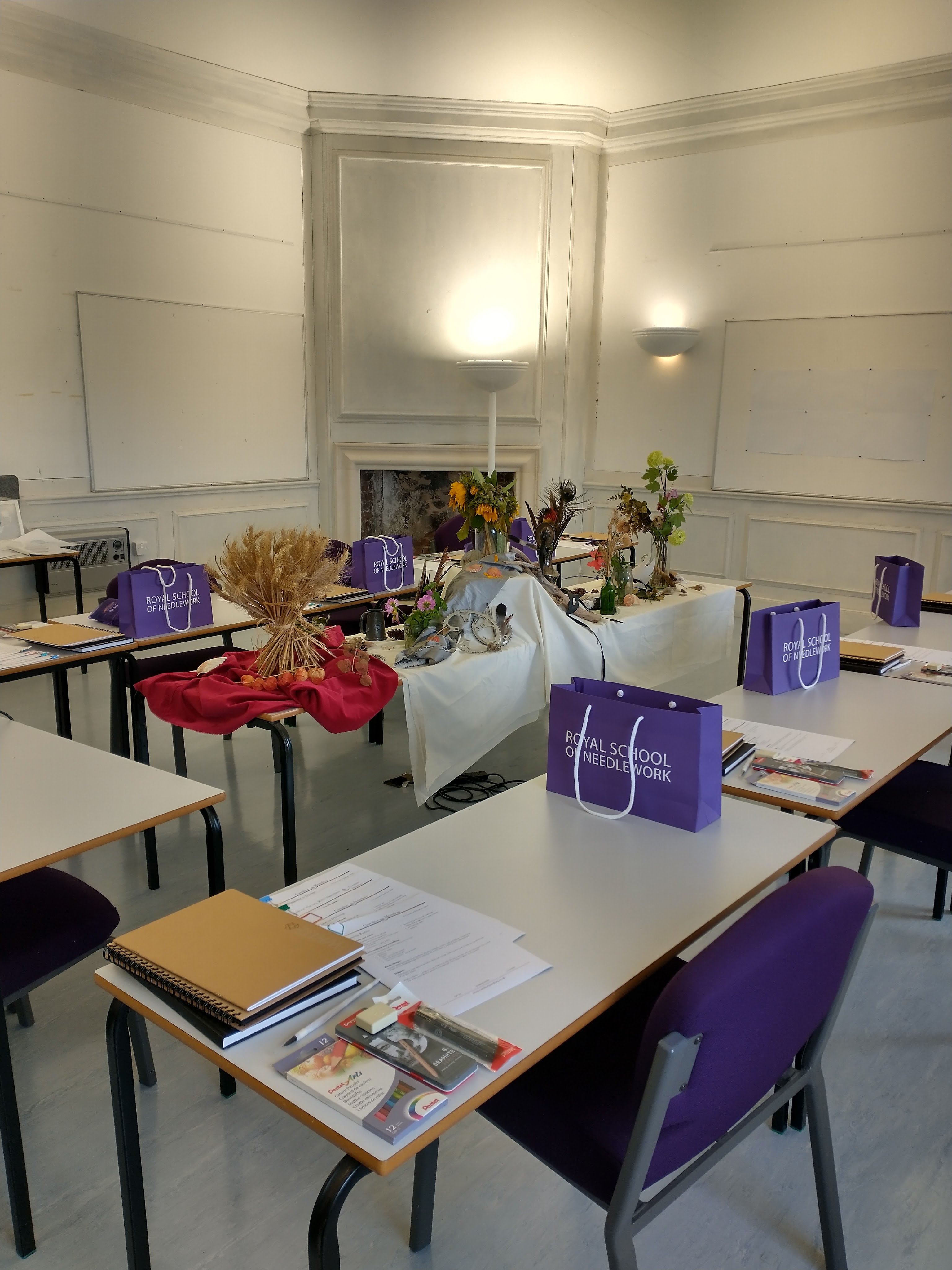
For the first time this year I participated in the Royal School of Needlework’s International Summer School, the first to feature an art class. It was also my first time taching this back on site at Hampton Court since March 2020. A week later that year the country was locked down; the last session of that course was delivered on Zoom, and was the pioneer for live online classes for the RSN.

The classroom was beautifully prepared by Noleen, Education Manager, and I was very ably assisted by RSN graduate Future Tutor Sonia Lee. We had an intense week with eight students, looking at drawing principles from the beginning with lots to learn and lots of experimental processes amongst the more traditional artistic principles and processes. People are often surprised to discover that there are learnable structures and principles behind art, it’s not a magic process which you can do or not.

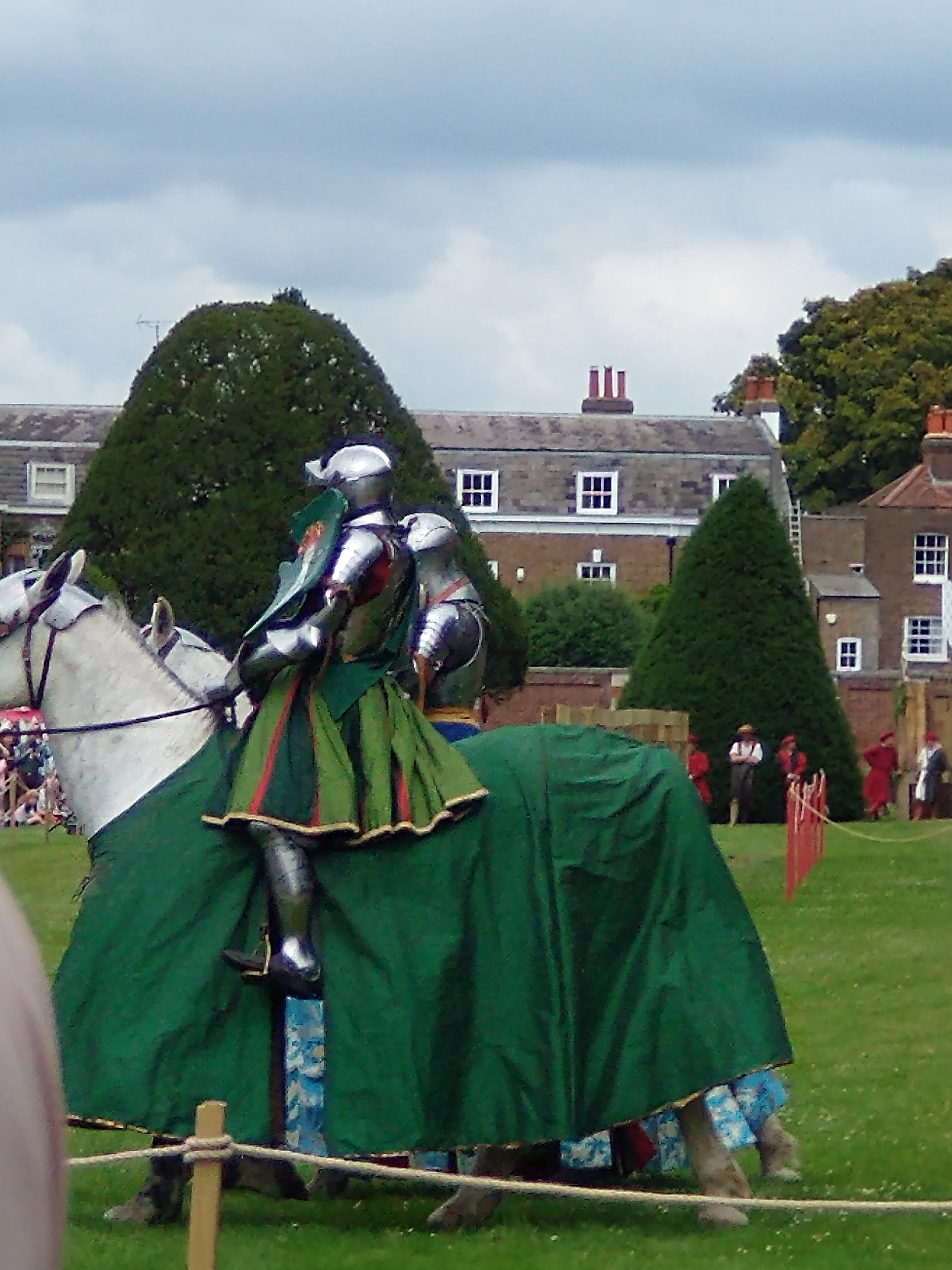
There’s always a lot going on at Hampton Court in the summer, with costumed intpreters and re-enactors doing their stuff in the kitchens, walking about the palace and jousting in the grounds. RSN staff and students had a special trip to Buckingham Palace to see the Coronation exhibition and the robes and screen on which RSN staff and students had worked. It was in all a super busy week with lots to learn, lots of complicated travelling arrangements and much to see and digest.

For me what tied both quite different teaching experiences together was the goal of enabling confidence and excitement for the students. I aim always to give encouragement to see more clearly, to experiment and to play, and permission, to follow wherever curiosity might lead, and believe in one’s own inner creative voice.

My greatest reward is when someone says: ‘I realise I can just do whatever I want with my art and try things, it doesn’t matter’. When they say ‘I believe now I can draw’. When they say ‘I see new things I didn’t notice before’.

Upcoming classes:

RSN: The online drawing course is running twice through the autumn, timed for UK and American students. https://royal-needlework.org.uk/courses/day-classes/

Thursday evenings Live Online drop in Class starts again on 14th September.

A new course Exploring Watercolour will be offered in January 2024, Tuesday evenings starting on 10th, 7-9pm UK time. Booking information to come.