
How to take the skills you’ve learned on a small scale into the outdoors.
Go on a small local expedition first.
A Simple Kit. Take familiar materials which are convenient and easily portable. What are you most comfortable with? Perhaps just starting with a 2B pencil and small sketchbook is easiest – you can fit thos into a pocket. A little case of select coloured pencils? You can work with 12 and make most colours. Take a camera too, if you like to record information that way. It’s especially useful for things which are transient or in motion and are hard to capture without that magic of being able to freeze them in a photo.
Clothing. Wear clothes and shoes or boots in which you will be comfortable, and will protect you from whatever elements are at play – whether it’s sun, wind, or even rain. Remember if you are standing for any length of time without moving, you will cool off, so might need another layer, thicker socks, a hat. How are you going to access your materials? A small bag or a pocket might be enough. Decide if you are happy standing or sitting on the ground; you could take a small stool, or something waterproof to sit on (I often sit on my waterproof trousers, or a carrier bag, on the ground).
Optional: portable cup of tea. I always take one! Some water is a good idea, especially in hot conditions. When drawing one can forget the passage of time and ‘come to’ feeling hungry and thirsty.
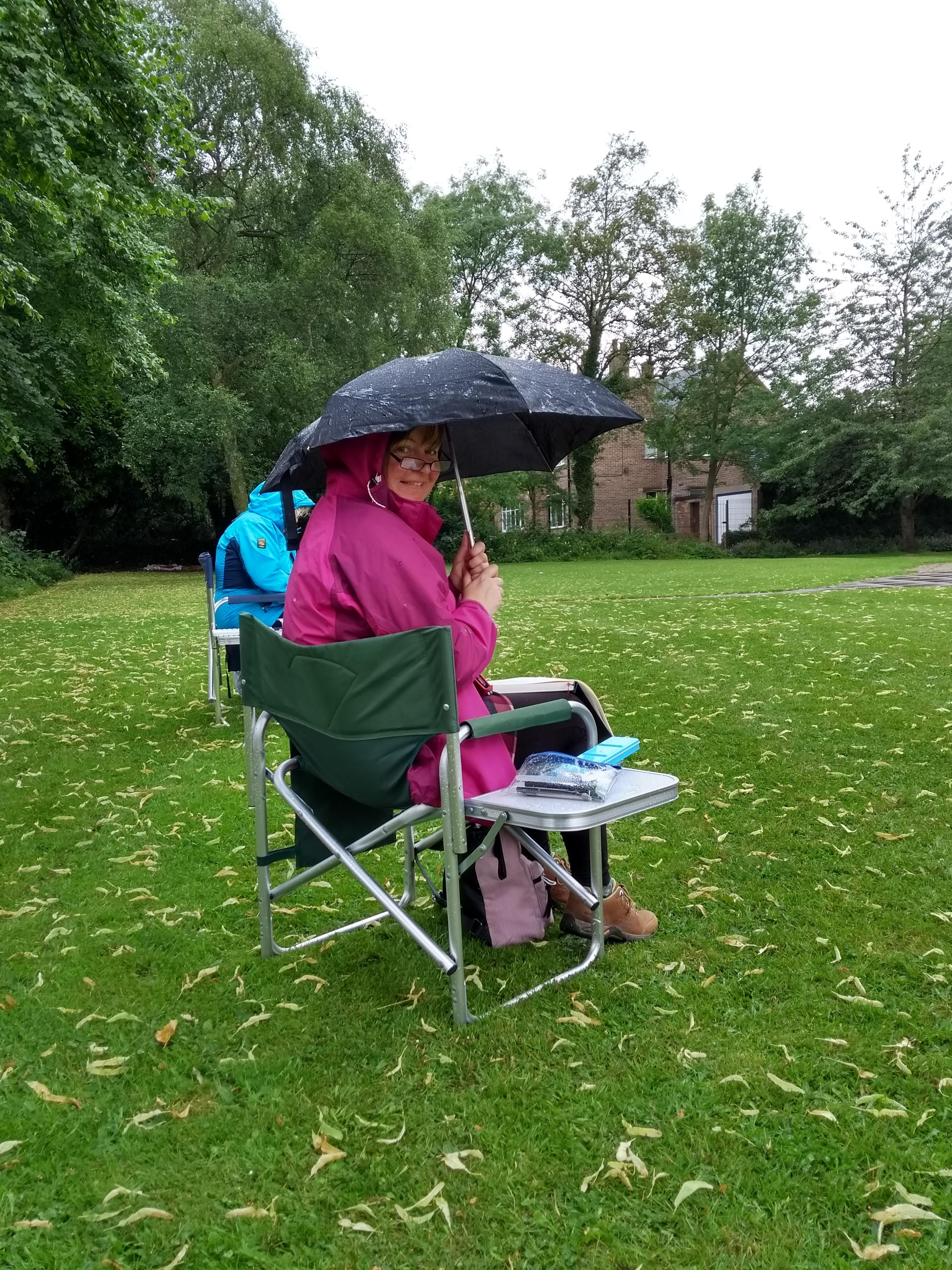
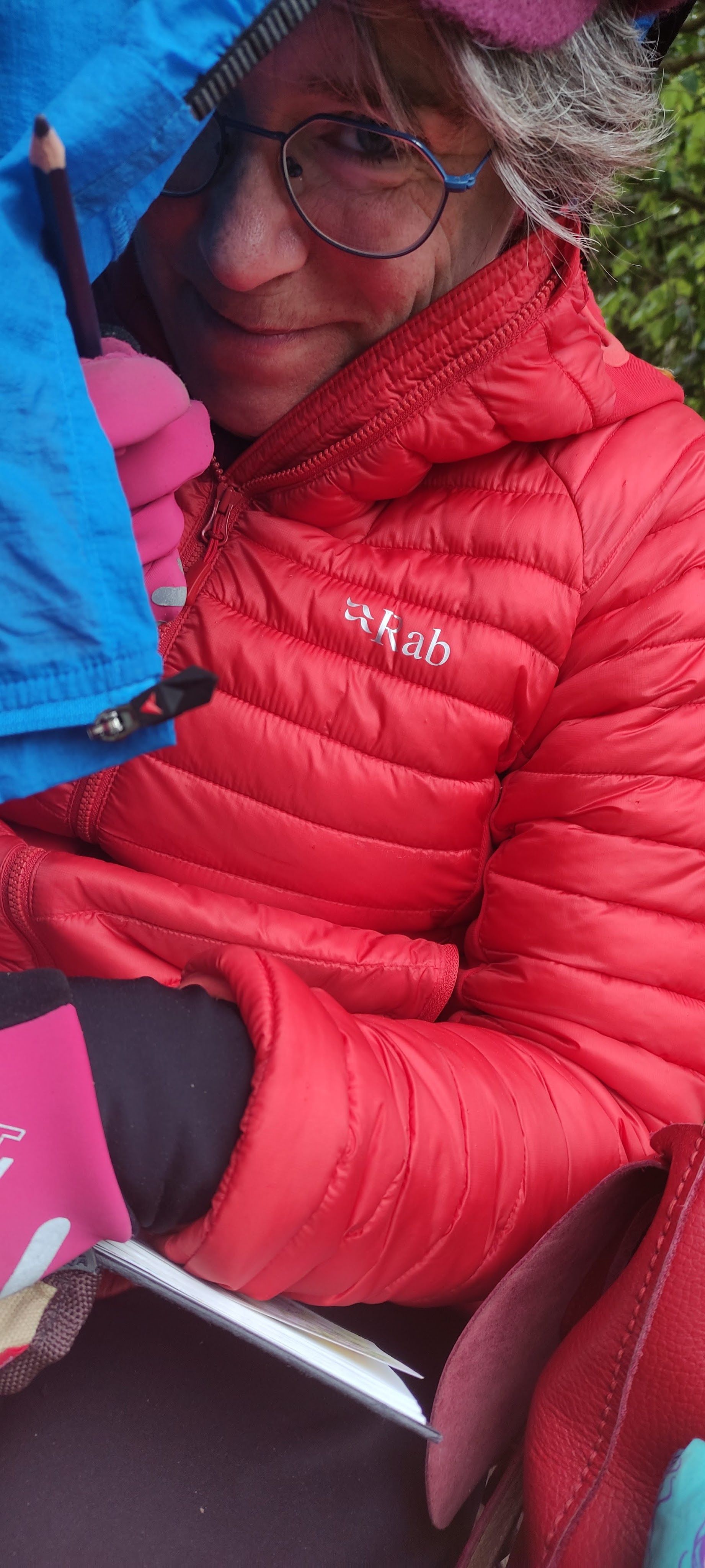

Start walking. Amble, in a non-purposeful, easy way. You want to feel unpressured and be able to pay attention to what’s around you. One way to do this is to pay attention to your senses – not just sight, but scents, and sounds; the feel of the ground, the smell of the earth, the noise made by your footfall, and any sounds you can hear, whether wildlife or man-made. These can help you get into the ‘right mode’ way of being, which is optimal for creativity (see Betty Edwards, Drawing on the Right Side of the Brain, for more about that).
Look and See. What catches your attention? Here are some things which caught my eye three different local outings recently, two in gardens, one on the river Wey.
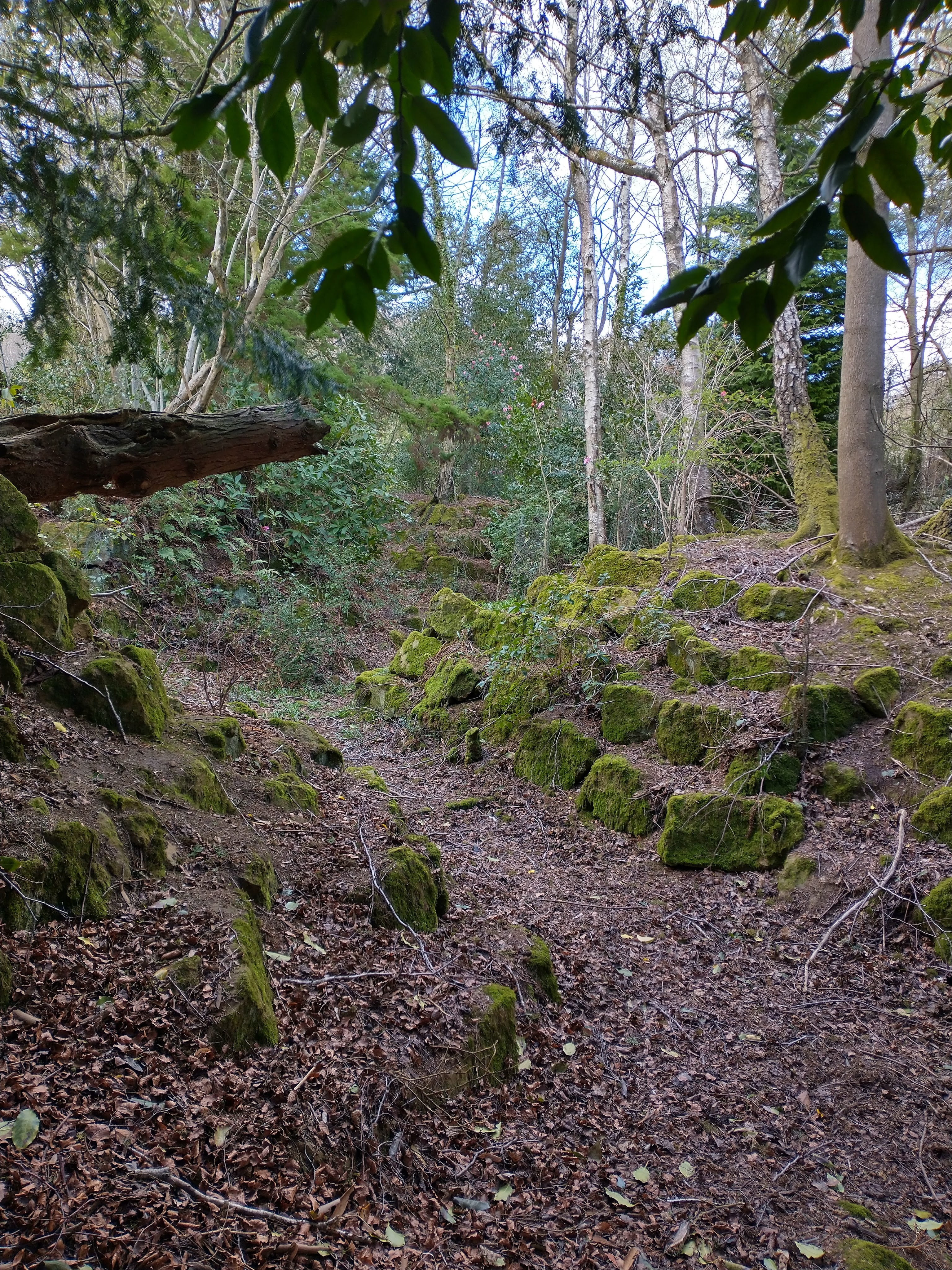
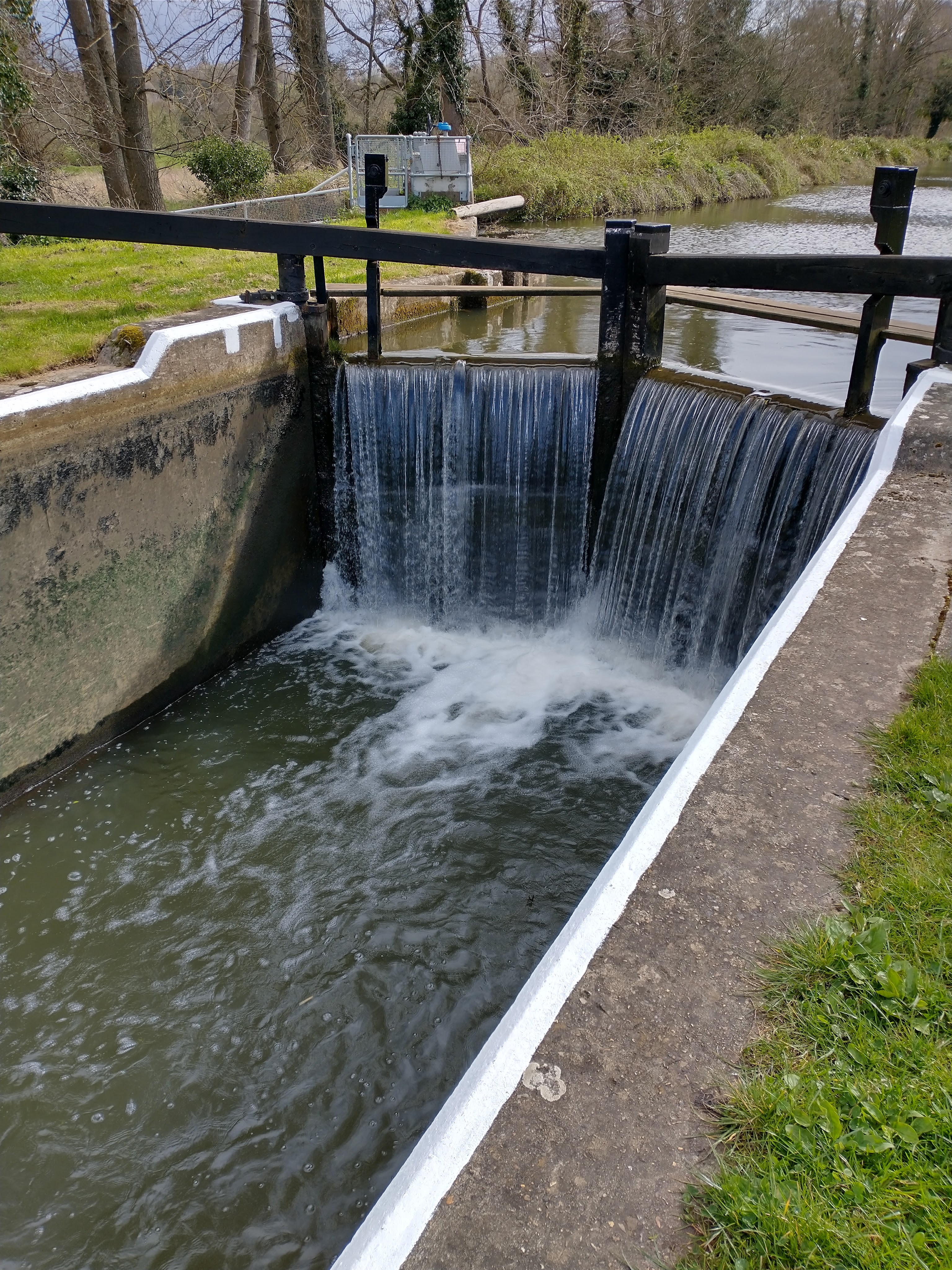
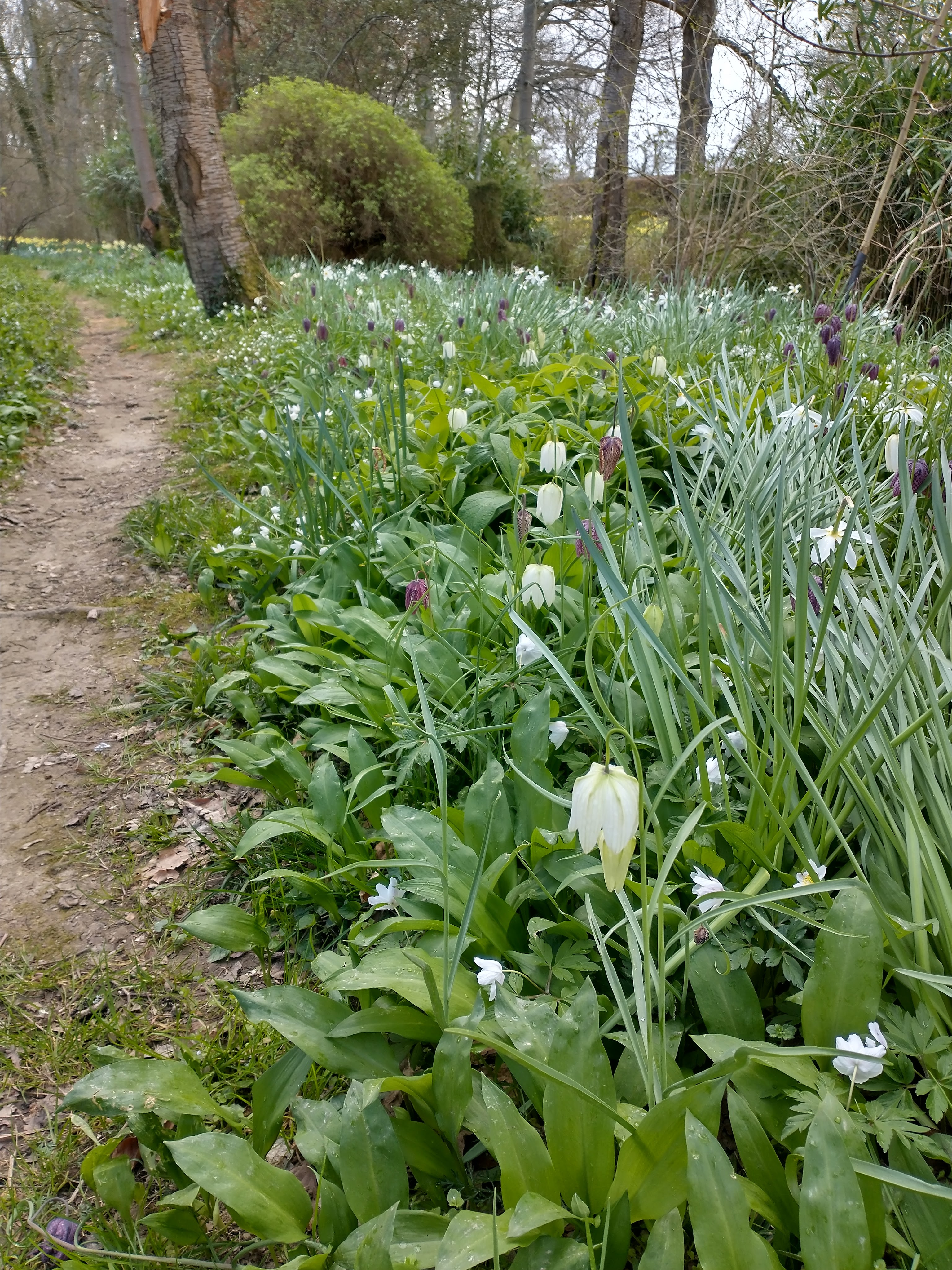
The subtle colours of the mossy rocks, and their shapes, against the leaf mould; the strong lines of the lock sides gates and the water pouring over the gates; the texture of the delicate spring flowers and the path receding away to …who knows where?
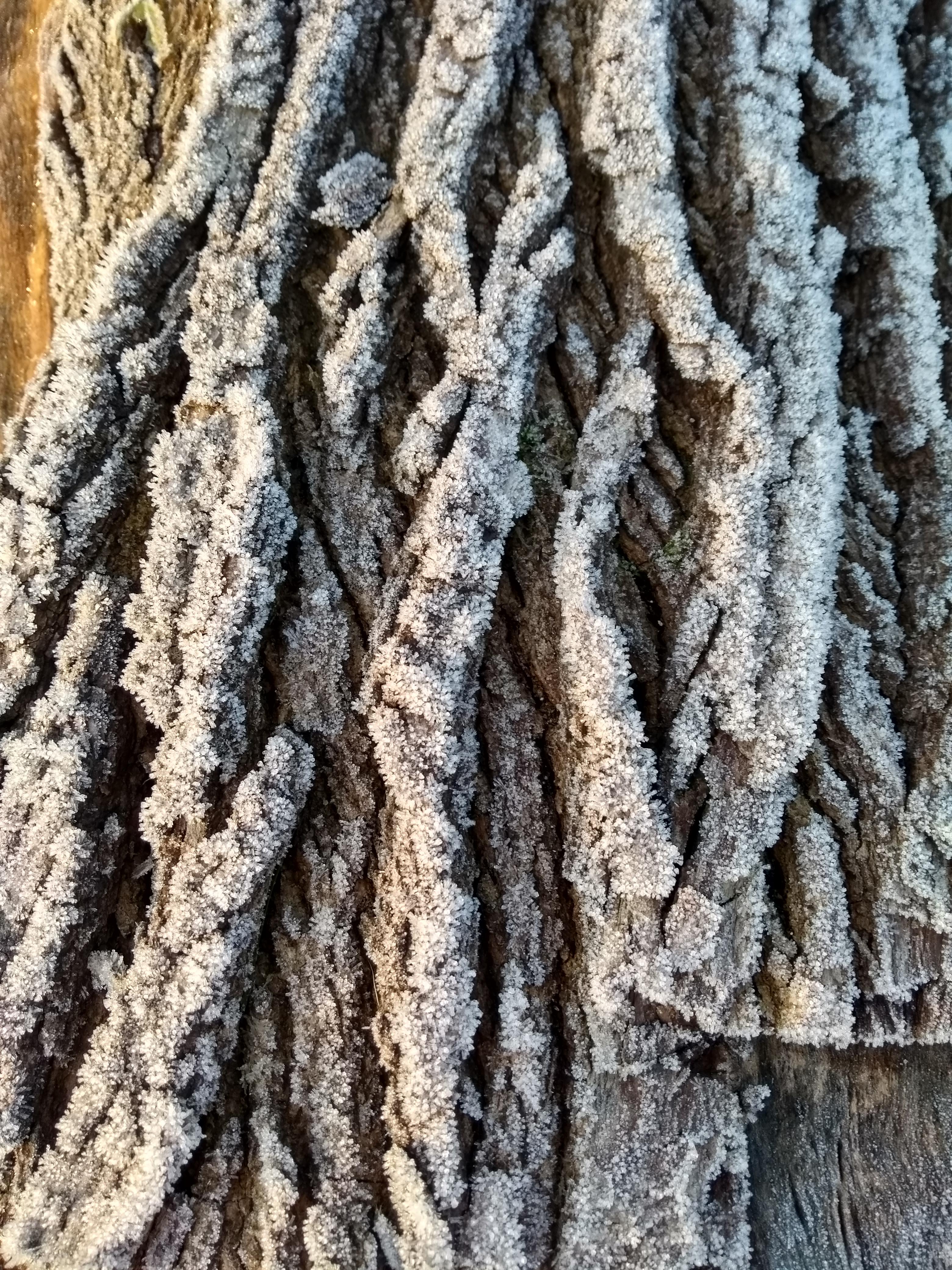
Start simple. All those things which apply to drawing small subjects indoors apply outside, it’s just on a different scale. You might start with drawing a detail – some leaves, some bark. If you’re drawing a scene, the trick is to focus on the larger aspects first – the large shapes, the colour contrasts, the textures and what marks might convey them. Make studies, not a finished drawing: get the composition right with a quick sketch of the large shapes; record the colour, either with colour swatches or notes about what colours are there; make some sketches of the details. This is drawing as a process, to learn about the subject.
Set a time limit. Draw for 10 minutes, to capture some element of what interests you. Draw for longer and you’ll have more time to investigate some other elements, as above.
Revist. If it’s local you can go back and look some more. There is always more to see; one reason for specialsing in a subject matter is because it takes time to truly see that subject and get to know it.
If you are anxious about being observed. A small sketchbook is very hard for others to look into. You can discourage looking with your body-language, hiding behind sunglasses or wearing a large hat! However, in my experience if anyone is curious, it is because thay have an interest in art and wish they could do it themselves. They might even be wishing they had your spirit of adventure to try.
Have you tried drawing outside? I would love to hear about your experiences: how was it? and perhaps what you drew, if you’re willing to share. Did any questions arise for you? Use the comments section below or send me a message via the contact form.

 Over the last four years I’ve been learning and then training as a Thinking Environment® facilitator. The cornerstone of the Thinking Environment is the principle that people can think well for themselves, given the right conditions. They involve being in the presence of a listener whose attention and encouragement is wholly yours, and who trusts completely that you are creative, altruistic, intelligent and can think for yourself.
