On Staying in: Finding objects to Draw

It’s mid-winter, and bitterly cold where I am. Snow, floods and ice are not enticing me out right now. It’s time to wrap up in blankets, get a hot drink and look for indoor inspiration.

Drawing objects involves the same sort of decisions as any subject matter, in terms of shapes, space, colour and tone, contrasts, mood, balance, harmony and feeling. It’s also very accessible, and has a long pedigree stretching back into the past -artists have used objects from their surroundings as vhicles for their image making for ever. When you’re drawing at home, or joining me for a class, it pays to spend a bit of time gathering objects together which will be interesting to you, and provide opportunities for interpreting textures, exploring modelling, contrasts, and tone and colour.
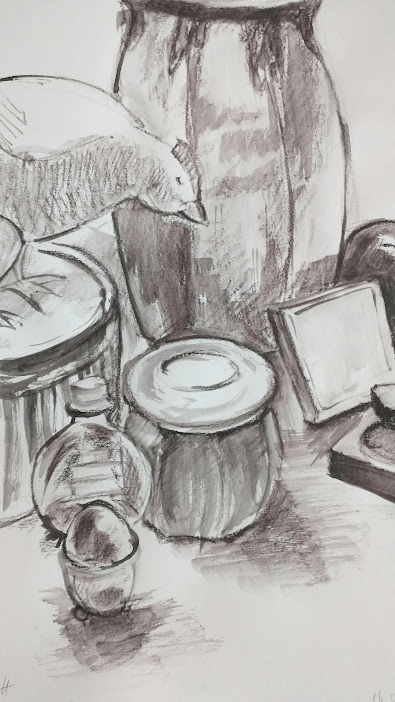
Start with objects already around your home, in different shapes, sizes and textures. Anything is fair game for drawing! -a shoe, a candle stick, a cabbage, a bottle, a crumpled pillow case, the aftermath of dinner. Get curious about it, even if you’ve seen it a hundred times. Have you really looked, at the shapes, the surface, the angles? How could you indicate that texture, mix that colour?

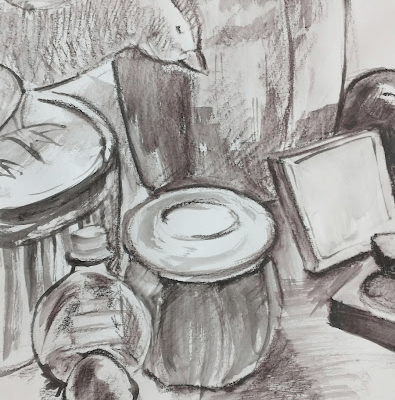
Objects organised in groups give you more to see and interpret, and are a way to begin playing with composition. In this grouping, there are a few ceramic pots with similar shapes but quite different sizes (repetition); there are contrasts of texture (variety), and the objects are grouped in such a way that the eye travels through them, they relate, like group of friends having a conversation.

Some artist stick with the same obects which appear over and over in their work through their life. Ben Nicholson’s striped and spotted jugs and mugs appear over and over throughout his art, but over time they transformed, he interpreted them afresh. You can read more about his still life collection here, at the Pallant House Gallery website.

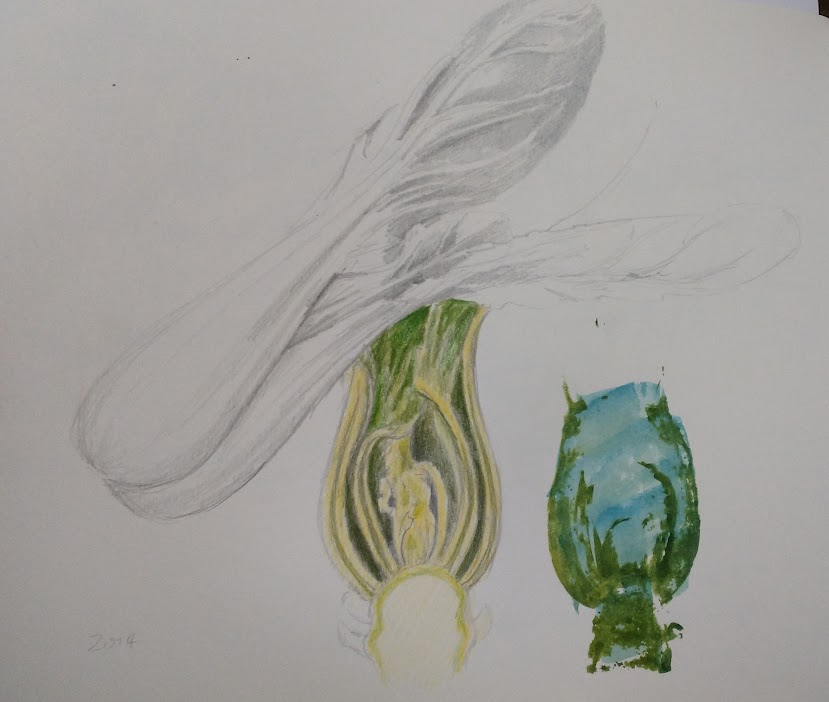
This idea might horrify you though. If you’ve been drawing the same things for years and are feeling stale, try looking eleswhere in your home for objects you haven’t spent time looking at. The veg drawer in the fridge is a good source of change (and often decay!) – there are often things in there or the fruit bowl in various states of freshness, and perhaps it changes by season and even variety. Apples will certainly change variety through the winter, with russets in autum, golden yellow matt skin, through to deep red flecked ones which are appearing now. You can cut and slice your fruit and vegetabels in different ways to create a new view. Below: Pak choi, drawing in graphite, sliced in half and observed in coloured pencil, then printed. The remains went in the stir-fry.
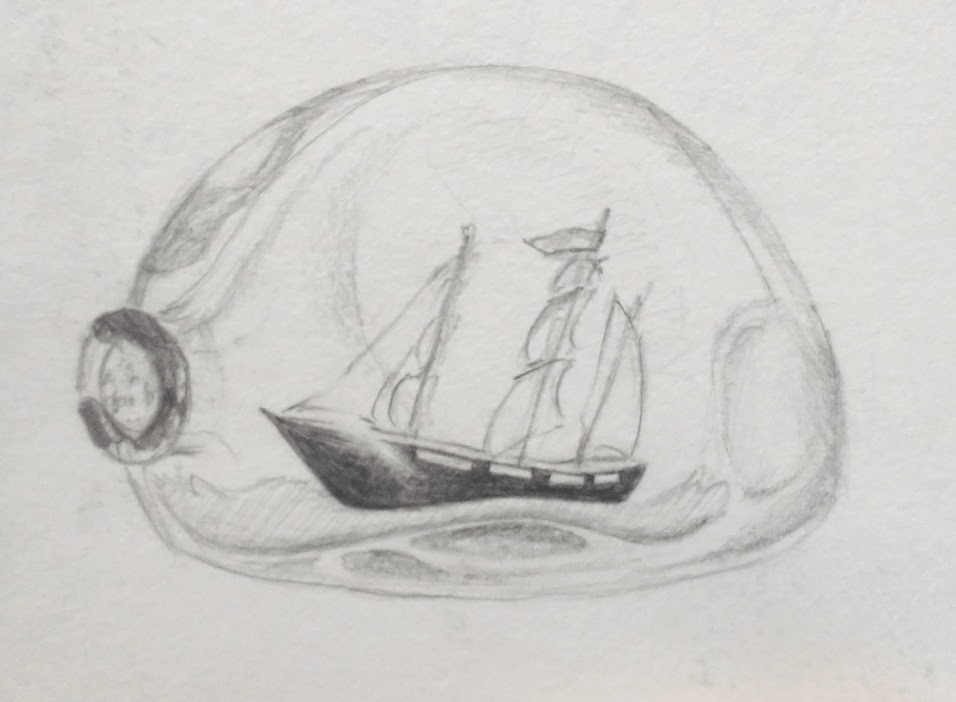
Small ornaments can make a good study by themselves. You never know how they may become involved in something else later on… like the animated objects in the 2017 Disney film of Beauty and the Beast (director Bill Condon), your possessions might take on imagined a life of their own.
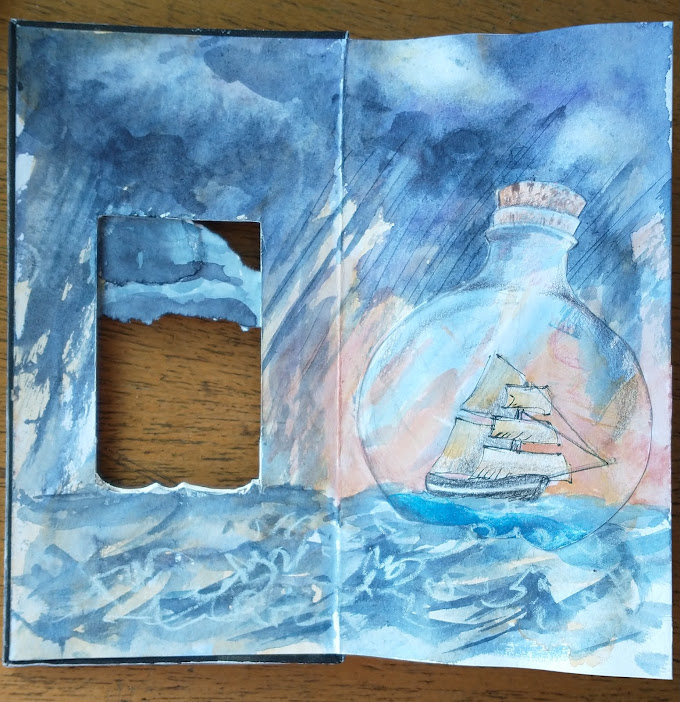
JOIN IN: from 9th January 2025, Thursday Drop in Drawing at 7.30 PM London Time. Click here to find out more.
On really seeing, and expressing.

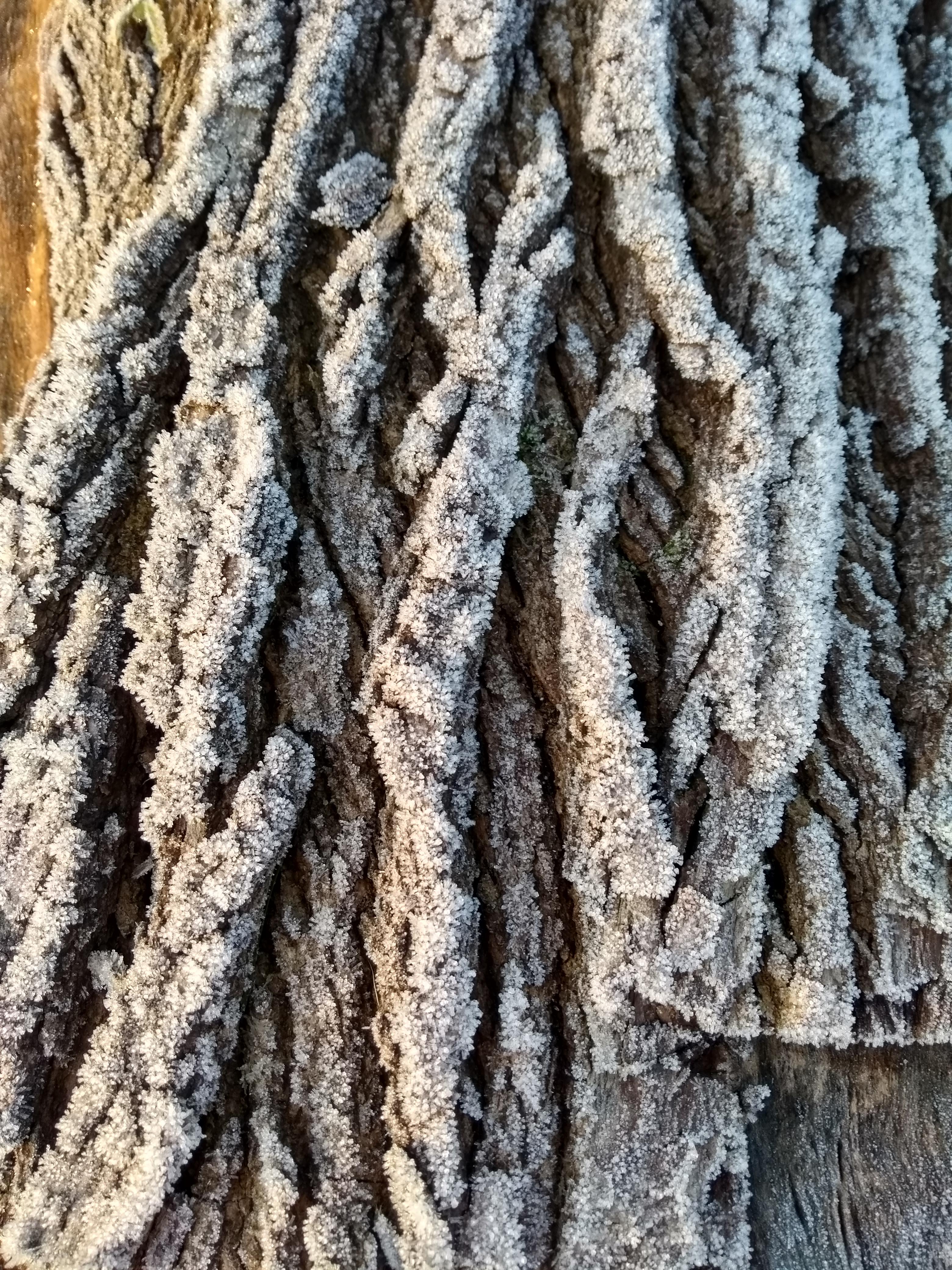
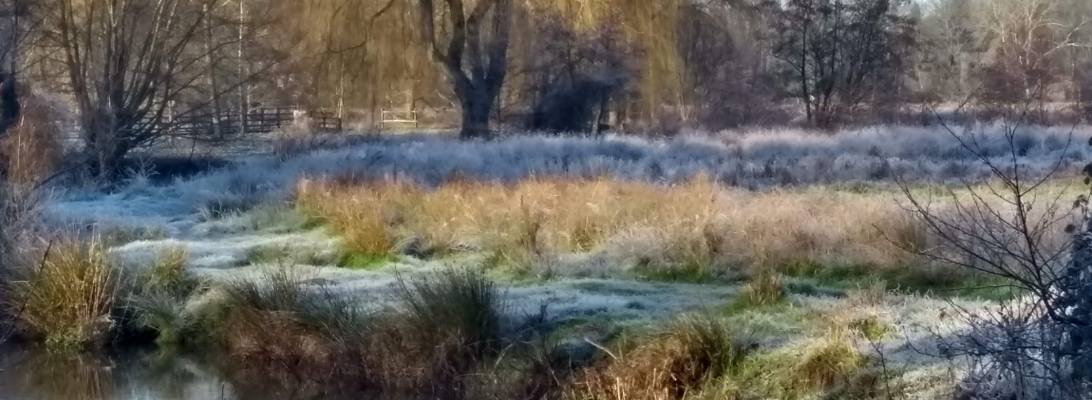
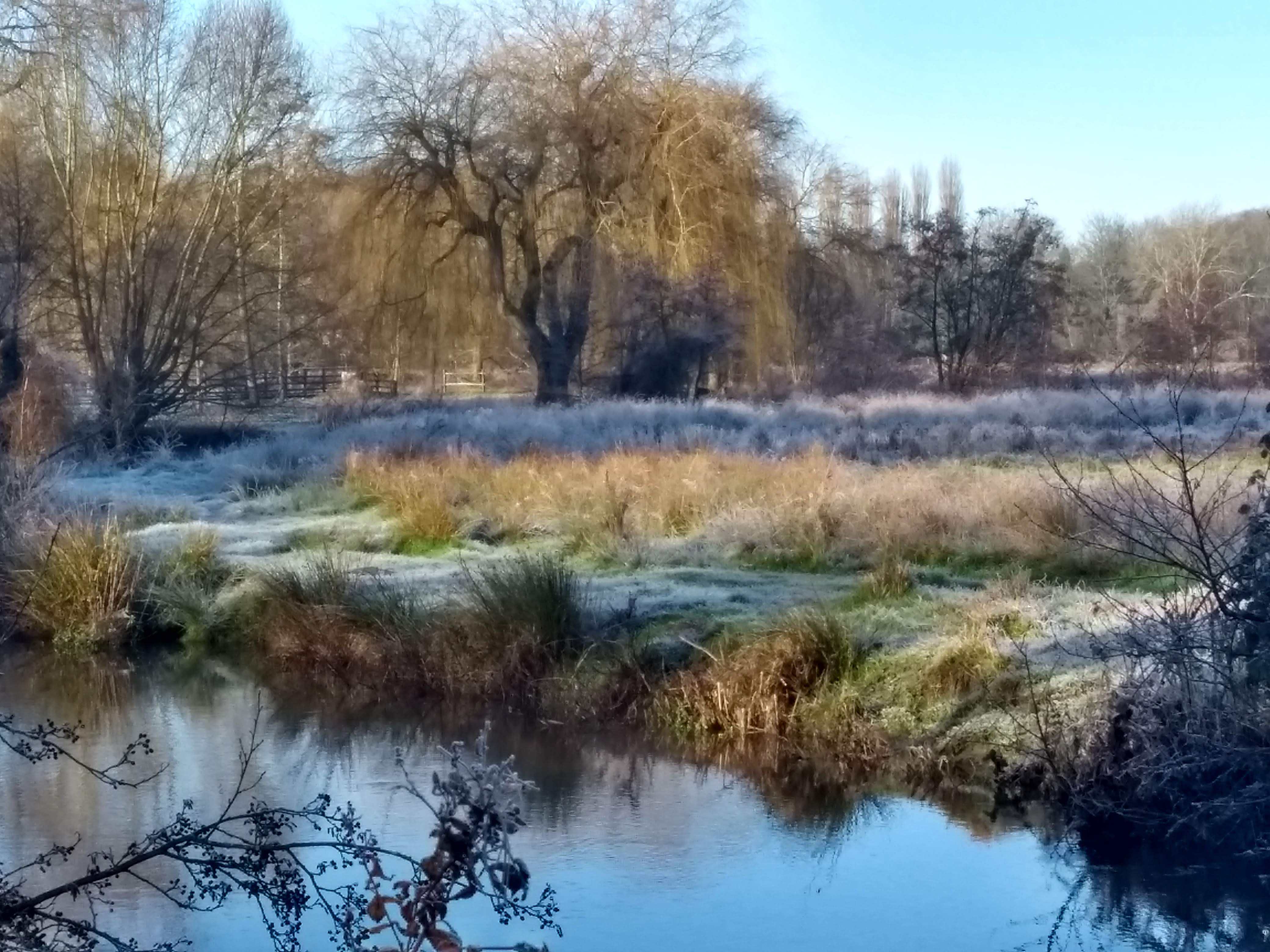
It’s chilly out this morning. Across the river, the grass is a very pale blue-ish green with its coating of frost. The bare treetrunks are dark umber browns, with a surprising cast of purple around the haze of twigs at the ends of their branches. The deep browny purple is lifted by the golden ochre colour of the grasses nearby. Behind, the soft, indistinct masses of hedgerows and trees are the stubtlest hues of blues and purples.

I’m surveying my selection of coloured pencils, tuning in to find the ones which will enable me to create the right hues for the landscape I’m in, how they look to me at this point in the day, in these conditions of light and cold. This red-violet, this ochre, this turqouise blue… how will they work together? I’m absorbed, and even though I’ve seen this view many times a week over the last ten years, I haven’t seen this version of it before.

That’s one of the things drawing does for me; gives me a way to be present, to really look, and look again. It stops me assuming I know what things are, prevents me from getting stale and becoming bored by my surroundings – and how important has that been, since our lives have been circumscribed by the pandemic and kept close to home? What a gift, to have a way to see the familiar afresh.

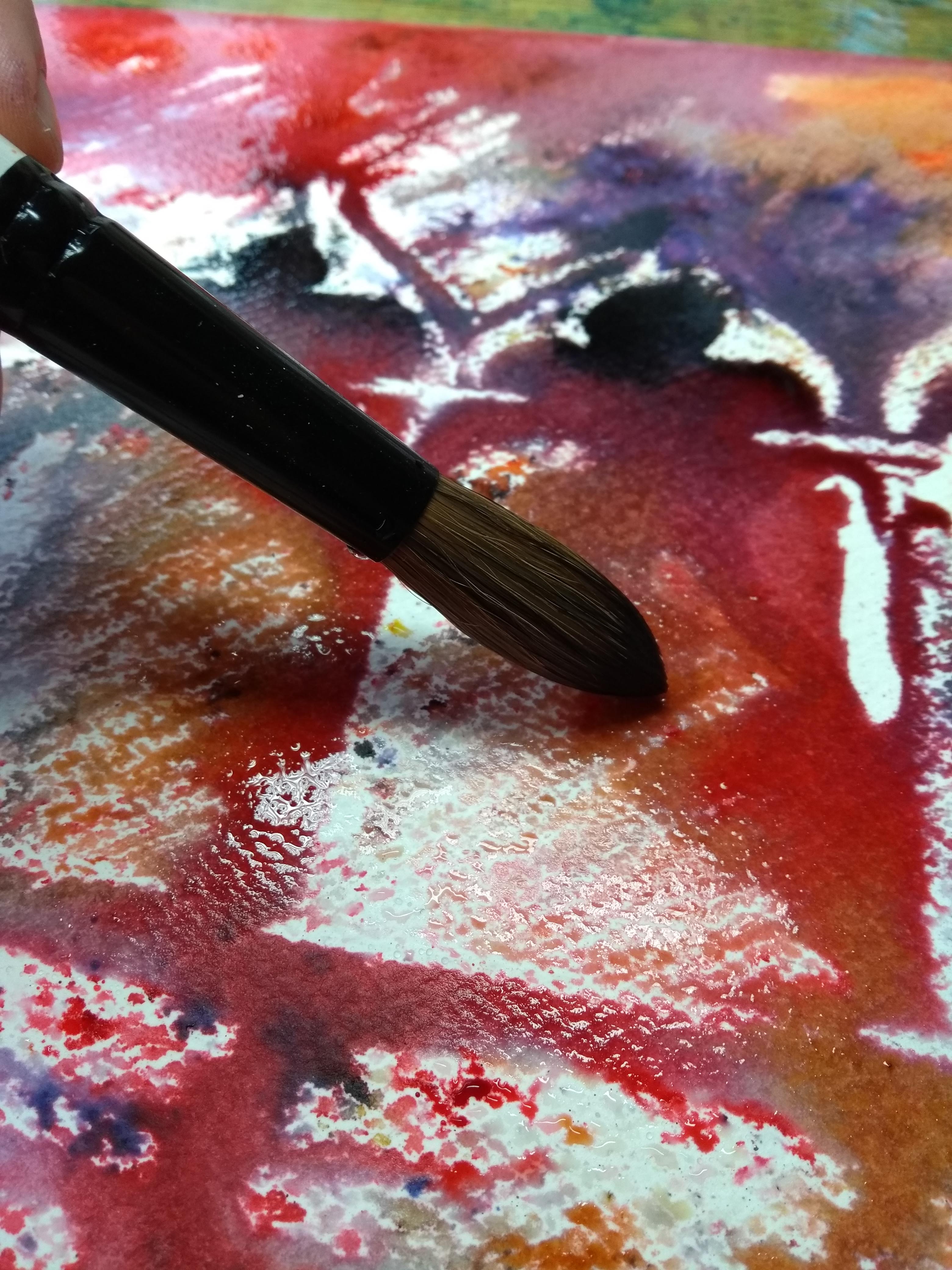
It’s also a tactile process. I love to focus on the feel of soft, creamy pencils or paint sticks; the sudden burst of colour as water brings a solid paint block to life; the feel of a paint-loaded brush moving across the sandy texture of a heavy watercolour paper. Do I like how the paint sits on this paper, or that paper? Do I prefer the feel of this pencil, as it leaves a trace of pigment from the stroke I make, or that one? Finding materials which feel right is part of the process, grounding and comforting, connecting me with my own tastes in a small but crucial way.

Since March 2020 drawing has become a mainstay, and I am lucky to have been able to share it with my students. Real-life classes which I taught before the lockdowns became virtual, and instead of constricting my world, running them live online has enabled me to connect with others across the country and the world. I’ve had students from the US, Australia, New Zealand, Canada, Spain, Brussels, Germany, and Russia join me and share their drawing journey together, many through the classes I teach at the Royal School of Needlework, and some from classes I run. I learn as much from students as they from me, and we have had moments of realisation, empowerment, joy, and laughter as we try things out, explore basic principles, find out what we like and don’t like, discover what we want to express, and how to encourage ourselves in the cradle of a supportive group.

I love to share what drawing gives to me, and to hear what it does for others, so I’m running another class for total beginners live online, starting on Janury 19th. It runs over three weeks on a Wednesday evening, via Zoom, and will be a small and supportive group. There will be plenty of opportunity to share and ask questions, but also no requirement to share if you don’t want to – after all, participants are at home and one of the benefits of that is that you can control your privacy. There wil be some suggestions of things to try between the sessions, and the chance to join one free Thursday evening or Monday morning drop-in session for free after the course, should you wish to. More information is available below on the learning page, and a link to book.