This year I will be running my first retreat day, with Laura Murphy of mtc2. I will be publishing regular posts and other material about it, on my new blog ‘Reframe the View’. This blog will continue to be focussed on art making and learning. There’s an extract below from today’s post. If you enjoy it and would like to read about wellbeing and ways to nurture and support yourself, please go to ‘Reframe the View’ by clicking the button below.
The Stillness of Midwinter
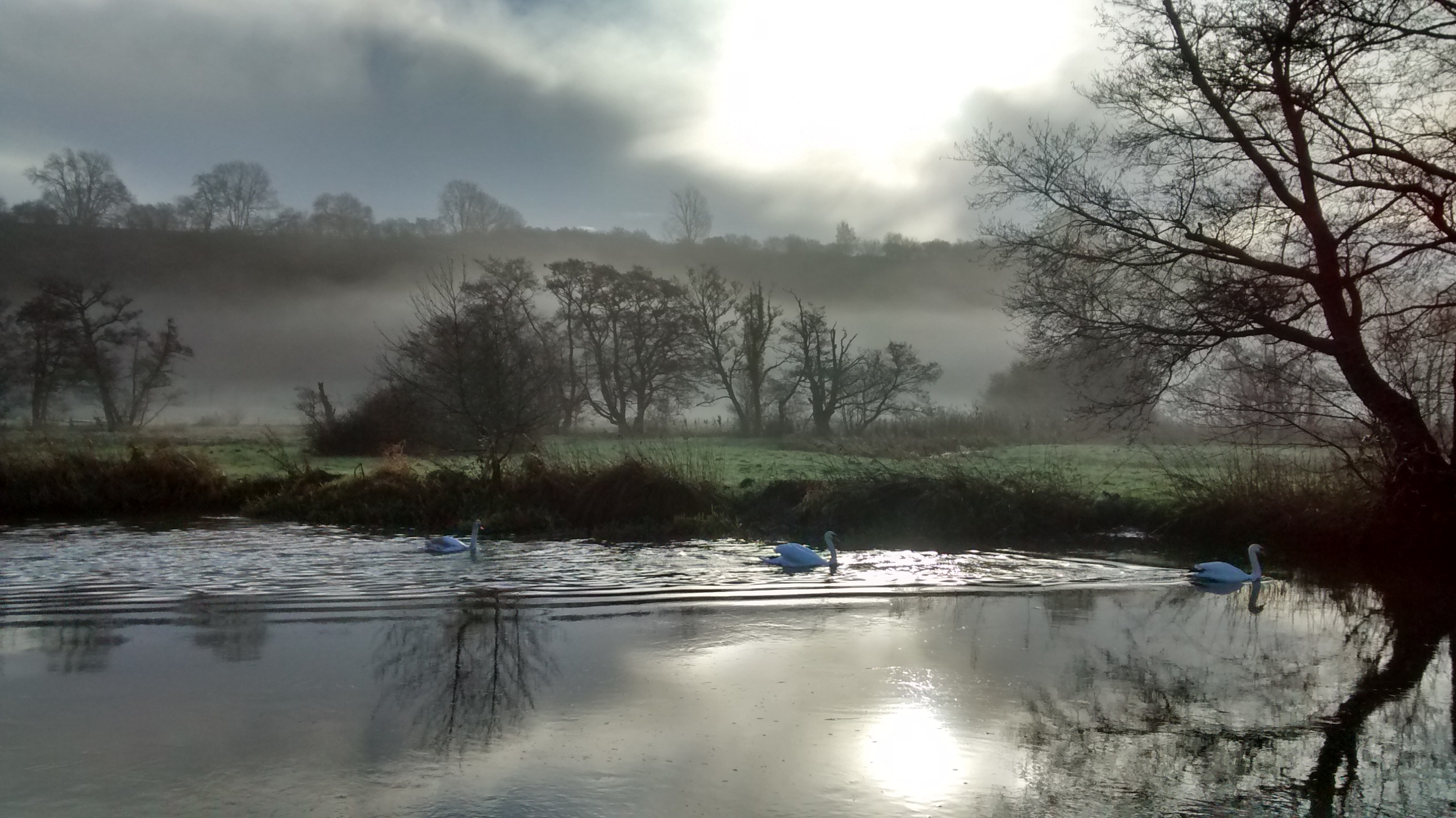
Today is a grey overcast day. It’s very quiet at home, with the sound of sporadic rain pattering against the glass and the ocasional breathy resonance of the windblown chimney. Not much is moving outside. Our feline neighbours are glimpsed darting across the garden and are gone -back home to curl up somewhere warm. Bulbs rest in the earth, their green spears nosing through when there’s a warmer day, but stopped when it’s cold and grey. Water is pooled on the meadows and lammas lands, with fleets of overwintering gulls, cormorants and the resident ducks and geese sailing in the shallow water. Twigs drip, tree trunks stained black with water. Their fat buds wait -for spring.
We are surrounded at the moment by stuff about renewal, reinvention, get fitter, get healthier and make resolutions. In the deep quiet of midwinter this increasongly feels out of step to me. Over recent years I’ve been paying more attention to the seasonal cycles and wondering how to align myself with them.
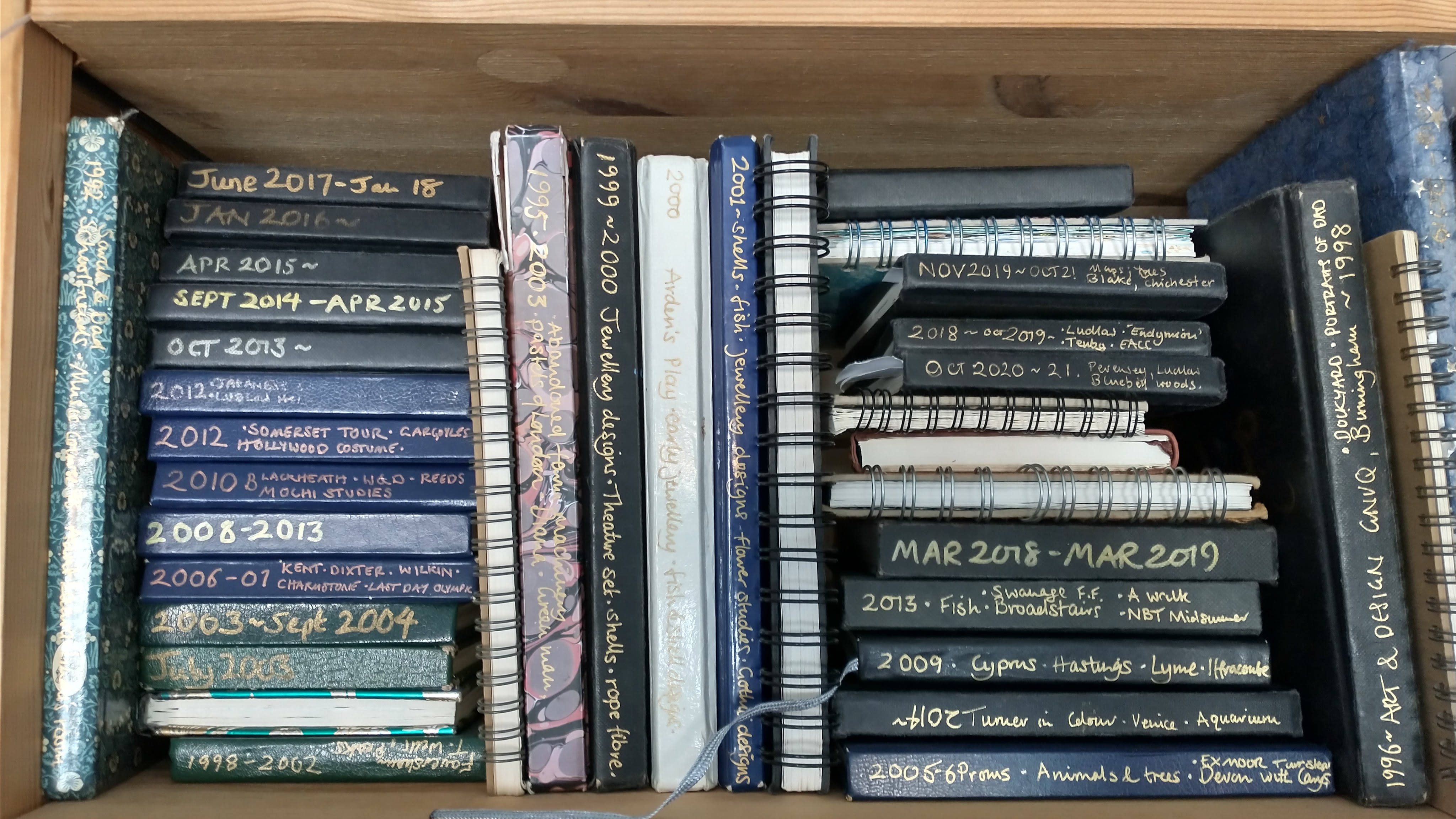
I effectively have two sorts of journalling: my sketchbooks which are very much drawn from and of the outside world, and written ones. There are lots more sketchbooks than written journals. The sketchbooks are on open shelves in my studio room, the journals are not. There are lots of drawings of places I’ve been, people I know (and sometimes people I don’t), some more detailed studies, rapid lines taken during a concert, studies made in museums, and sometimes written notes; it’s a place to record, remember and gather for future use. People look through my little sketchbooks sometimes but that’s ok because I don’t think they contain anything secret or controversial that I don’t want anyone to see. Most of the drawings were done in public anyway.
The journals are different. They are messy, written with no concern for spelling or grammar, not organised and sometimes illegible. These are not pretty journals; there’s no artwork or colour. Page after page of inky scrawl, which if you could unravel it, would be miles and miles of blue black thread which would probably go around the earth a few times. Often I write in a stream of consciousness which just goes wherever it needs to, and sometimes in more structured way around a question or a idea which has emerged. I write down reflections about my artwork: what I’ve tried and what I want to do next, which really helps me to pick it up again after a gap.
Sometimes I’m just dumping thoughts. I read them back later and that gives me some objectivity. It turns out that being able to do this for yourself has the added benefit of protecting your relationships from the strain of oversharing negative emotions (Kross, Chatter – The Voice in Our Head (and How to Harness It) p31, Vermillion 2022) without tiring the empathy of listeners.
I can then review it, giving myself the chance to consider it with some distance. Are there any negative assumptions underlying my reactions to something? Is there a different, more enabling way I could see it? What are the options for response, if any? Or do I need to just accept it?
Sometimes, on re-reading, I can find insights. if I repeatedly write about a problem, it flags up that there really is something I need to address. Coloured pencils come in for a bit of highlighting, things that pop out as important.
It’s also useful to write sometimes in a deliberate attempt to find the positive.What’s gone well today? what did I particularly enjoy, however small, or what am I grateful for? That can give me something to focus on when I wake up in the small hours ruminating.
Researchers are finding evidence of all these benefits in the practising of writing reflectively about one’s own experiences. It’s one of the practises being offered by Laura and myself on the Retreat Day we’re running next March. So if it’s new for you, give it a go and see how it changes things.
A few things to try:
setting a timer and writing in a stream for, say, 15 minutes.
writing down what you feel grateful for.
writing about an experience; who was there, what did you see, hear, smell, taste; what did you feel, what happened? Try writing it as if in the third person. Imagine you are observing yourself.
finding some affirmations and writing them down. This is very literally telling yourself that you’re worthy, deserving of love and affection, are capable, have talents – whatever it is that you need to hear to feel more safe, secure and supported, especially in areas where you feel vulnerable.
look up some journalling prompts. Specfic questions like: what behaviours do I want to grow? what do I want to stop doing? What new thing would I like to try? Who gives me support?
Research also shows that the benefit are felt over time, and that you don’t have to write every day to feel them. The important thing is to choose a way that suits you, and keep it private.
It’s a common experience: there’s something you love doing, but you struggle to find the time, or the motivation, and you can get discouraged and then feel disappointed. There are some ideas from study about how people change which might help.
I learned recently that to change things you need to be consistent in what you’re aiming for, flexible in how you get there, and persistent in your efforts. There will be lapses and changes of direction, but continual steps and trying different ways of doing things will keep you moving forward, however small your actions are.
Of course, learning a skill is going to involve changing a number of things in your life. You’ll need to review and make decisions about in how you spend your time, perhaps change your priorities a little to make room for your interests, and if the skill involves a physical element like learning a musical instrument or making something, spending time developing it will create changes how you use your body .
So what is it you want to learn? How do you make space for it, and encourage it? And how do you keep motivated after the initial burst of enthusiasm or effort?
I’ve been learning to play the harp over the last 18 months. I had a burst of enthusiasm when I acquired it, and was less busy at the time (April 2021) so I did lots of research, found different teachers and resources online, and spent time getting to know it. I found a place to keep my harp to hand, so that I could just pick it up and play whenever I had a few minutes. Although I’m enjoying playing it by myself and experimenting, I wanted to check I was getting the basics right – you can hurt yourself playing an instrument if you dont take care about how you’re doing the repetitive actions. I decided to go on a weekend course. It was amazing to be in a great big room full of harps, talk to the owners, and hear very different styles of playing. That really opened up my eyes to the potential of this instrument. I came away with renewed enthusiasm and curiosity, still mostly playing by myself but now looking for ways to connect with other harp players.
I’ve realised more and more since the pandemic just how important it is to mix energy with other people, in positive, fun, friendly and supportive environments. It’s very important to me in my work too, and why I like to teach groups. We’re usually learning drawing and aspects of art together; the ‘together’ bit is really important. In a recent class for the Royal School of Needlework, we had a wonderful difference of interests and experiences, not to mention different cultural knowledge as well.
At the end of these classes I try to persuade people to think realistically about how to carry on with their learning. Set realistic goals: choose two or three short times a week to practise, keep your materials to hand and then review what happened after a few weeks. Have some intention about what you’re practising, which means think about it occasionally and choose what to practise baed on what you are most interested in and want to develop. Be prepared to change the timing, frequency and circumstances of when you practise. Accept that in busy times you may have to reduce or let go of your practice temporarily, and that’s ok. Return and renew the commitment when the time allows. Just don’t stop. Keep taking little steps. Consistent, flexible, persistent.
I run a regular drawing class online each week, for just this sort of encouragement. Short courses in drawing are also available, directly through me or oriented towards stitchers via the Royal School of Needlework. Click here to find out more: https://carolinehomfray.co.uk/drawing/
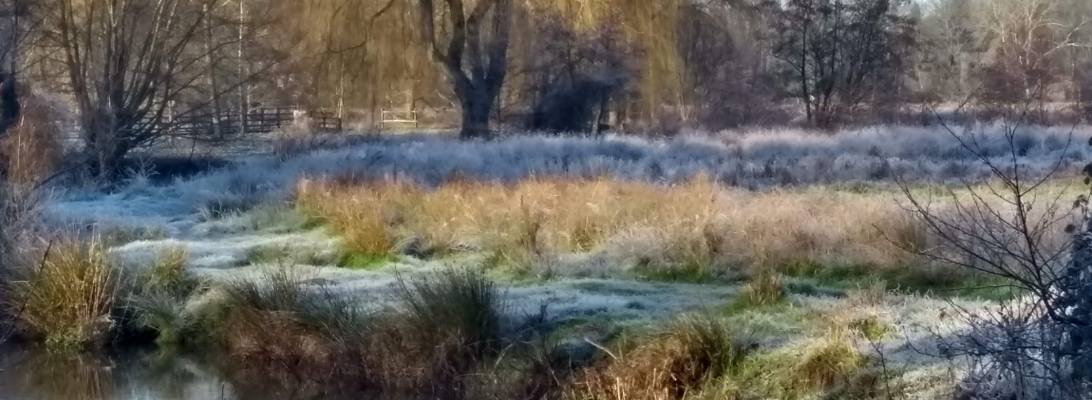
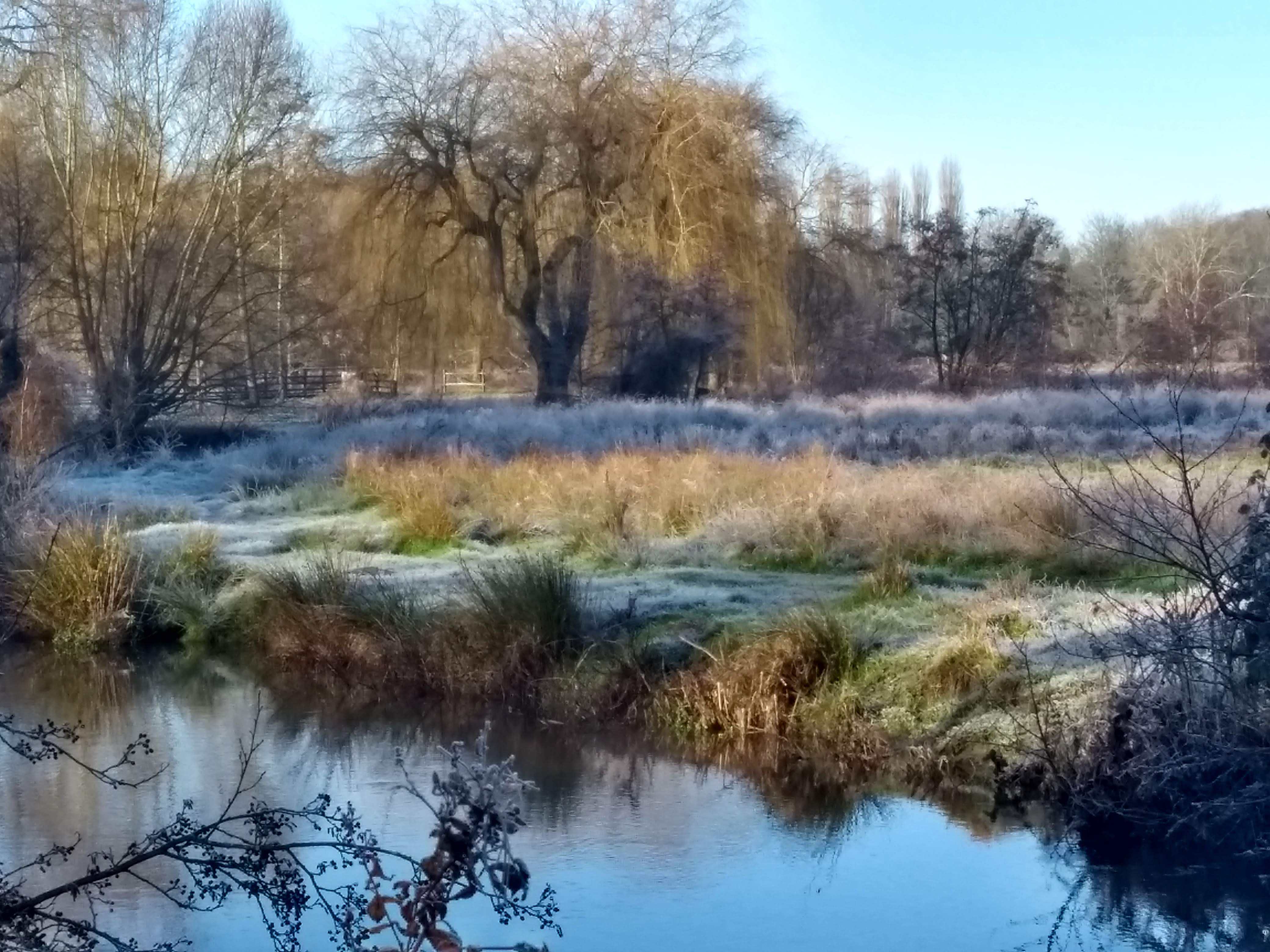
It’s chilly out this morning. Across the river, the grass is a very pale blue-ish green with its coating of frost. The bare treetrunks are dark umber browns, with a surprising cast of purple around the haze of twigs at the ends of their branches. The deep browny purple is lifted by the golden ochre colour of the grasses nearby. Behind, the soft, indistinct masses of hedgerows and trees are the stubtlest hues of blues and purples.
I’m surveying my selection of coloured pencils, tuning in to find the ones which will enable me to create the right hues for the landscape I’m in, how they look to me at this point in the day, in these conditions of light and cold. This red-violet, this ochre, this turqouise blue… how will they work together? I’m absorbed, and even though I’ve seen this view many times a week over the last ten years, I haven’t seen this version of it before.
That’s one of the things drawing does for me; gives me a way to be present, to really look, and look again. It stops me assuming I know what things are, prevents me from getting stale and becoming bored by my surroundings – and how important has that been, since our lives have been circumscribed by the pandemic and kept close to home? What a gift, to have a way to see the familiar afresh.
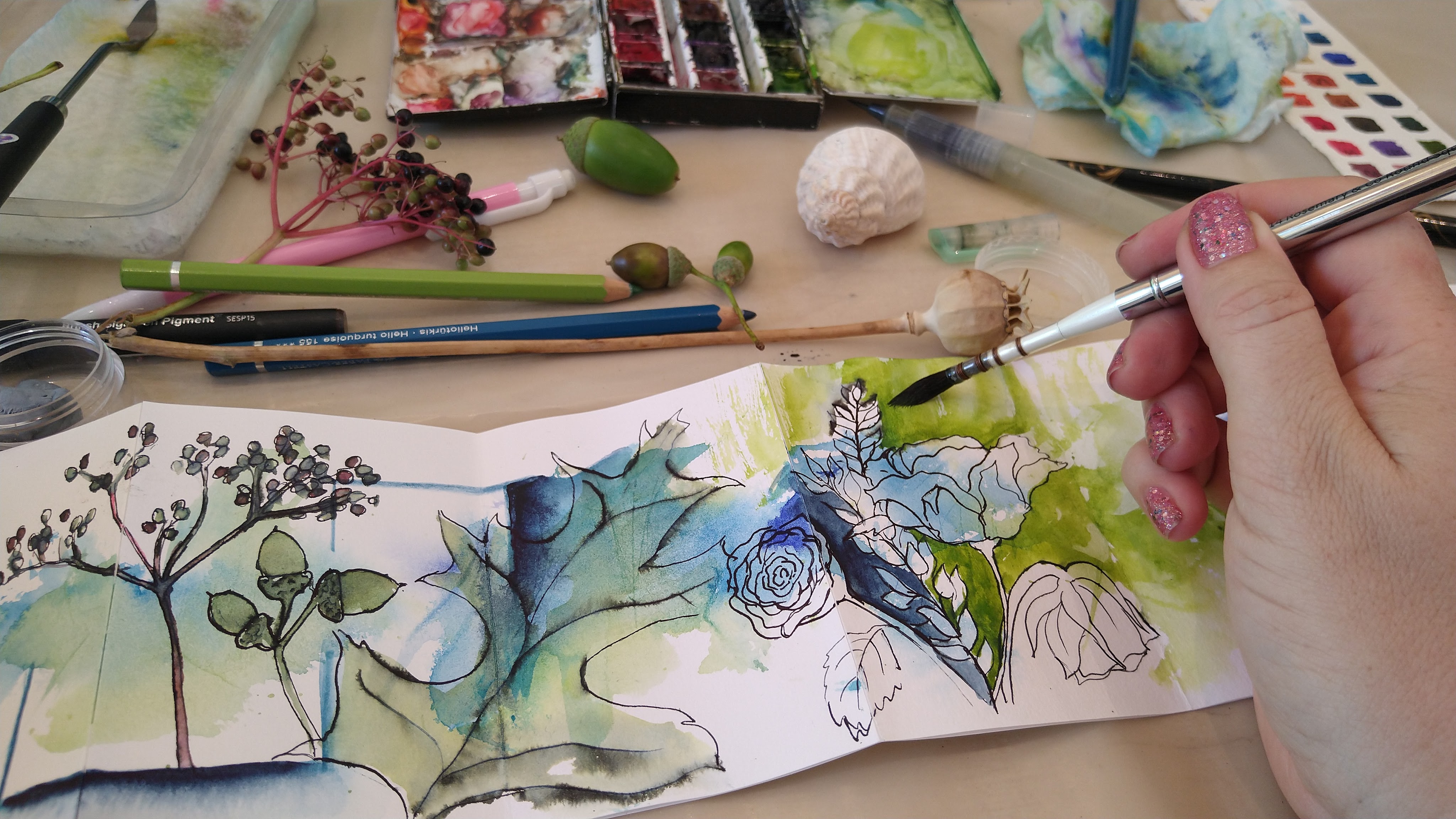
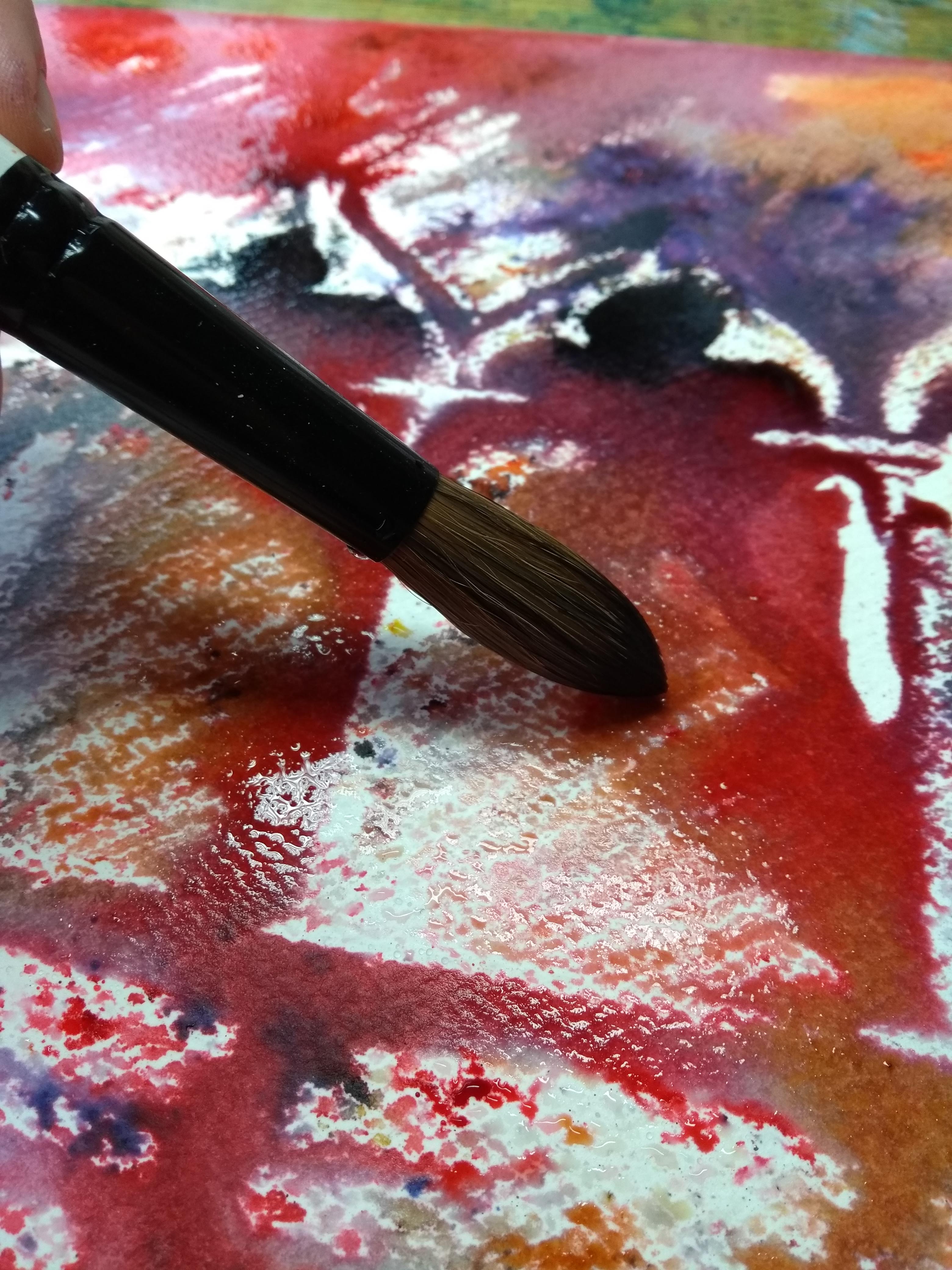
It’s also a tactile process. I love to focus on the feel of soft, creamy pencils or paint sticks; the sudden burst of colour as water brings a solid paint block to life; the feel of a paint-loaded brush moving across the sandy texture of a heavy watercolour paper. Do I like how the paint sits on this paper, or that paper? Do I prefer the feel of this pencil, as it leaves a trace of pigment from the stroke I make, or that one? Finding materials which feel right is part of the process, grounding and comforting, connecting me with my own tastes in a small but crucial way.
Since March 2020 drawing has become a mainstay, and I am lucky to have been able to share it with my students. Real-life classes which I taught before the lockdowns became virtual, and instead of constricting my world, running them live online has enabled me to connect with others across the country and the world. I’ve had students from the US, Australia, New Zealand, Canada, Spain, Brussels, Germany, and Russia join me and share their drawing journey together, many through the classes I teach at the Royal School of Needlework, and some from classes I run. I learn as much from students as they from me, and we have had moments of realisation, empowerment, joy, and laughter as we try things out, explore basic principles, find out what we like and don’t like, discover what we want to express, and how to encourage ourselves in the cradle of a supportive group.
I love to share what drawing gives to me, and to hear what it does for others, so I’m running another class for total beginners live online, starting on Janury 19th. It runs over three weeks on a Wednesday evening, via Zoom, and will be a small and supportive group. There will be plenty of opportunity to share and ask questions, but also no requirement to share if you don’t want to – after all, participants are at home and one of the benefits of that is that you can control your privacy. There wil be some suggestions of things to try between the sessions, and the chance to join one free Thursday evening or Monday morning drop-in session for free after the course, should you wish to. More information is available below on the learning page, and a link to book.
I get great comfort and encouragement from the spiral. So often it seems like I am circling around the same things, confronting the same issues. I remind myself though that this time is not in fact the time before, however similar it may appear.
The nautilus grows its shell one chamber at a time, moving every so often into a slightly larger space than the previous one. It gives itself room to grow, increasing the spiral as it adds a new chamber.
Regularly reflecting on what is happening in my life and what I need to do next is a bit like building a new chamber for my self, or allowing the space I live in to gow and expand a little. As I realise a blockage and remove it, or change a habit to something more beneficial, I grow a little. There’s always a new thing around the corner, or even a similar thing around the corner, but I can take some time to think. What have I tried, why didn’t it stick last time, is there somthing else I haven’t seen which is affecting me?
The regular meetups I run for Evolve Leadteam, in our local community, give me that steady, regular application of thought to my life. I started running this monthly event, which we carry out on Thinking Environment® principles, to share with others the benefits of a space to thin well for oneself. one step at a time, little by little, I stop doing the things which don’t work. Slowly it changes my life.
Our necxt Magic Meetup in Farncombe, Godalming is on 10th July at Hucklberry’s cafe.
I was reminded yesterday of declaring some time ago that I really wanted to reach my potential, desperate for it. Recently I’ve been thinking more about this phrase. It suggests that potential is a thing out there to be reached, like a mountain peak, requiring struggle and effort fixed on a goal. I was asked, what will you do when you reach it? will you be happy?
Envisioning the future has long been hard for me; recurring bouts of depression have eroded my ability to see forward. At times, the future I could concentrate on was the next few minutes. Yet I knew I still wanted to ‘reach my potential’. I don’t know what it is I’m trying to reach though. When asked what I want, usually all that’s there is a sort of desperation, and something of a void, like hunting in a large cave with a small torch.
Now though, I’m becoming aware of a burning desire to explore what I can do. Feeling a drive to put stuff out there – thoughts, music, art, listening, enabling – assess the result, then choose the next thing, like navigating through a new landscape, bit by bit, and it opening out before me. This isn’t a clear view to the mountain, where all that has to be decided is how to get there. It’s a continual checking of a map which is being made, asking questions, feeling my way along, looking outwards, seeing what could be done, doing, noting it, and then checking inwards to find out how that feels, does it sit well with me, does it flow?
Potential feels more like Dylan Thomas’s ‘green fuse that drives the flower’. There is a fuel, (a need? drive? desire?) and a process (observing, acting, assessing, recalculating, observing…). It isn’t anything I’m going to reach. It isn’t only about work. It’s a restless, searching force, it’s a process, it feels energising, it’s life.




 Caroline Homfray