A new place can be a fresh inspiration in art. It’s easier to see what’s really there and feel curious and interested in a scene which you’ve never seen before – there’ll be fewer existing assumptions or pre-conceived ideas about it. You can enjoy that child-like experience of exploring and discovering, and it’s also an opportunity to find out what you’re interested in, so that you can consciously pay more attention to that.
How to find out what interests you? Start by wandering, and absorb. Let yourself relax, let what’s there flood in without judgment. Be curious and playful and notice where you want to look more closely.
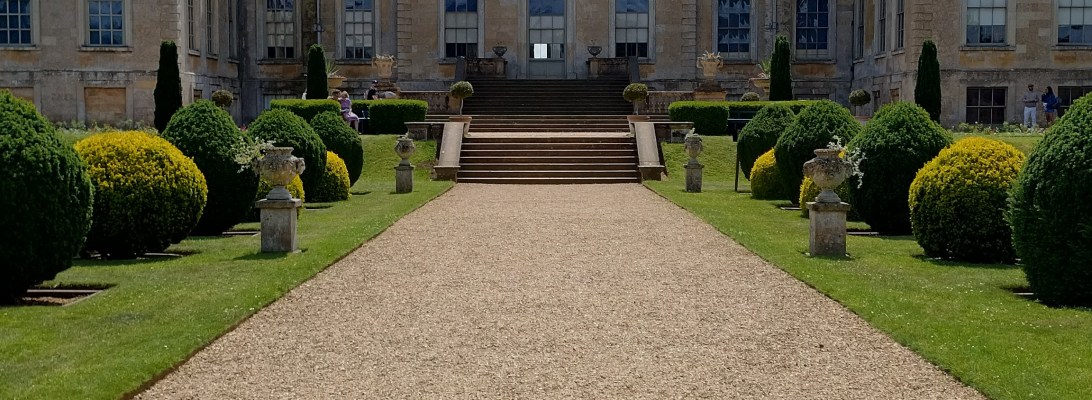
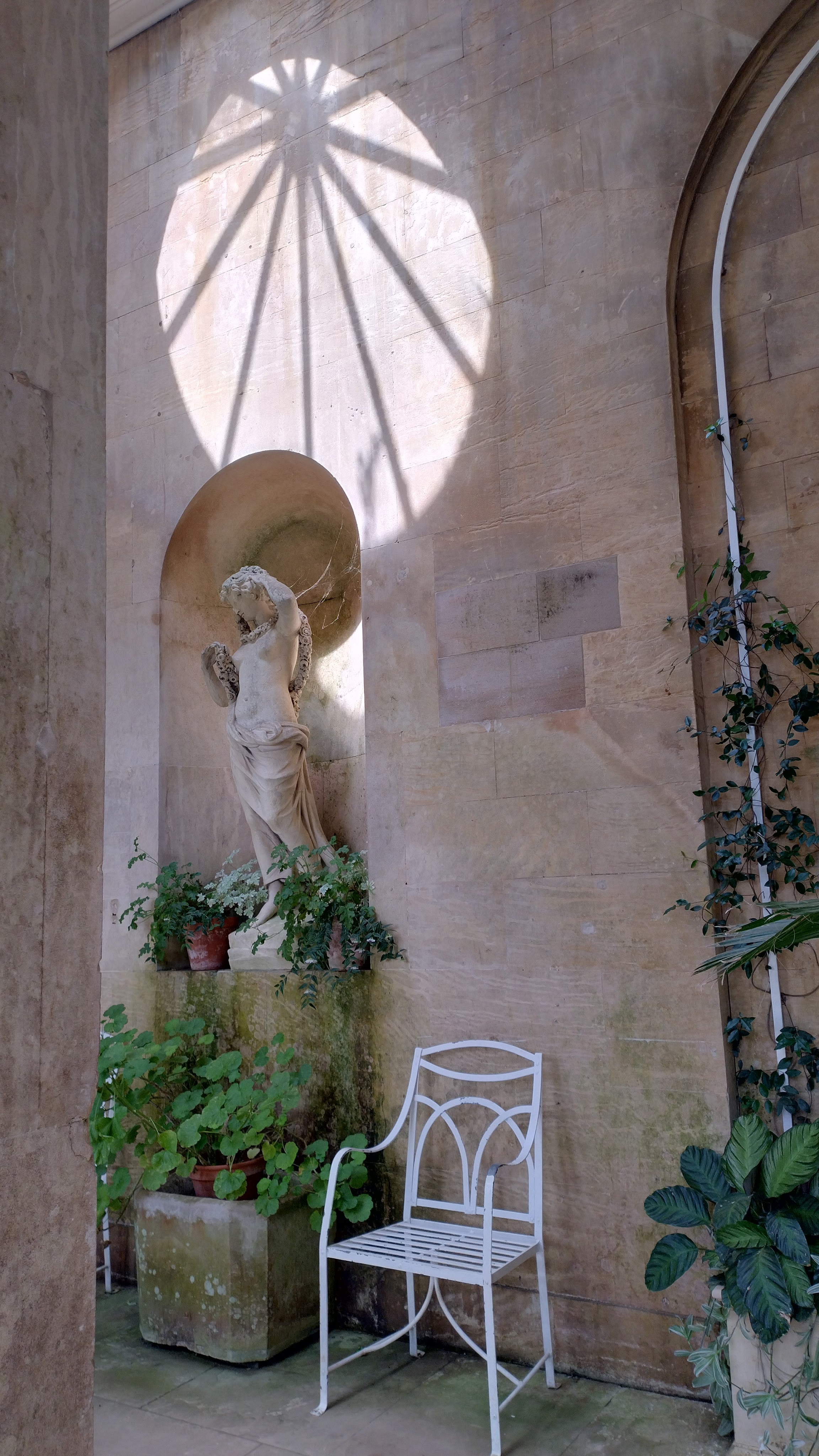
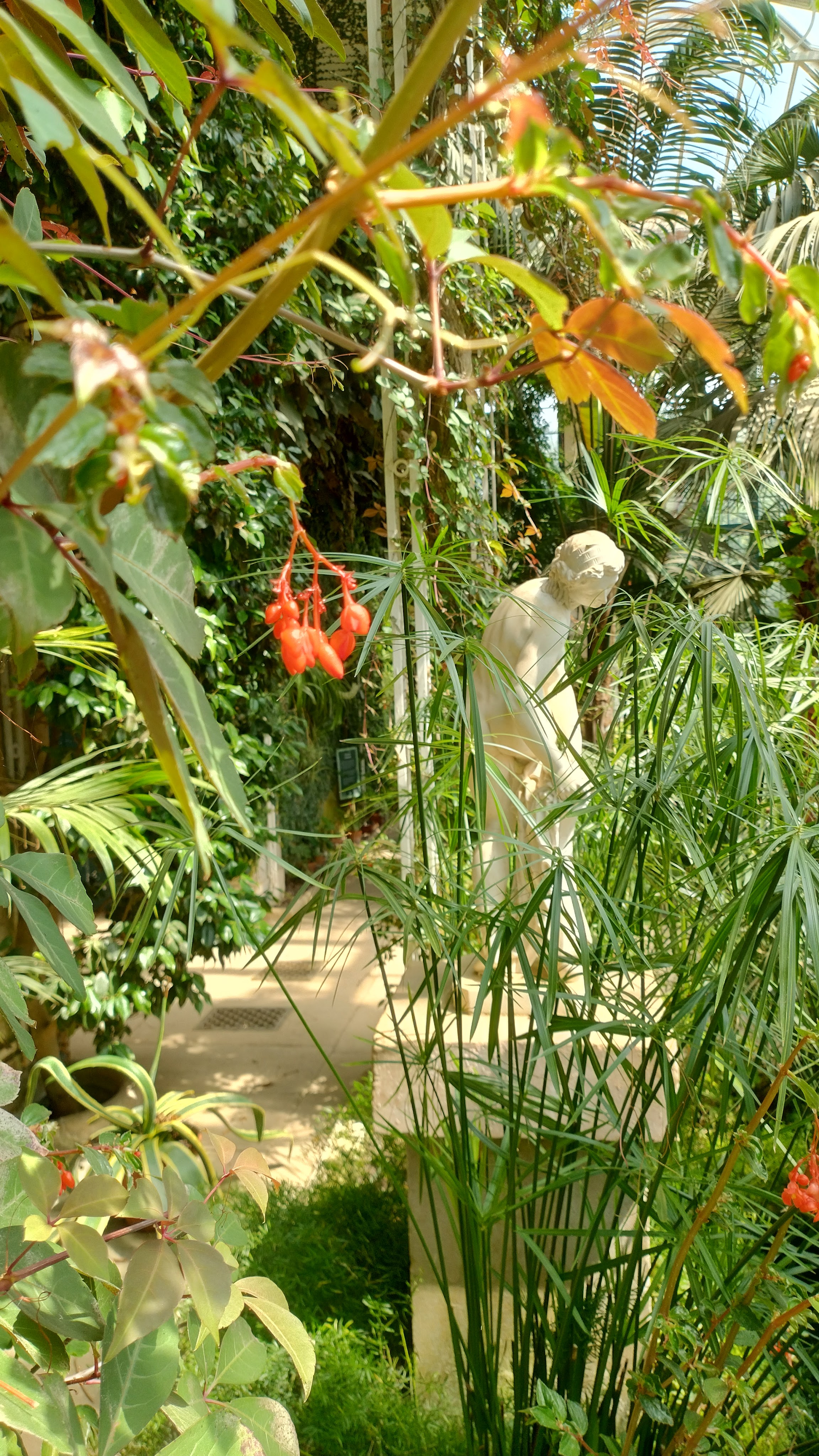
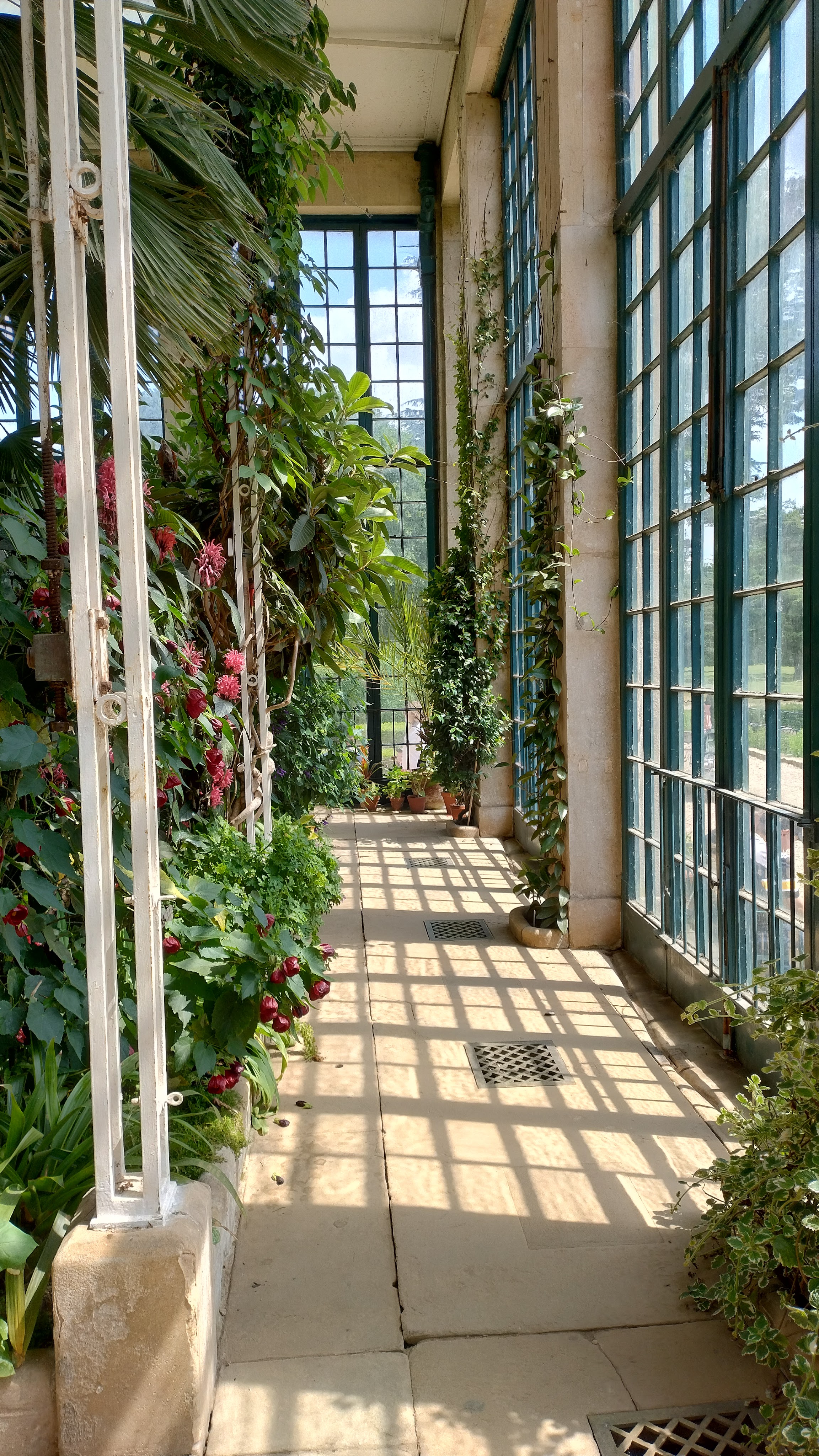
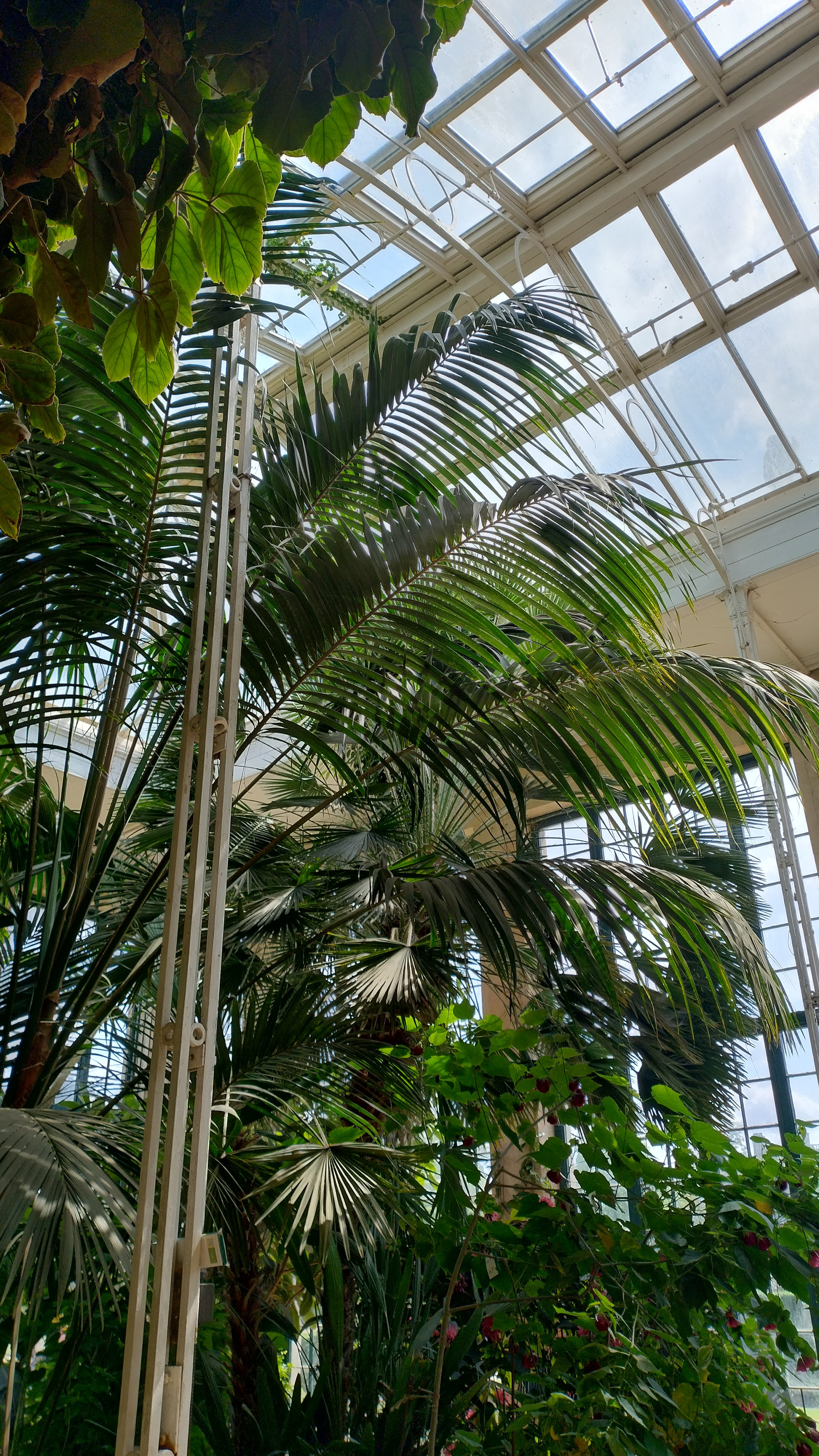
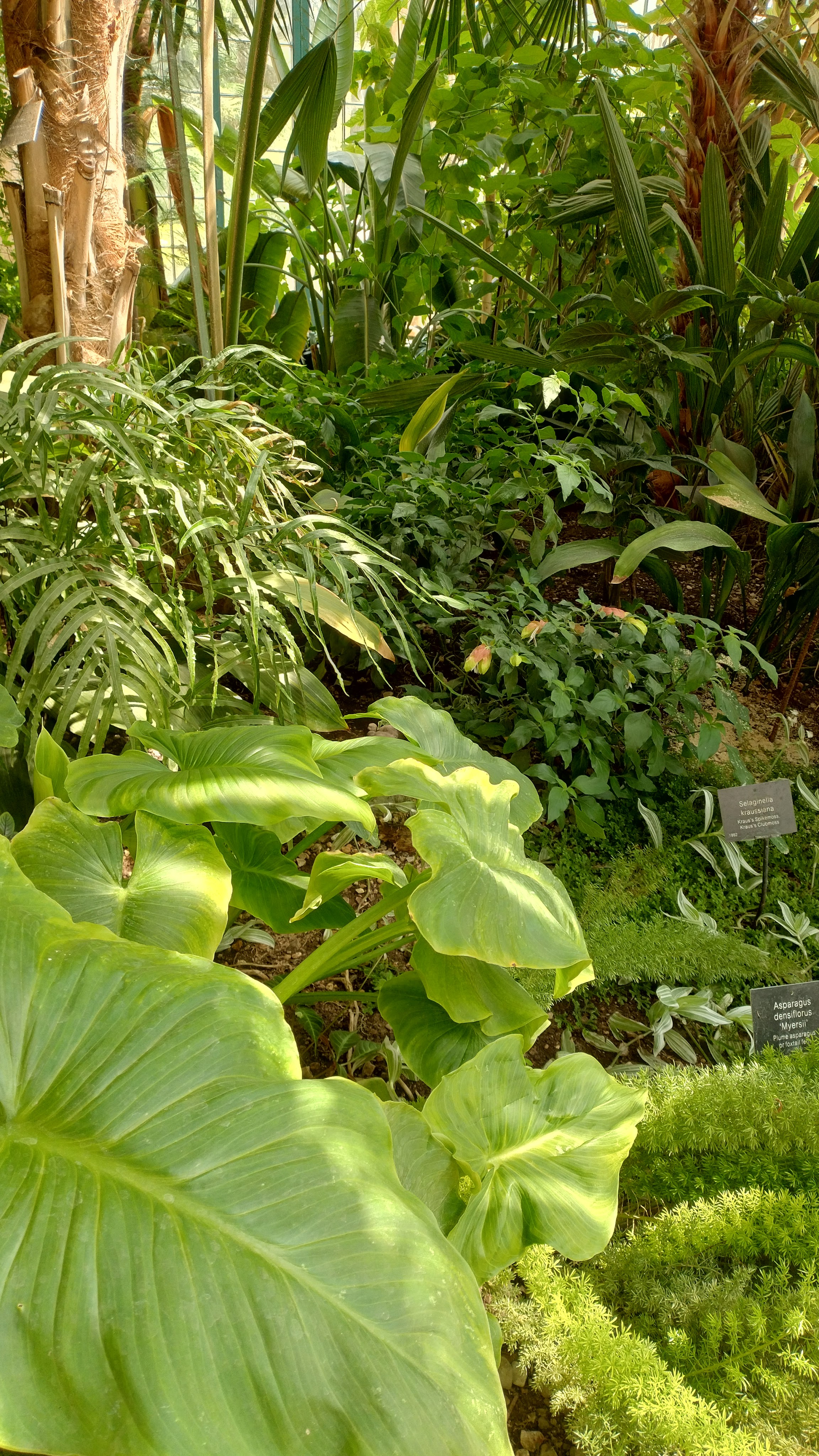
Wandering around the gardens at Belton, I found interesting contrasts and effects of light, patterns of foliage, shadows, different shapes, colours and strange things. The iron architecture of the conservatory gives structure to the green lushness and contrasts of the planting within. Windows give a frames work and let in light creating patterns on the walls and floor. It’s a sheltered indoor contained world of rare things, full of interest fro tiny details to how all the parts relate.
We will be playing with this process of drawing inspiration on the in-person drawing weekend I’m running in July. This year it’s located at Belton estate in Grantham, Lincolnshire. We’ll be based in the spacious and quiet venue of the old School in Belton village, and have access to the grounds and house of the estate.
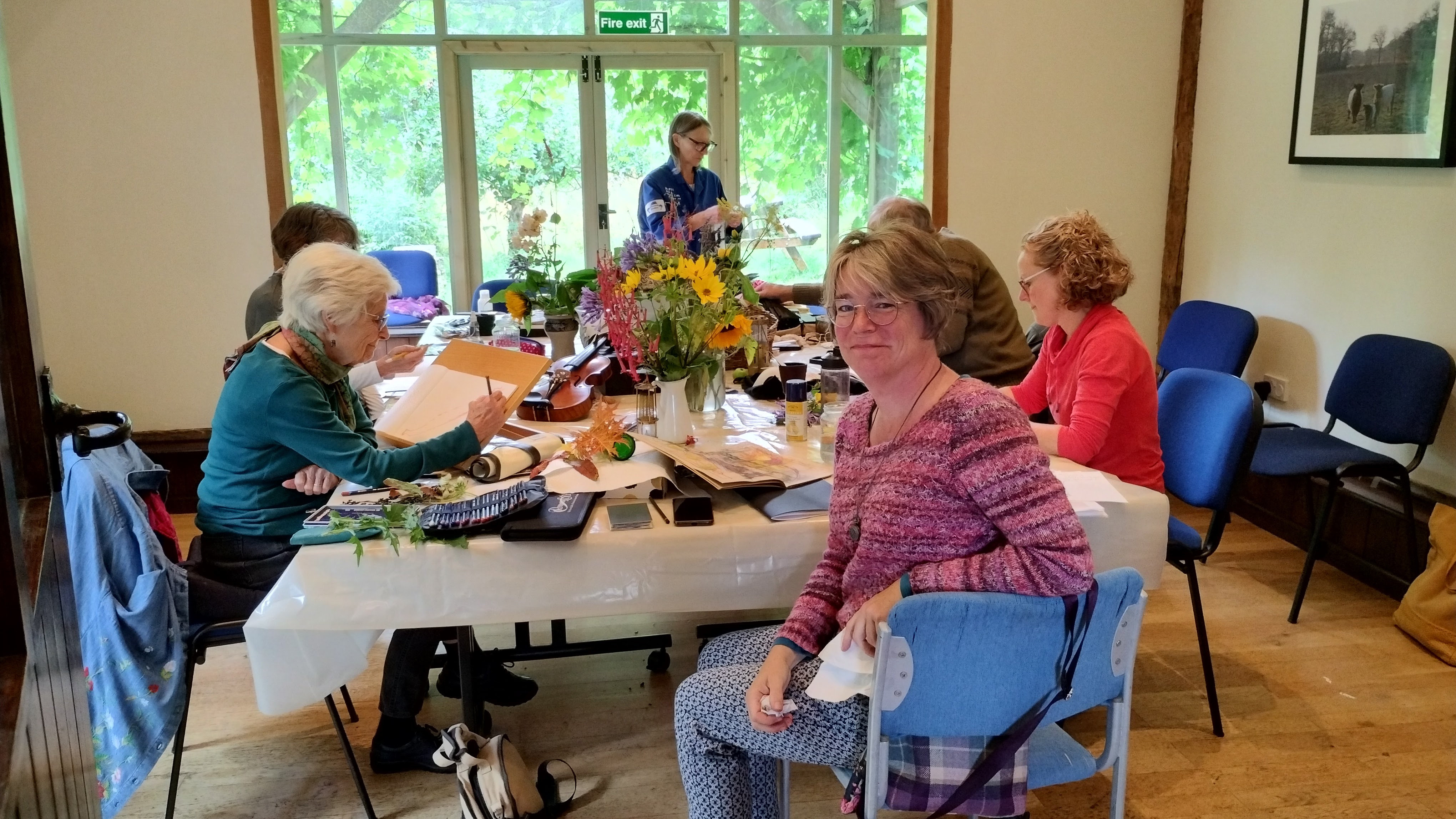
Particpants in previous years have valued the time, space and supportive atmosphere of this yearly drawing event. It’s flexible so that your csan pursue your own interests throught eh weekend, but we will start together and you can get guideance on your develop through the weekend. There are opportunities to socialise as well.
To find out more, and register your interest, follow the link below.
It’s mid-winter, and bitterly cold where I am. Snow, floods and ice are not enticing me out right now. It’s time to wrap up in blankets, get a hot drink and look for indoor inspiration.
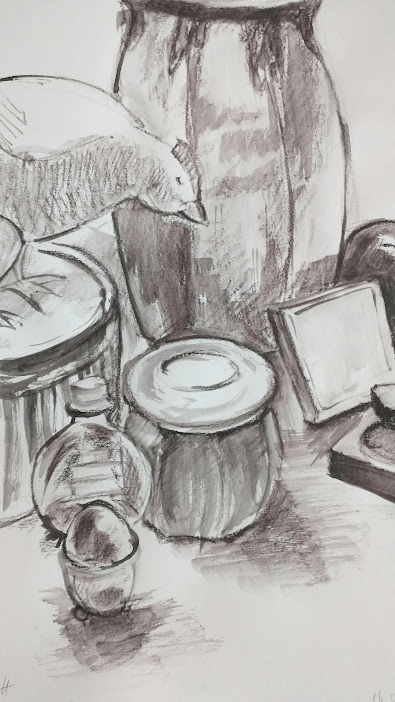
Drawing objects involves the same sort of decisions as any subject matter, in terms of shapes, space, colour and tone, contrasts, mood, balance, harmony and feeling. It’s also very accessible, and has a long pedigree stretching back into the past -artists have used objects from their surroundings as vhicles for their image making for ever. When you’re drawing at home, or joining me for a class, it pays to spend a bit of time gathering objects together which will be interesting to you, and provide opportunities for interpreting textures, exploring modelling, contrasts, and tone and colour.
Start with objects already around your home, in different shapes, sizes and textures. Anything is fair game for drawing! -a shoe, a candle stick, a cabbage, a bottle, a crumpled pillow case, the aftermath of dinner. Get curious about it, even if you’ve seen it a hundred times. Have you really looked, at the shapes, the surface, the angles? How could you indicate that texture, mix that colour?
Objects organised in groups give you more to see and interpret, and are a way to begin playing with composition. In this grouping, there are a few ceramic pots with similar shapes but quite different sizes (repetition); there are contrasts of texture (variety), and the objects are grouped in such a way that the eye travels through them, they relate, like group of friends having a conversation.
Some artist stick with the same obects which appear over and over in their work through their life. Ben Nicholson’s striped and spotted jugs and mugs appear over and over throughout his art, but over time they transformed, he interpreted them afresh. You can read more about his still life collection here, at the Pallant House Gallery website.
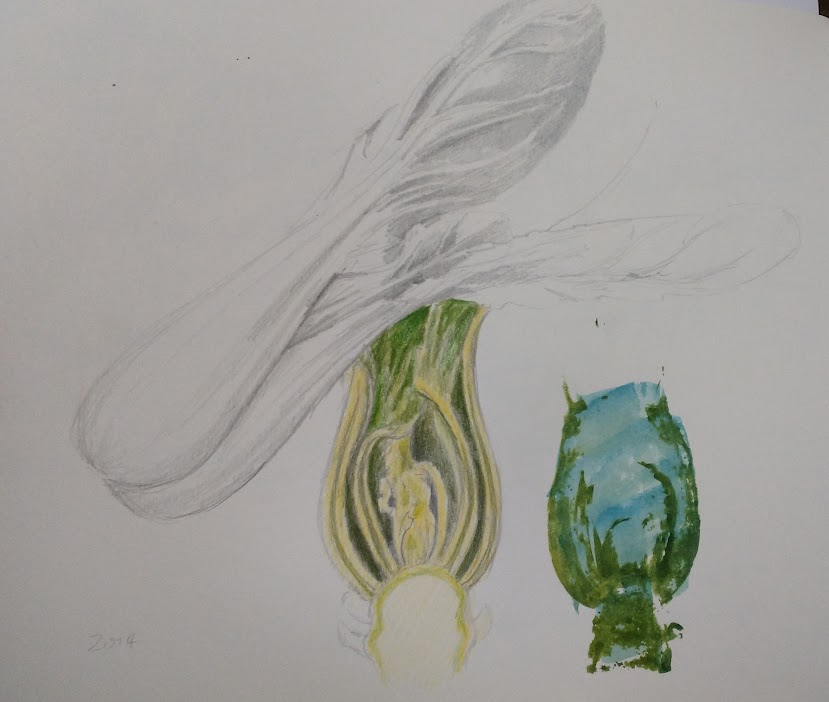
This idea might horrify you though. If you’ve been drawing the same things for years and are feeling stale, try looking eleswhere in your home for objects you haven’t spent time looking at. The veg drawer in the fridge is a good source of change (and often decay!) – there are often things in there or the fruit bowl in various states of freshness, and perhaps it changes by season and even variety. Apples will certainly change variety through the winter, with russets in autum, golden yellow matt skin, through to deep red flecked ones which are appearing now. You can cut and slice your fruit and vegetabels in different ways to create a new view. Below: Pak choi, drawing in graphite, sliced in half and observed in coloured pencil, then printed. The remains went in the stir-fry.
Small ornaments can make a good study by themselves. You never know how they may become involved in something else later on… like the animated objects in the 2017 Disney film of Beauty and the Beast (director Bill Condon), your possessions might take on imagined a life of their own.
JOIN IN: from 9th January 2025, Thursday Drop in Drawing at 7.30 PM London Time. Click here to find out more.
It’s been a busy few months; I’ve run two drawing summer schools this year, of very different sorts, and met some diverse and interesting people in each setting. One was more informal, the other more structured, but both about developing confidence and allowing people to grow their belief in themselves and their own creativity. I feel so lucky to spend time with my students, and their questions and conversations really stimulate and inspire my own thinking about art.
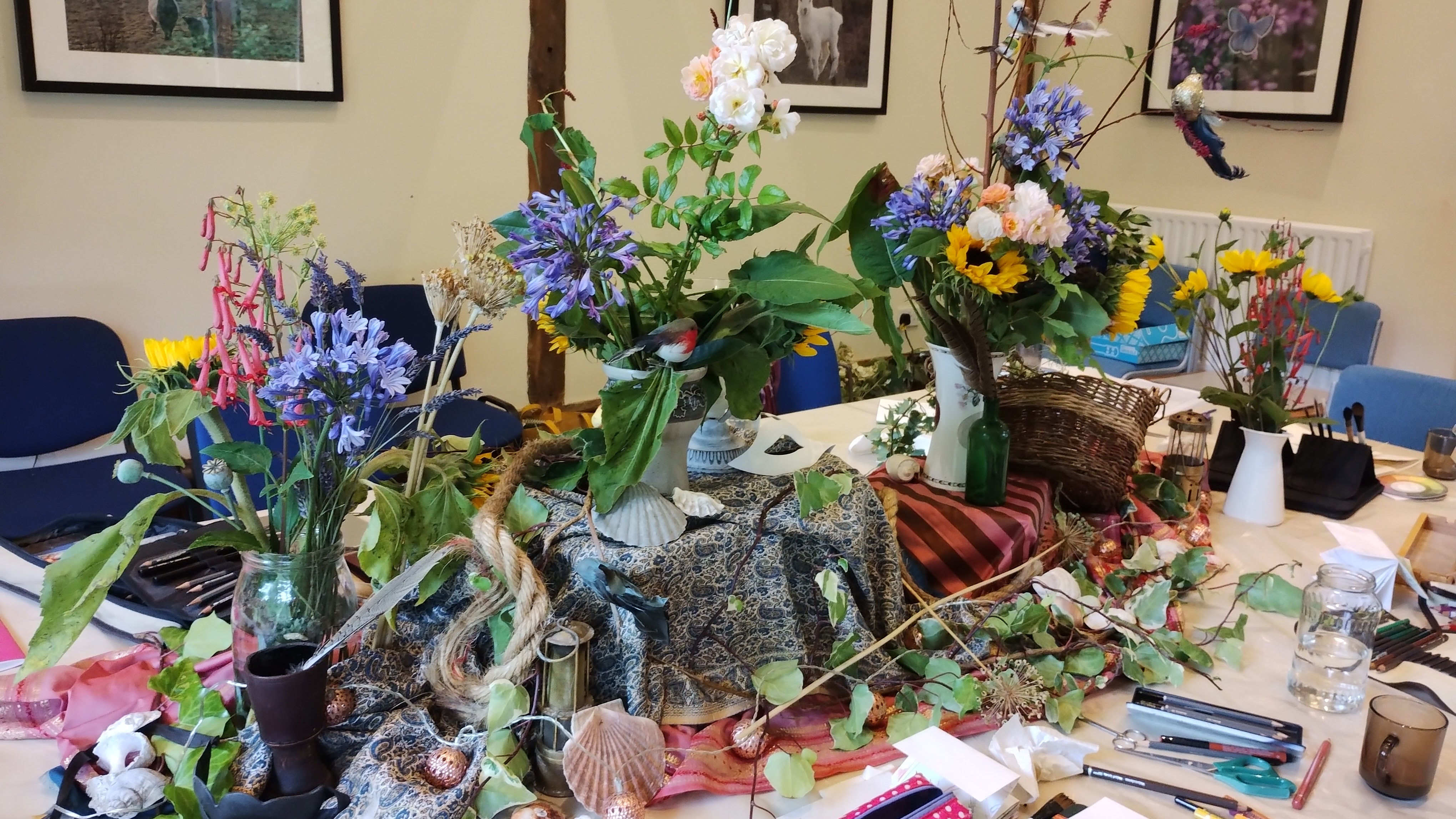
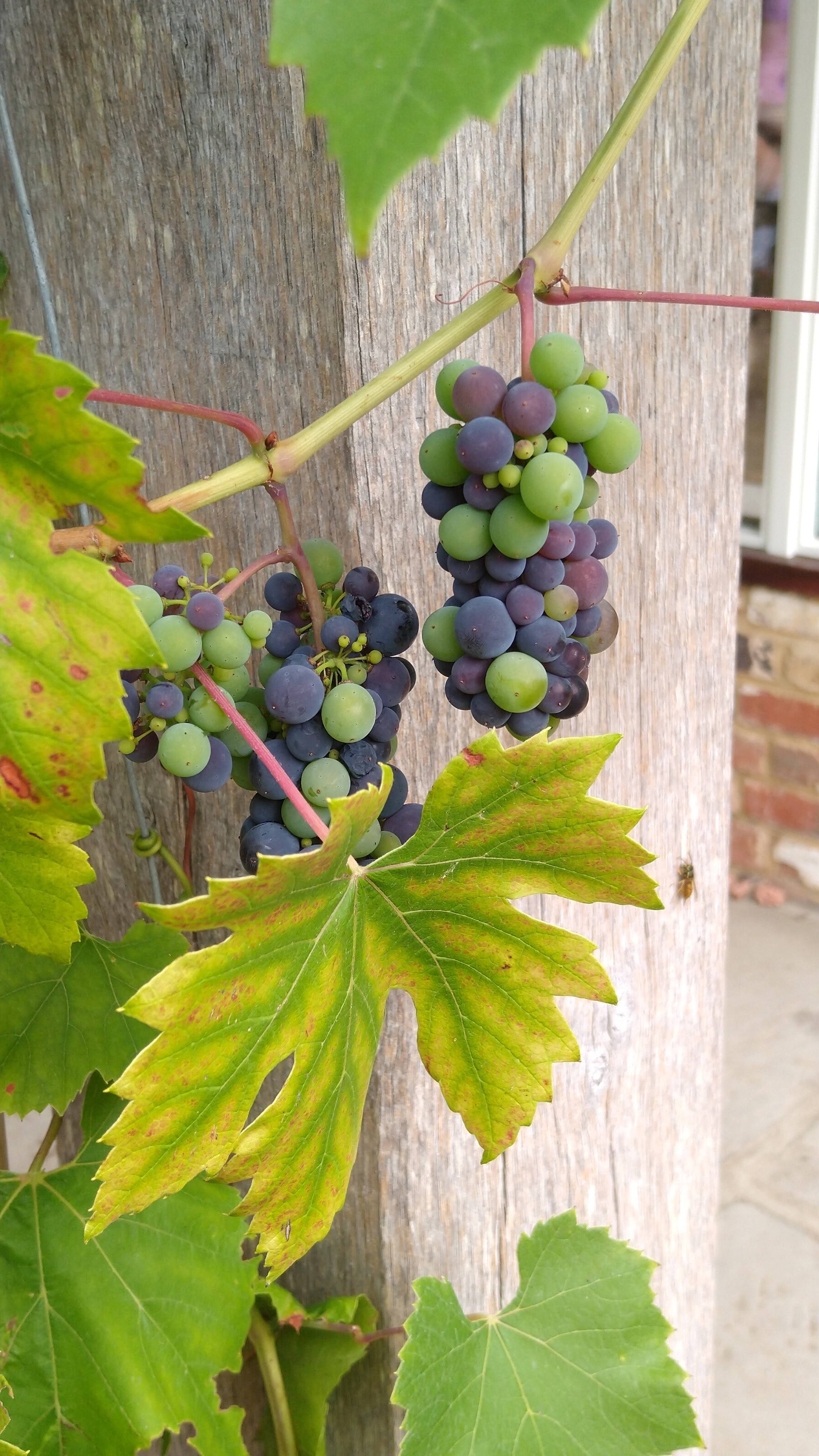
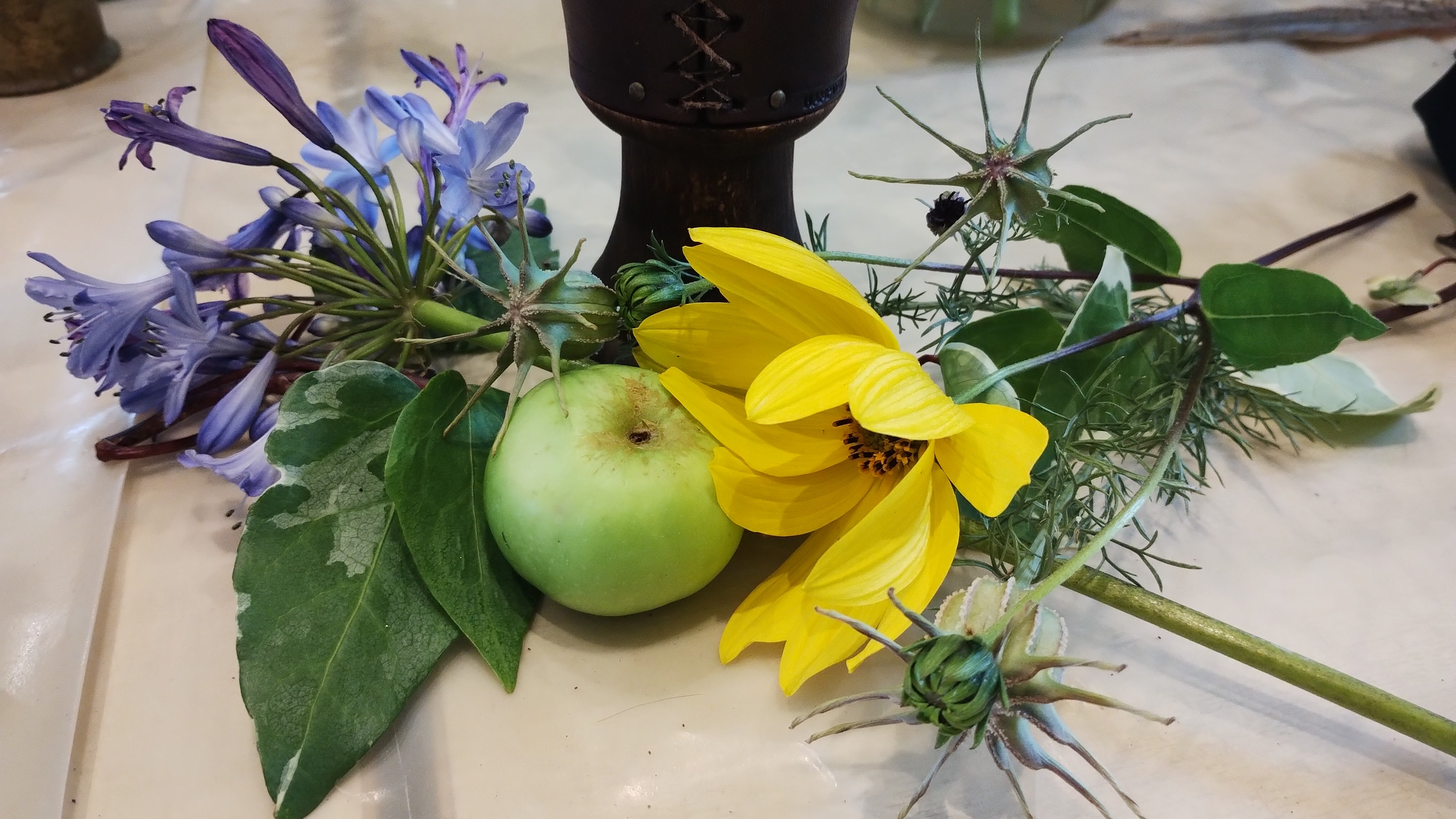
For the third year running, in July I hosted a small group in the lovely surroundings of Pucks Oak Barn in Compton, Surrey. It’s a beautiful green space surrounded by a woolly and wild community orchard, buzzing with insects and all sorts of plants; the weather was kind enough to allow us outside on Sunday, where particpants collected also sorts of interesting things from sensations to seedpods.
The focus was on creating space for each participant’s own practice, whatever they might need at this point – and we had a diverse group with varying levels of experience and wishes for what each wanted from the time. With such a small group I could work with each person and give individual guidance, so each could follow their path – and we had quite different results from the weekend: small folded books made of drawings, a giant collaged painting, colour charts and collaged concertina books.
It was a very relaxed time with lots of permission and encouragement to do whatever one felt like doing, including rest and chat!
For the first time this year I participated in the Royal School of Needlework’s International Summer School, the first to feature an art class. It was also my first time taching this back on site at Hampton Court since March 2020. A week later that year the country was locked down; the last session of that course was delivered on Zoom, and was the pioneer for live online classes for the RSN.
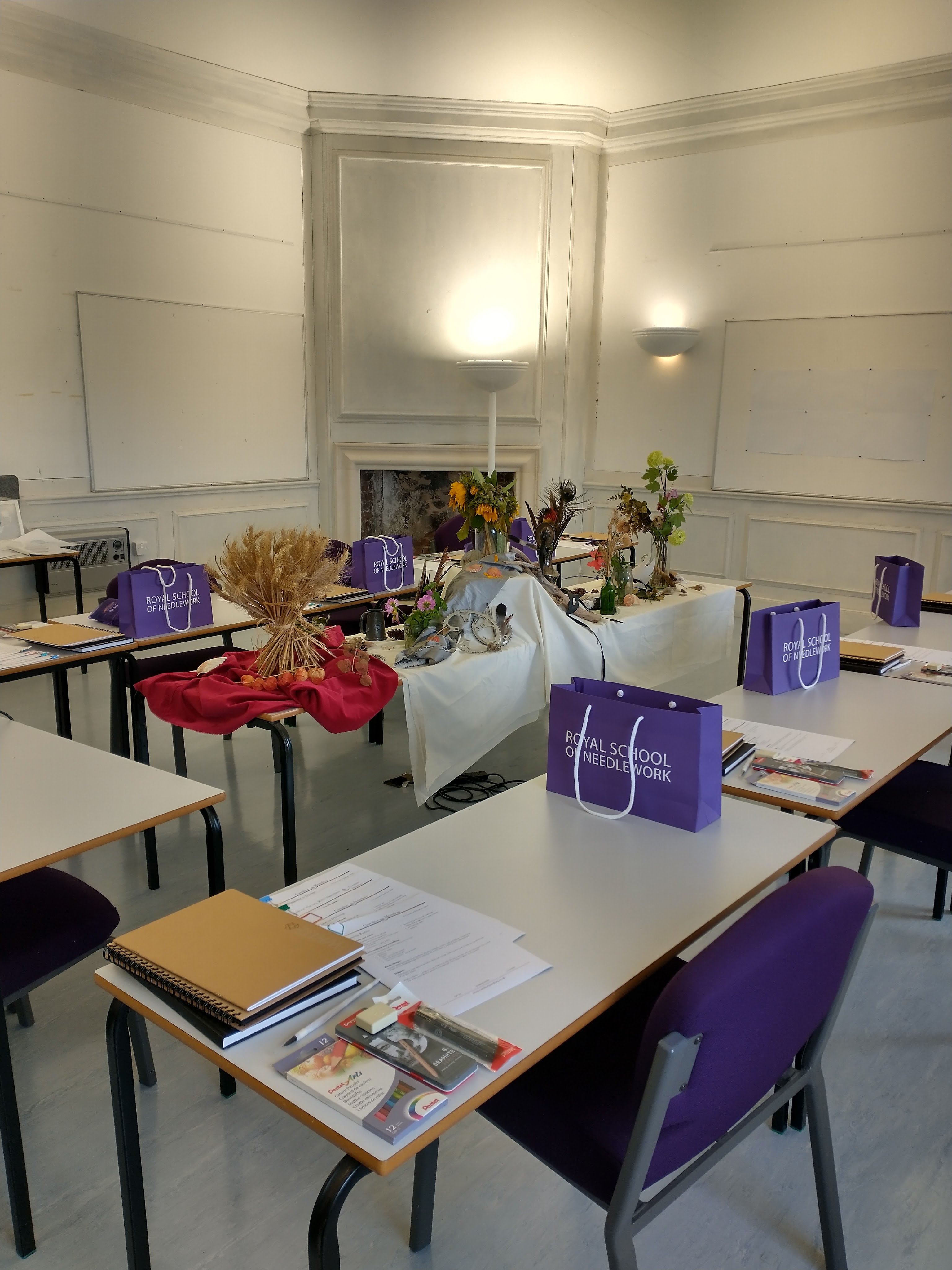
The classroom was beautifully prepared by Noleen, Education Manager, and I was very ably assisted by RSN graduate Future Tutor Sonia Lee. We had an intense week with eight students, looking at drawing principles from the beginning with lots to learn and lots of experimental processes amongst the more traditional artistic principles and processes. People are often surprised to discover that there are learnable structures and principles behind art, it’s not a magic process which you can do or not.
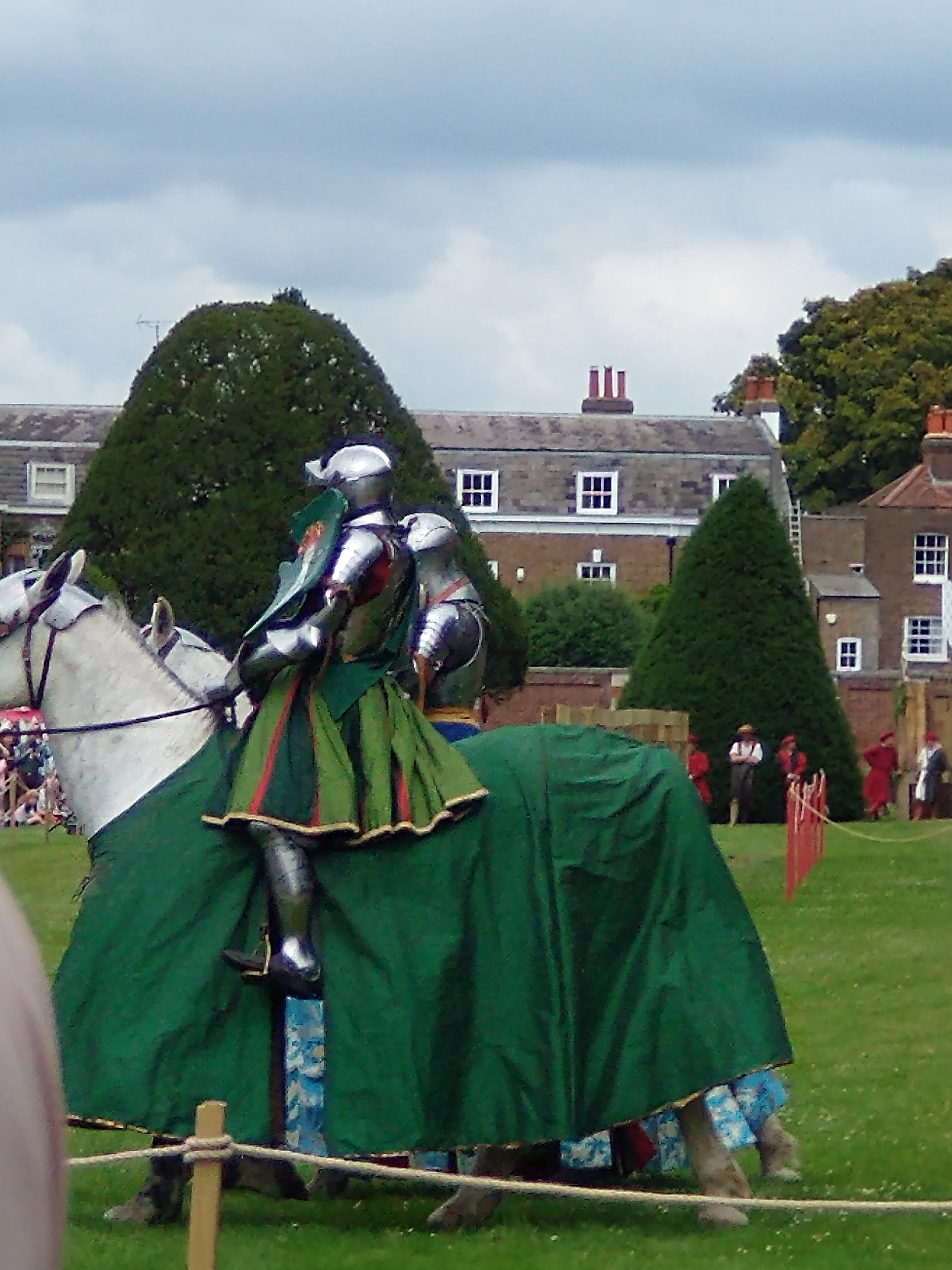
There’s always a lot going on at Hampton Court in the summer, with costumed intpreters and re-enactors doing their stuff in the kitchens, walking about the palace and jousting in the grounds. RSN staff and students had a special trip to Buckingham Palace to see the Coronation exhibition and the robes and screen on which RSN staff and students had worked. It was in all a super busy week with lots to learn, lots of complicated travelling arrangements and much to see and digest.
For me what tied both quite different teaching experiences together was the goal of enabling confidence and excitement for the students. I aim always to give encouragement to see more clearly, to experiment and to play, and permission, to follow wherever curiosity might lead, and believe in one’s own inner creative voice.
My greatest reward is when someone says: ‘I realise I can just do whatever I want with my art and try things, it doesn’t matter’. When they say ‘I believe now I can draw’. When they say ‘I see new things I didn’t notice before’.
How to take the skills you’ve learned on a small scale into the outdoors.
Go on a small local expedition first.
A Simple Kit. Take familiar materials which are convenient and easily portable. What are you most comfortable with? Perhaps just starting with a 2B pencil and small sketchbook is easiest – you can fit thos into a pocket. A little case of select coloured pencils? You can work with 12 and make most colours. Take a camera too, if you like to record information that way. It’s especially useful for things which are transient or in motion and are hard to capture without that magic of being able to freeze them in a photo.
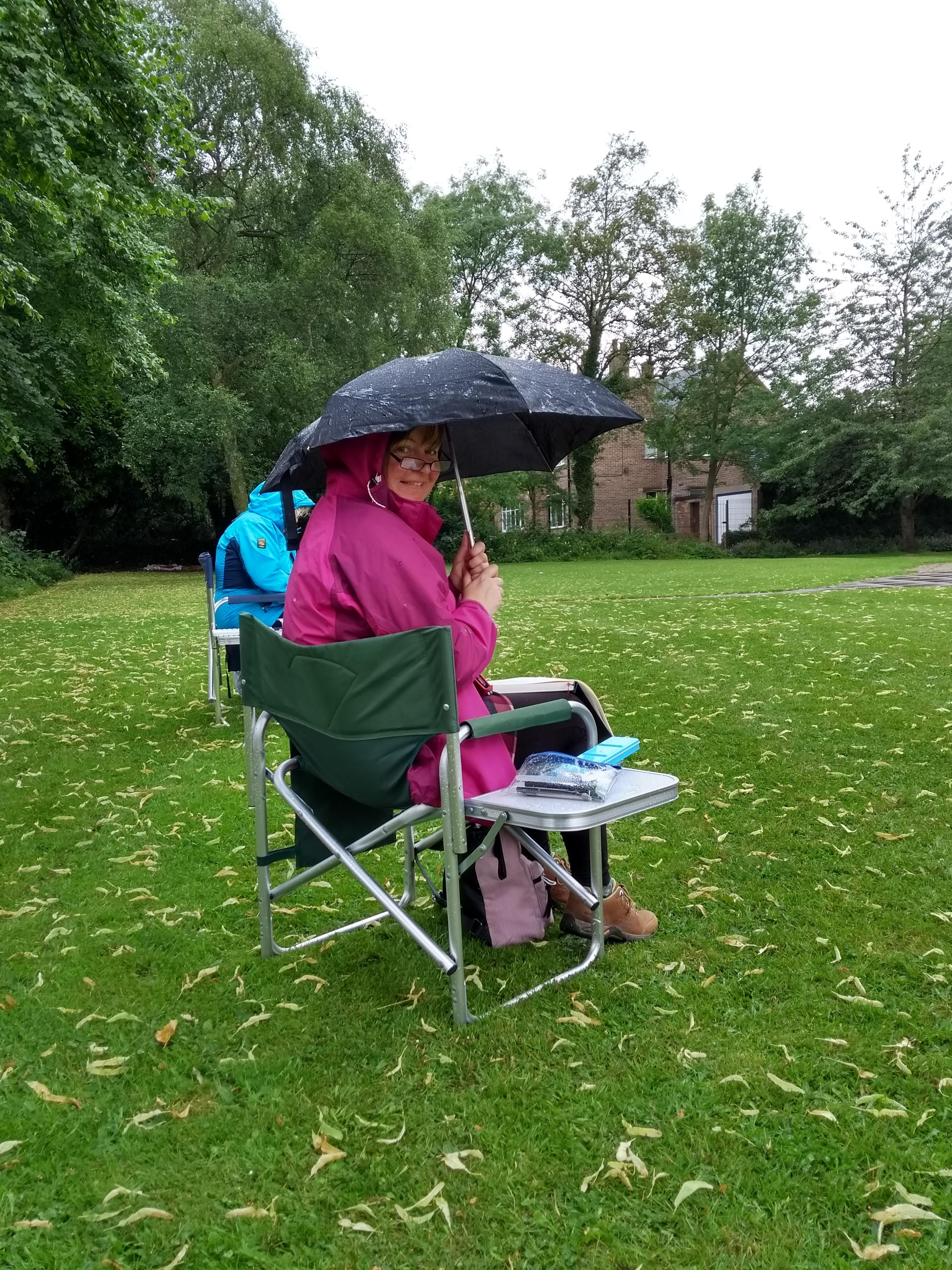
Clothing. Wear clothes and shoes or boots in which you will be comfortable, and will protect you from whatever elements are at play – whether it’s sun, wind, or even rain. Remember if you are standing for any length of time without moving, you will cool off, so might need another layer, thicker socks, a hat. How are you going to access your materials? A small bag or a pocket might be enough. Decide if you are happy standing or sitting on the ground; you could take a small stool, or something waterproof to sit on (I often sit on my waterproof trousers, or a carrier bag, on the ground).
Optional: portable cup of tea. I always take one! Some water is a good idea, especially in hot conditions. When drawing one can forget the passage of time and ‘come to’ feeling hungry and thirsty.
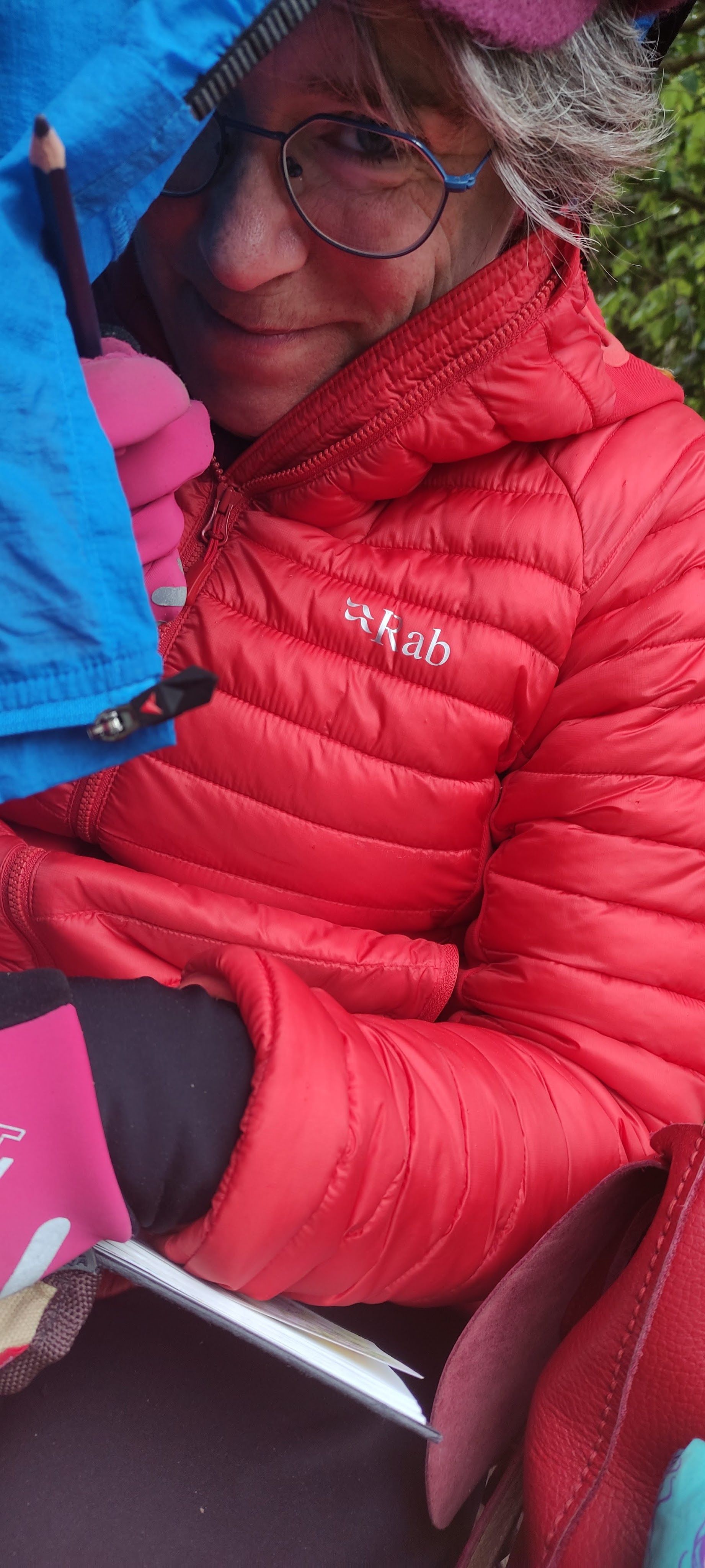
Sarah prepared for all weathersSome unexpected spots of rain – a coat over the head kept the paper dry!Plenty of layers hereDrawing outdoors means being prepared for different states of wet and dry, warm and cool. Sarah and I demonstrating outdoor kit.
Start walking. Amble, in a non-purposeful, easy way. You want to feel unpressured and be able to pay attention to what’s around you. One way to do this is to pay attention to your senses – not just sight, but scents, and sounds; the feel of the ground, the smell of the earth, the noise made by your footfall, and any sounds you can hear, whether wildlife or man-made. These can help you get into the ‘right mode’ way of being, which is optimal for creativity (see Betty Edwards, Drawing on the Right Side of the Brain, for more about that).
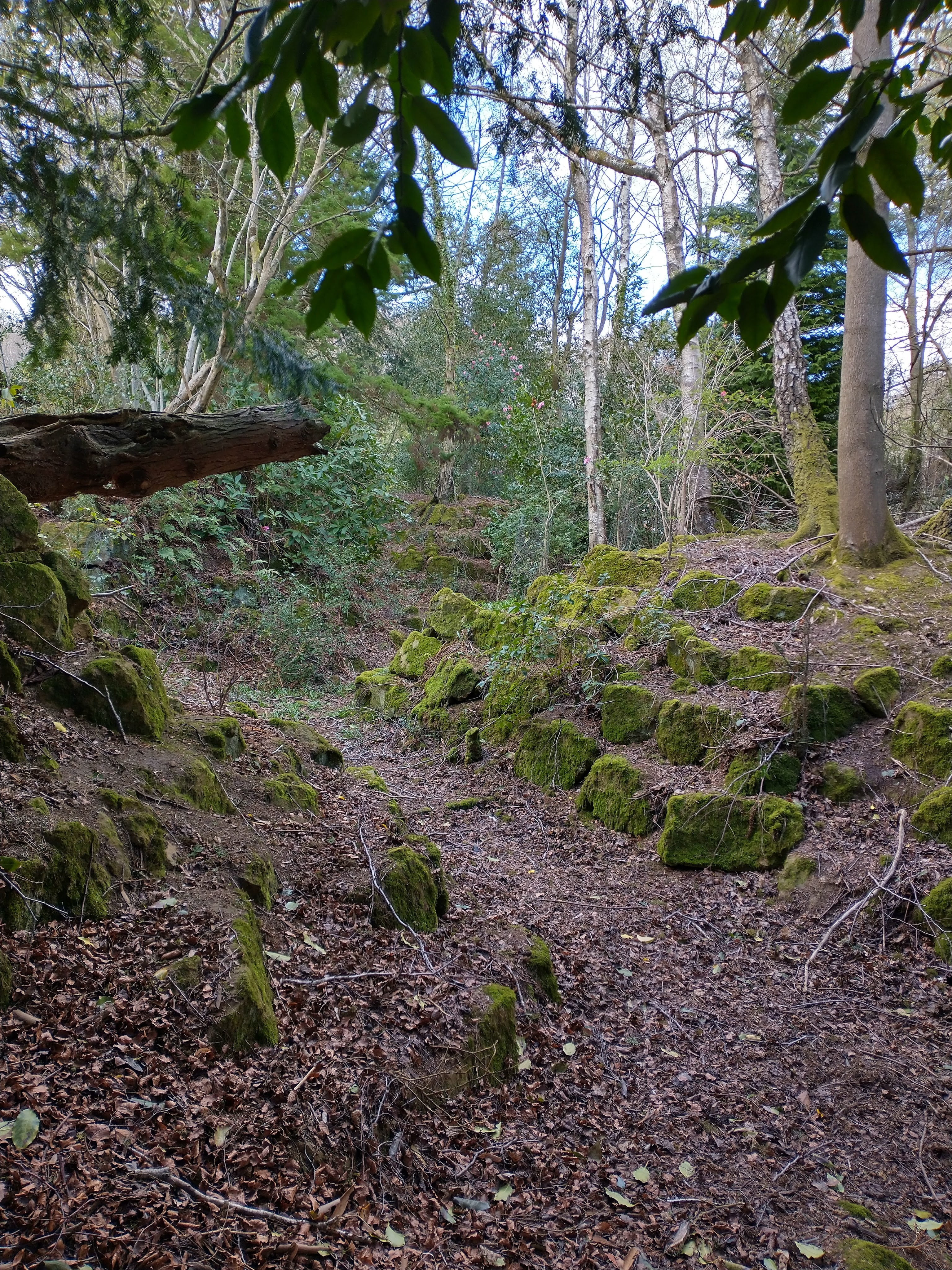
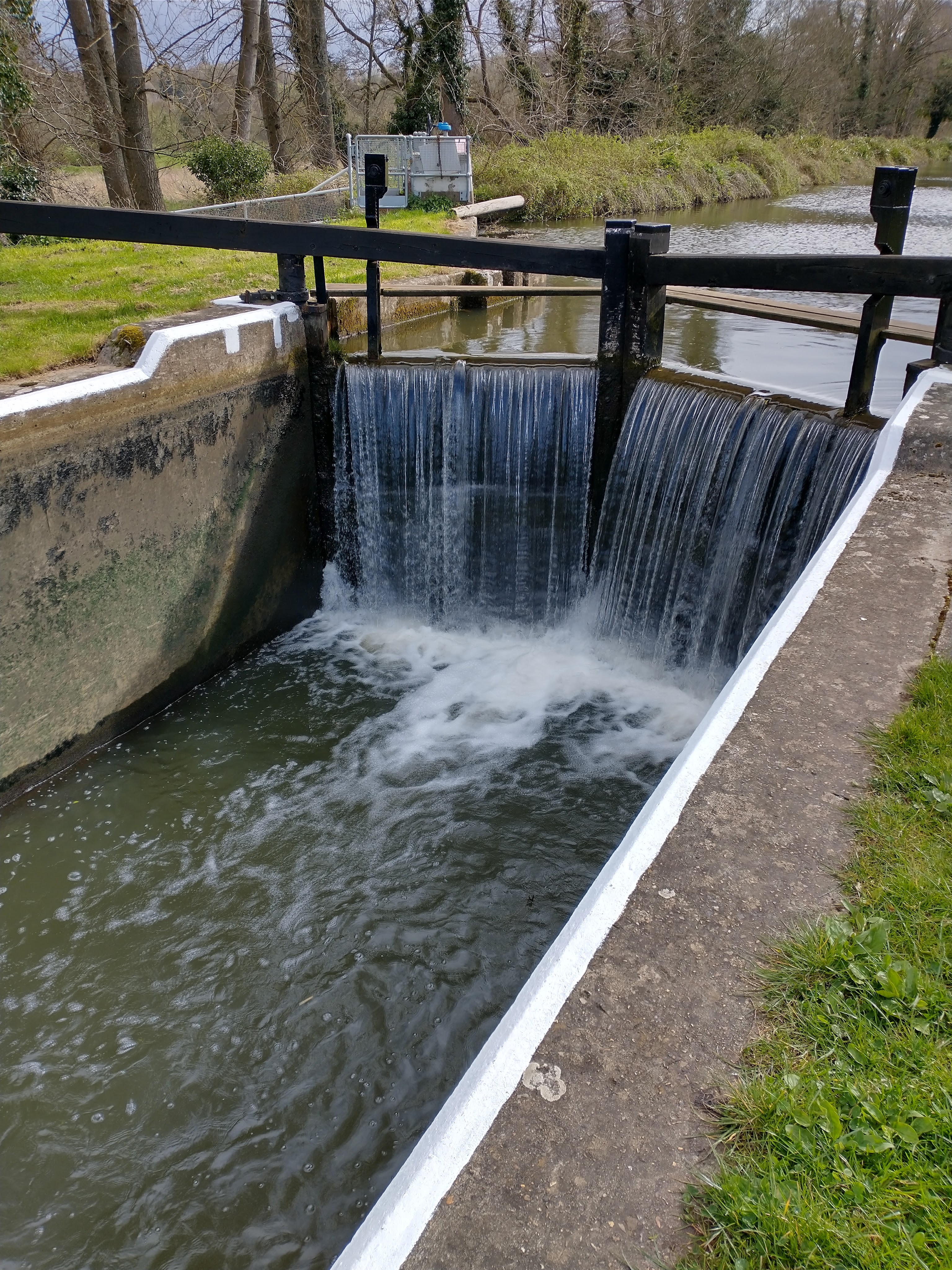
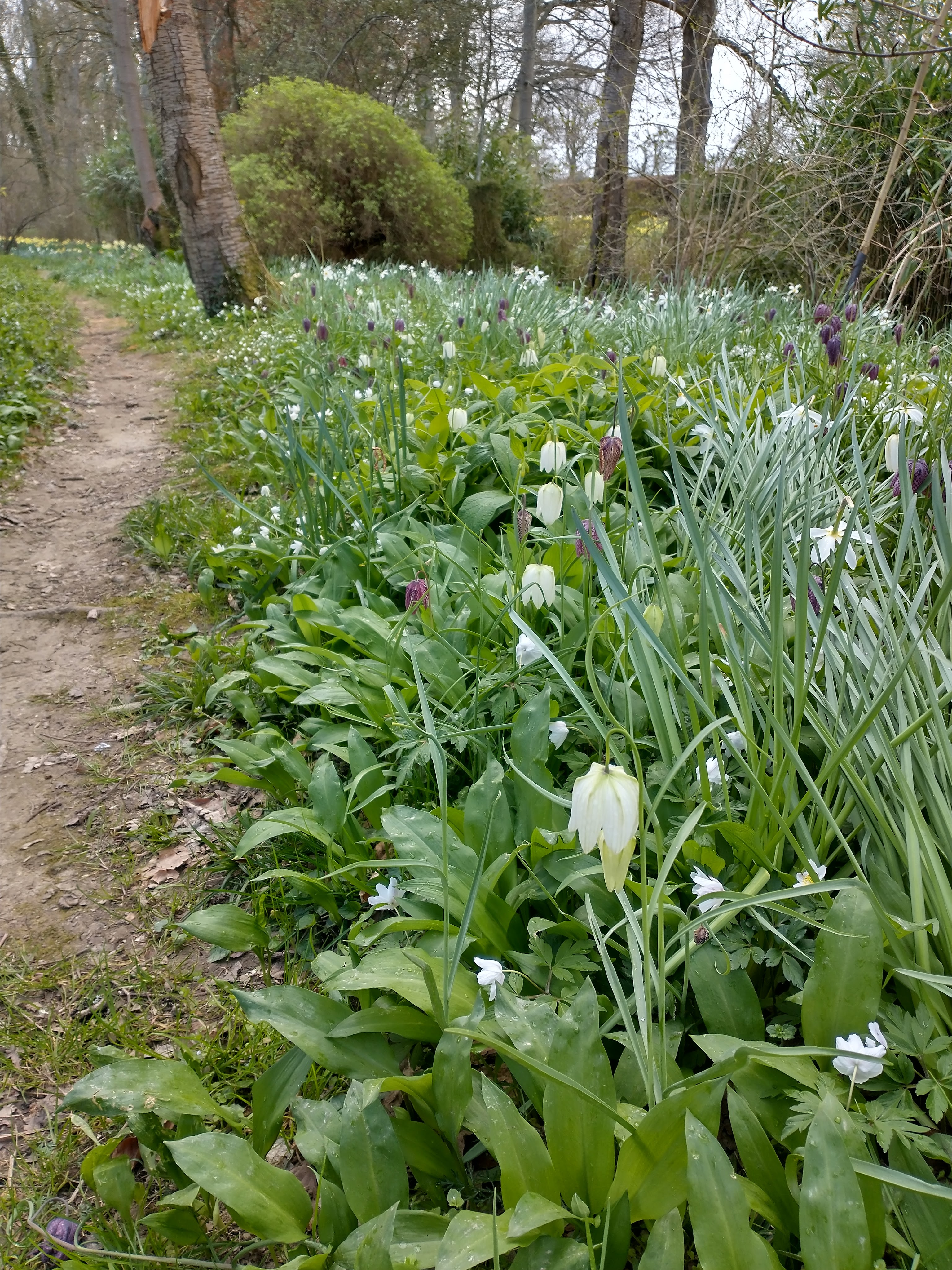
Look and See. What catches your attention? Here are some things which caught my eye three different local outings recently, two in gardens, one on the river Wey.
The subtle colours of the mossy rocks, and their shapes, against the leaf mould; the strong lines of the lock sides gates and the water pouring over the gates; the texture of the delicate spring flowers and the path receding away to …who knows where?
Start simple. All those things which apply to drawing small subjects indoors apply outside, it’s just on a different scale. You might start with drawing a detail – some leaves, some bark. If you’re drawing a scene, the trick is to focus on the larger aspects first – the large shapes, the colour contrasts, the textures and what marks might convey them. Make studies, not a finished drawing: get the composition right with a quick sketch of the large shapes; record the colour, either with colour swatches or notes about what colours are there; make some sketches of the details. This is drawing as a process, to learn about the subject.
Set a time limit. Draw for 10 minutes, to capture some element of what interests you. Draw for longer and you’ll have more time to investigate some other elements, as above.
I don’t really draw this fast….
Revist. If it’s local you can go back and look some more. There is always more to see; one reason for specialsing in a subject matter is because it takes time to truly see that subject and get to know it.
If you are anxious about being observed. A small sketchbook is very hard for others to look into. You can discourage looking with your body-language, hiding behind sunglasses or wearing a large hat! However, in my experience if anyone is curious, it is because thay have an interest in art and wish they could do it themselves. They might even be wishing they had your spirit of adventure to try.
Have you tried drawing outside? I would love to hear about your experiences: how was it? and perhaps what you drew, if you’re willing to share. Did any questions arise for you? Use the comments section below or send me a message via the contact form.
On 5th May 2022 it will be two years since I ran the first pilot Zoom session for the Royal School of Needlework – it was the last of a three-day drawing course, of which the first two days were delivered in person at Hampton Court.
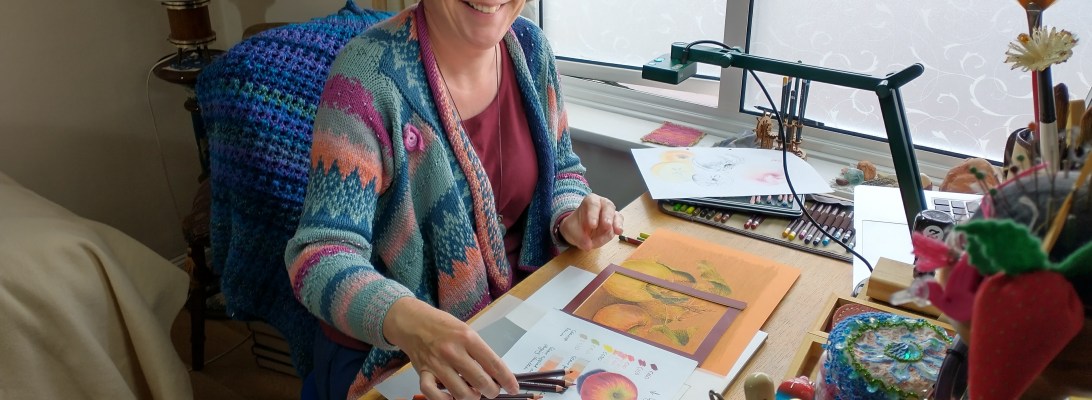
Learning to mix and choose coloursThe Zoom classroomTonal study drawingTwo years on… my Zoom classroom in May 2022.
The virus moved fast. By 23rd March we were in lockdown, a word I had not been aware of before the arrival of Coronavirus. I had one final drawing session to run of that three day course, as well as a ragular class of my own and a monthly ukulele group session I was responsible for- so lots of things which I wanted to keep going if I could find a way. I ran the first ukulele group session on 24th March 2020, with quite a bit of anxiety and finding the lack of feedback strange – I remember it felt very one way, me projecting outward. But it was better than not meeting at all.
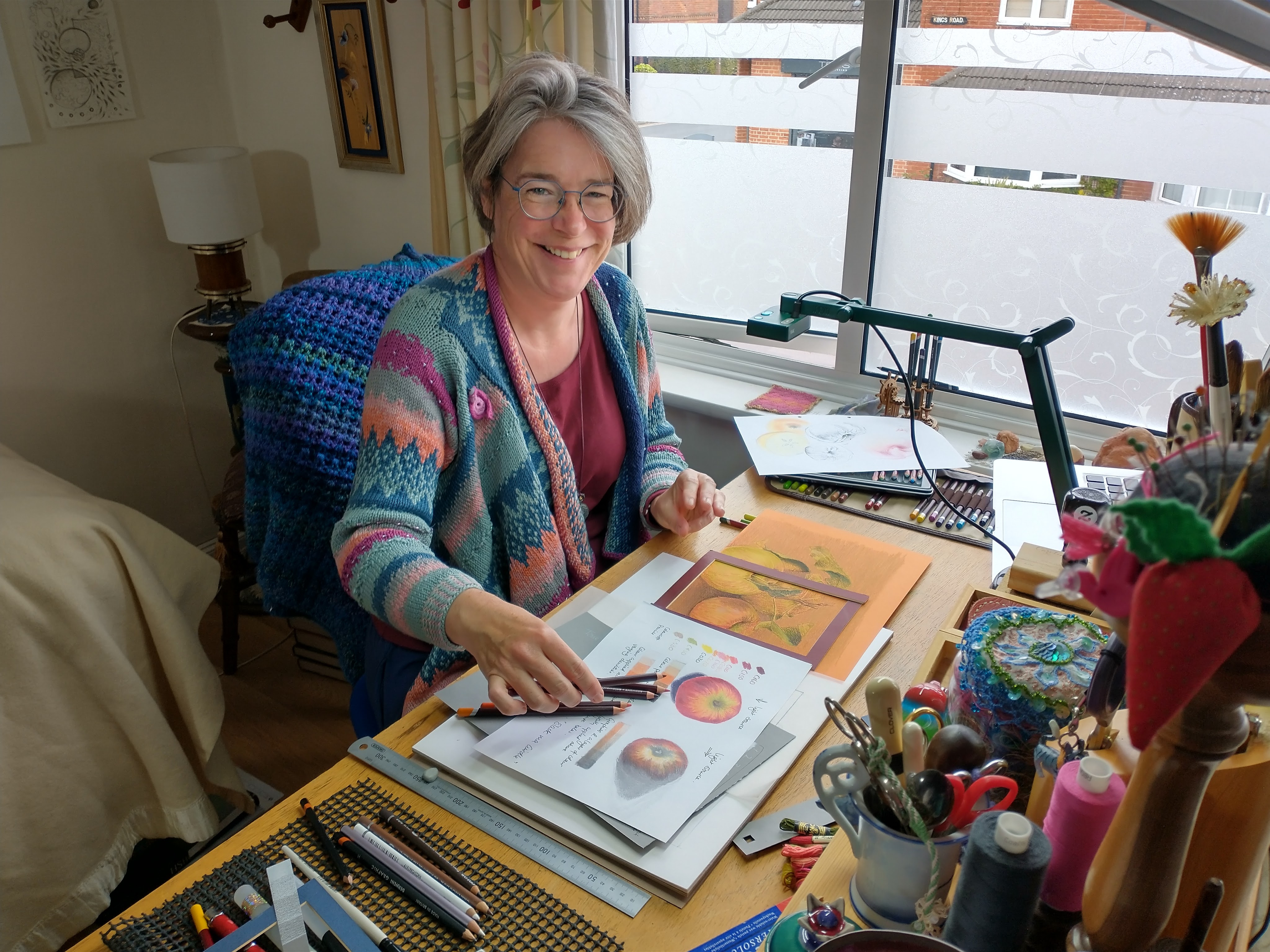
As I remember, I’d spent April getting used to Zoom and training my various students and ukulele group members how to work it. I got my own local drawing class going online on 30th March. I’d run a few sessions for the ukers and my own class weekly so I was in a good position to respond when Noleen, responsible for organising day classes at the Royal School of Needlework, asked me to try the remaining drawing session online on 5th May. I had an old webcam strapped onto an overhead lamp with a bit of masking tape, which I used to show my paper and the exercises during the session, and I used my facilitation skills to help everyone feel engaged and get them all interacting, which can be a challenge in Zoom. Students were so appreciative of the chance to go on learning online. Noleen was very enthusiastic and encouraging about trying it out, and very positive about the results.
The 5th May 2020 final drawing class session worked well enough on Zoom for the RSN to go forward with advertising and running online classes.
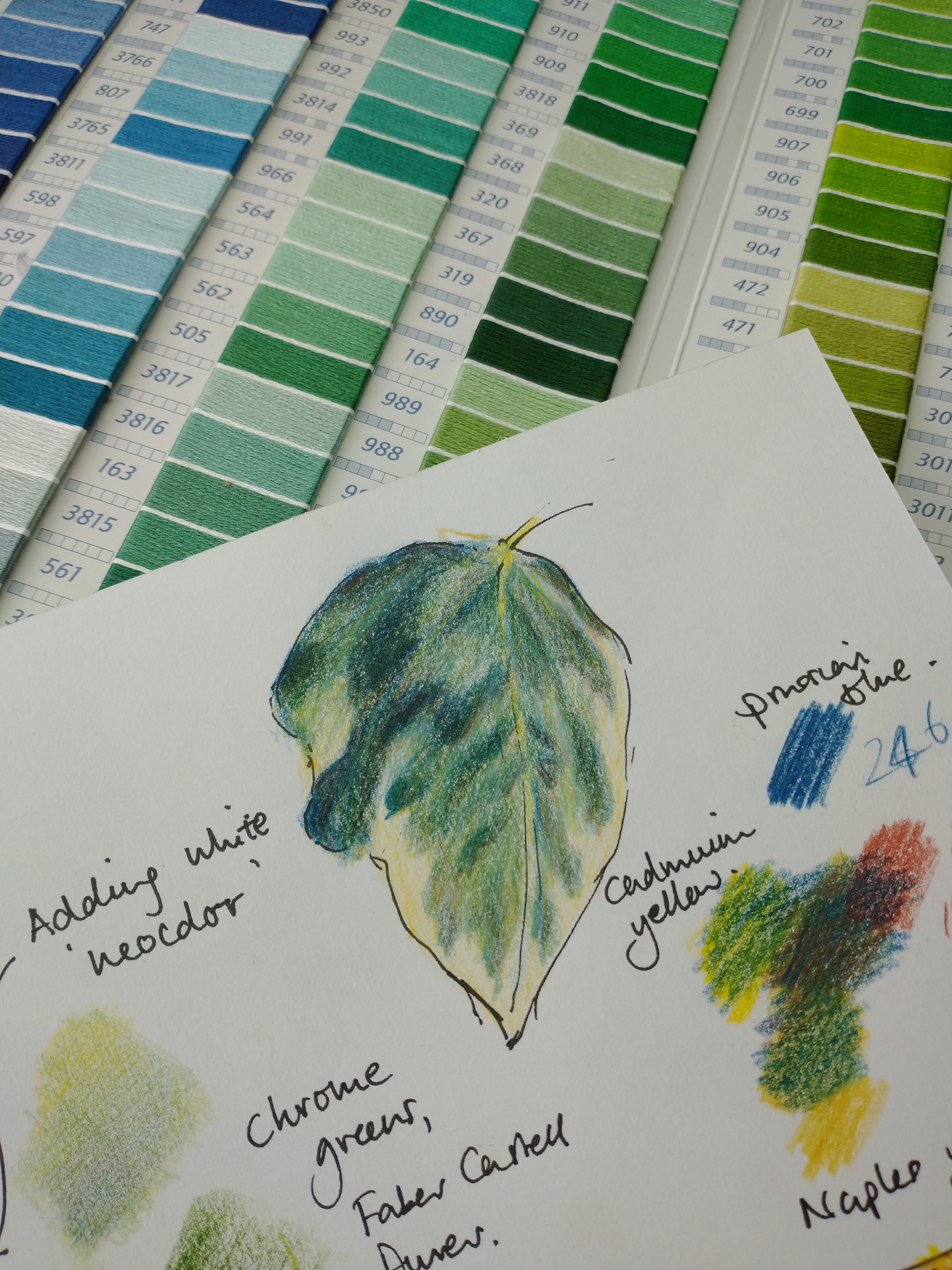
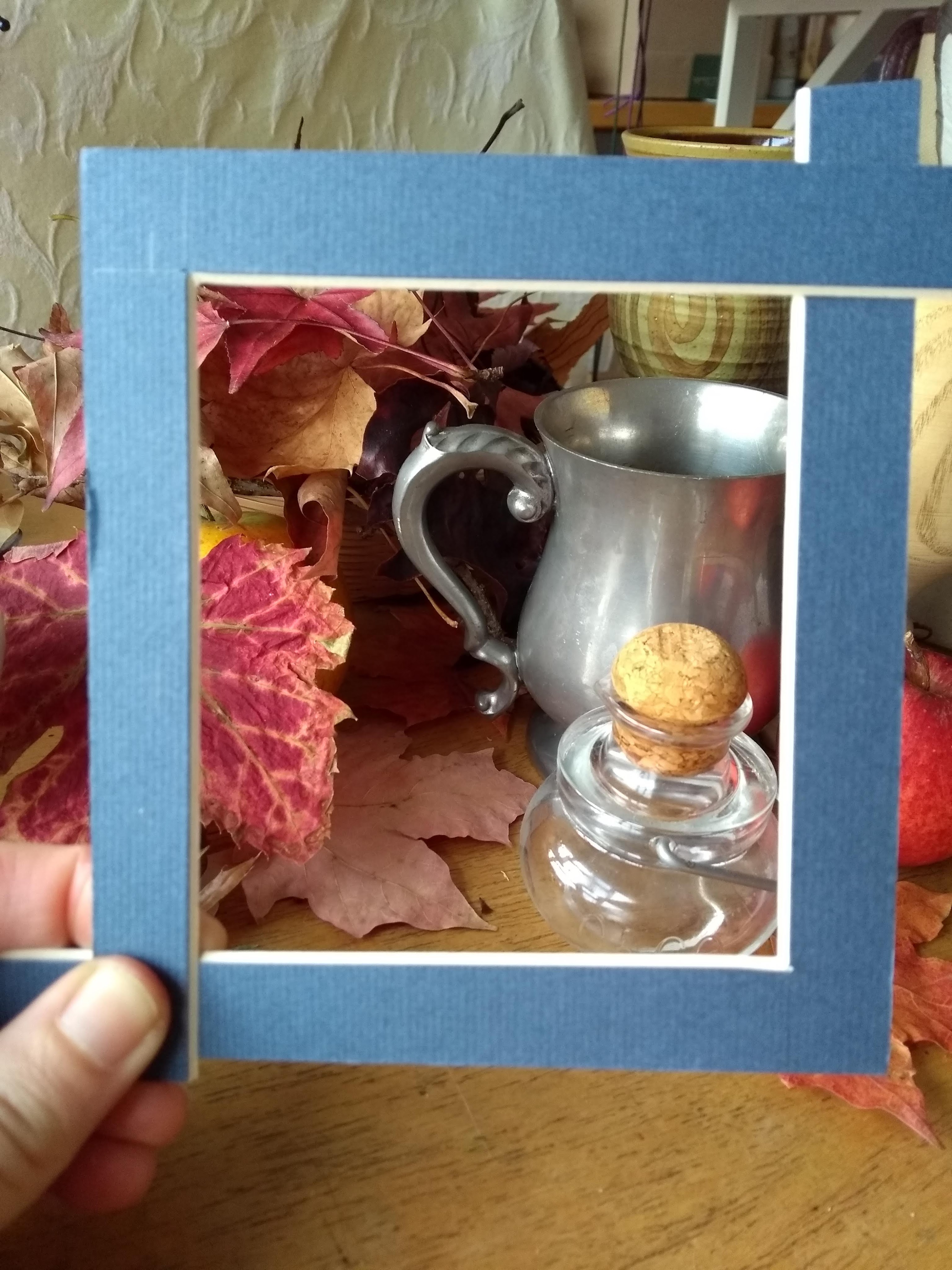
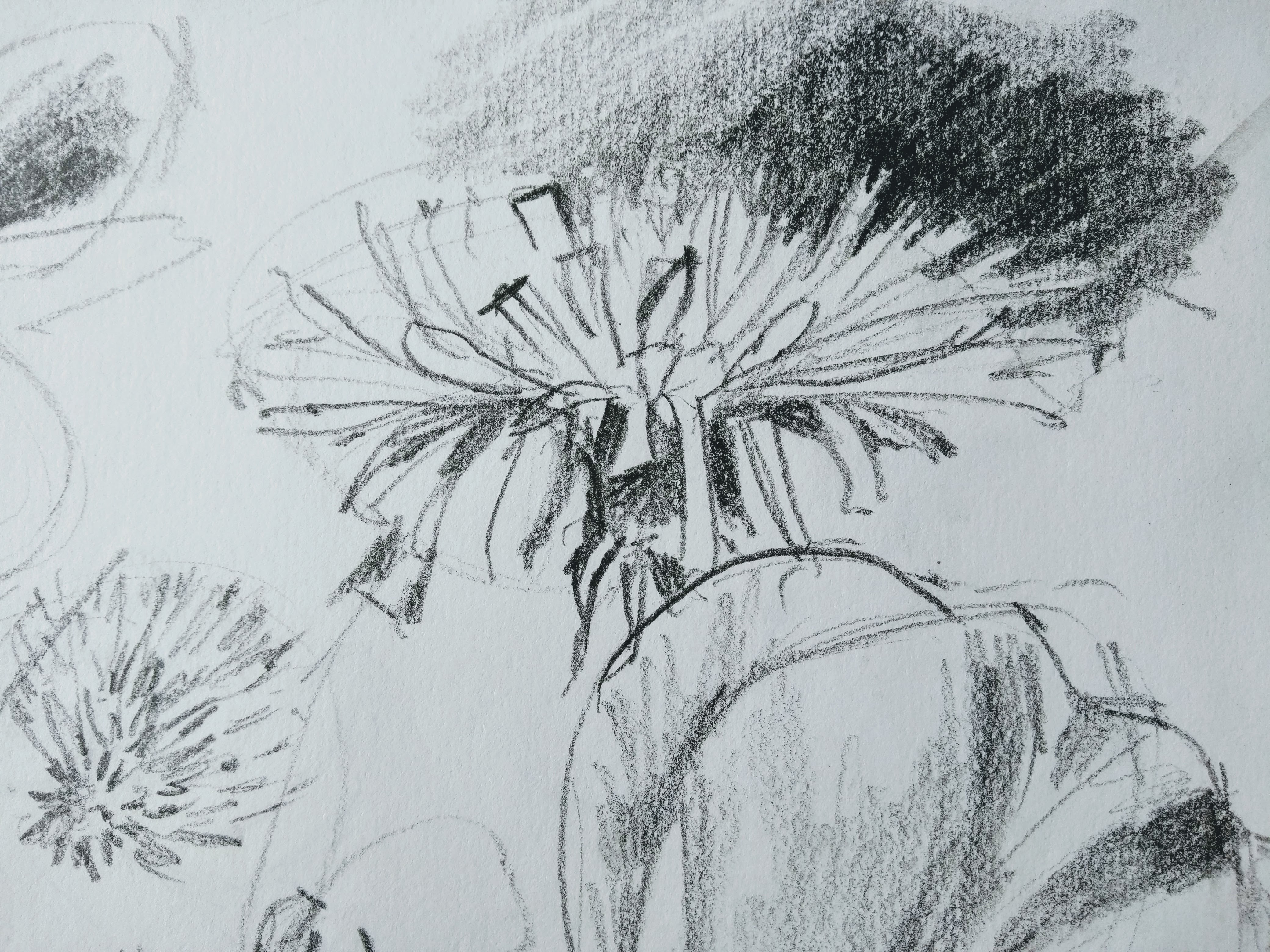
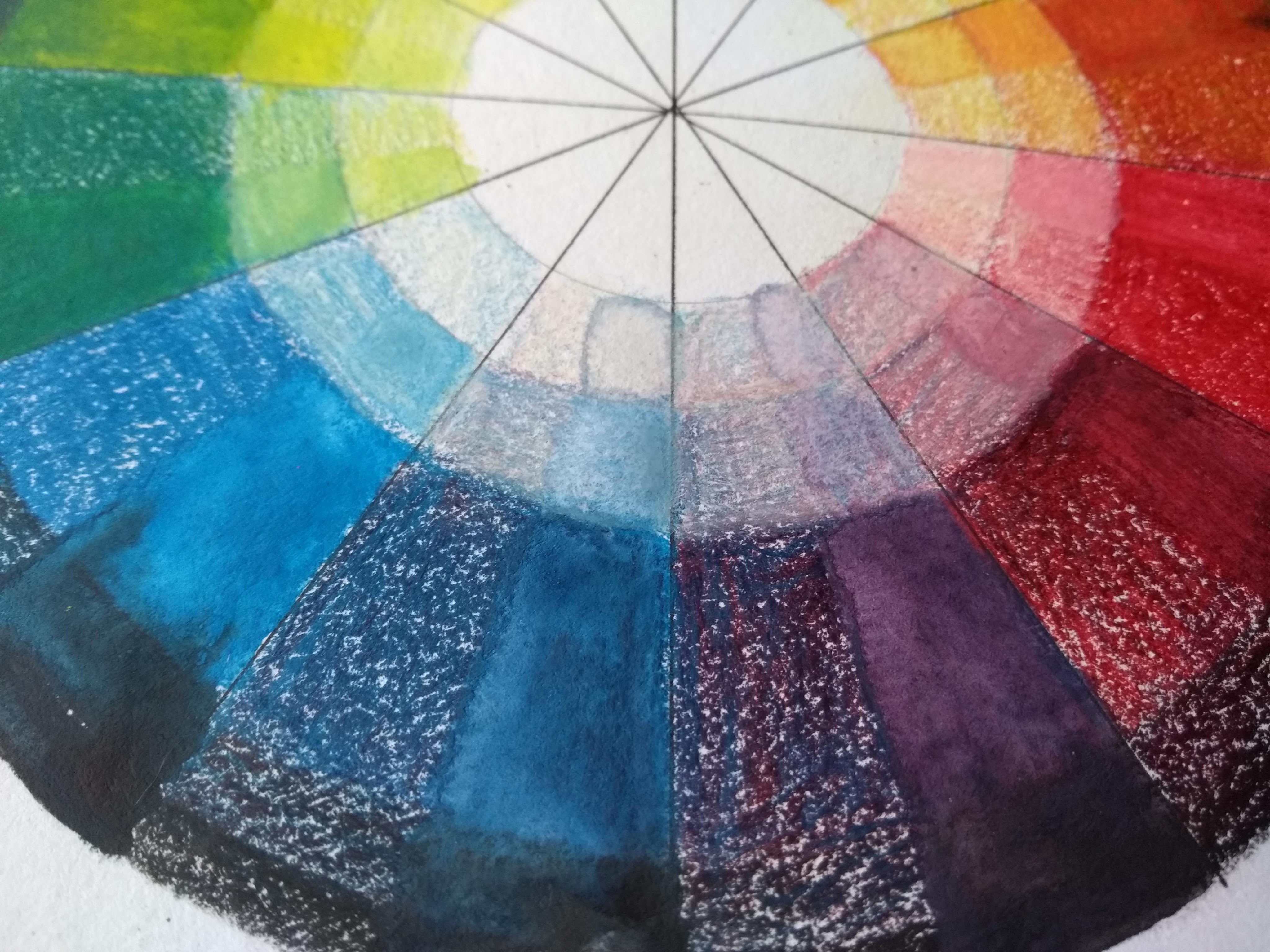
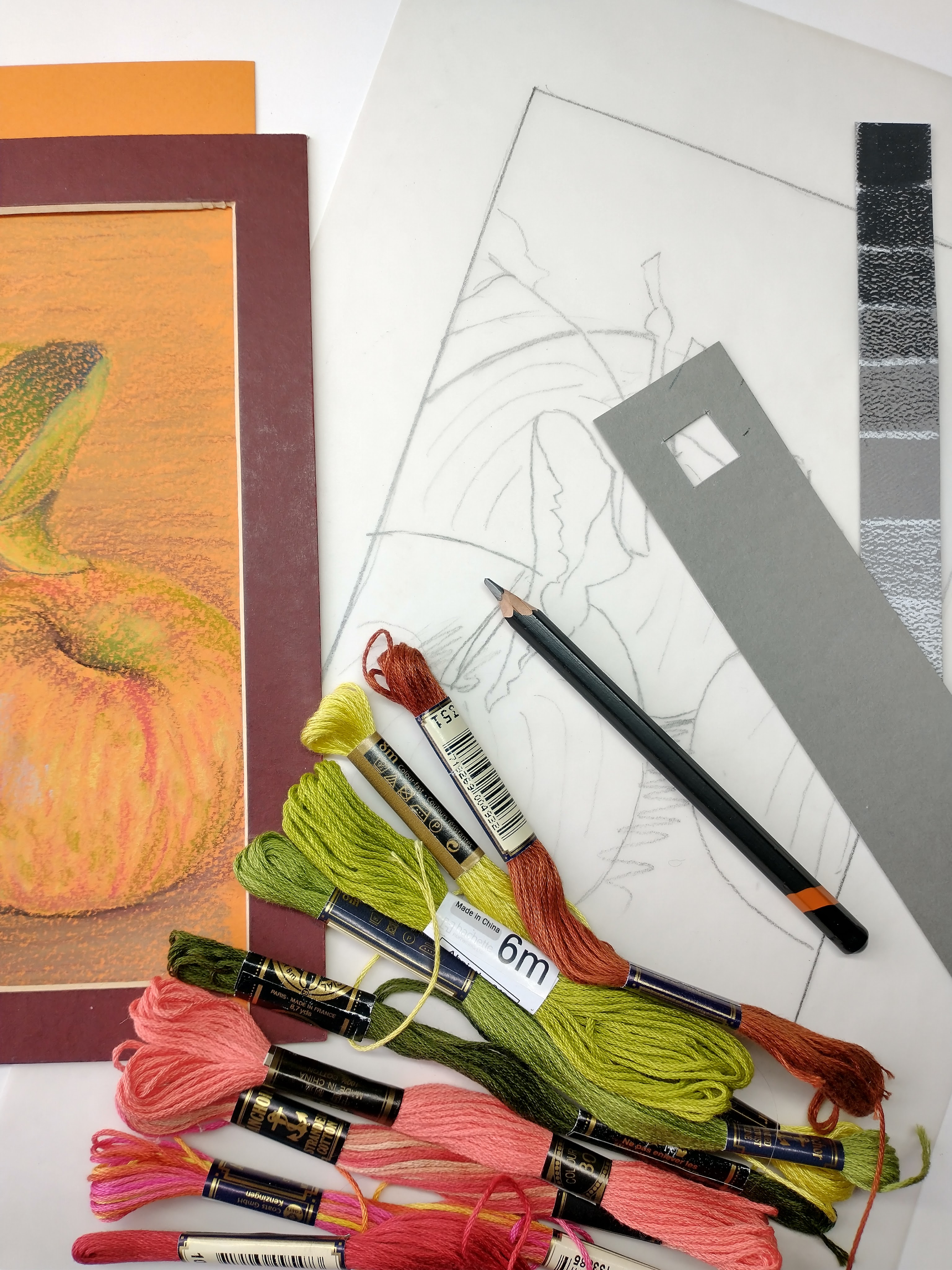
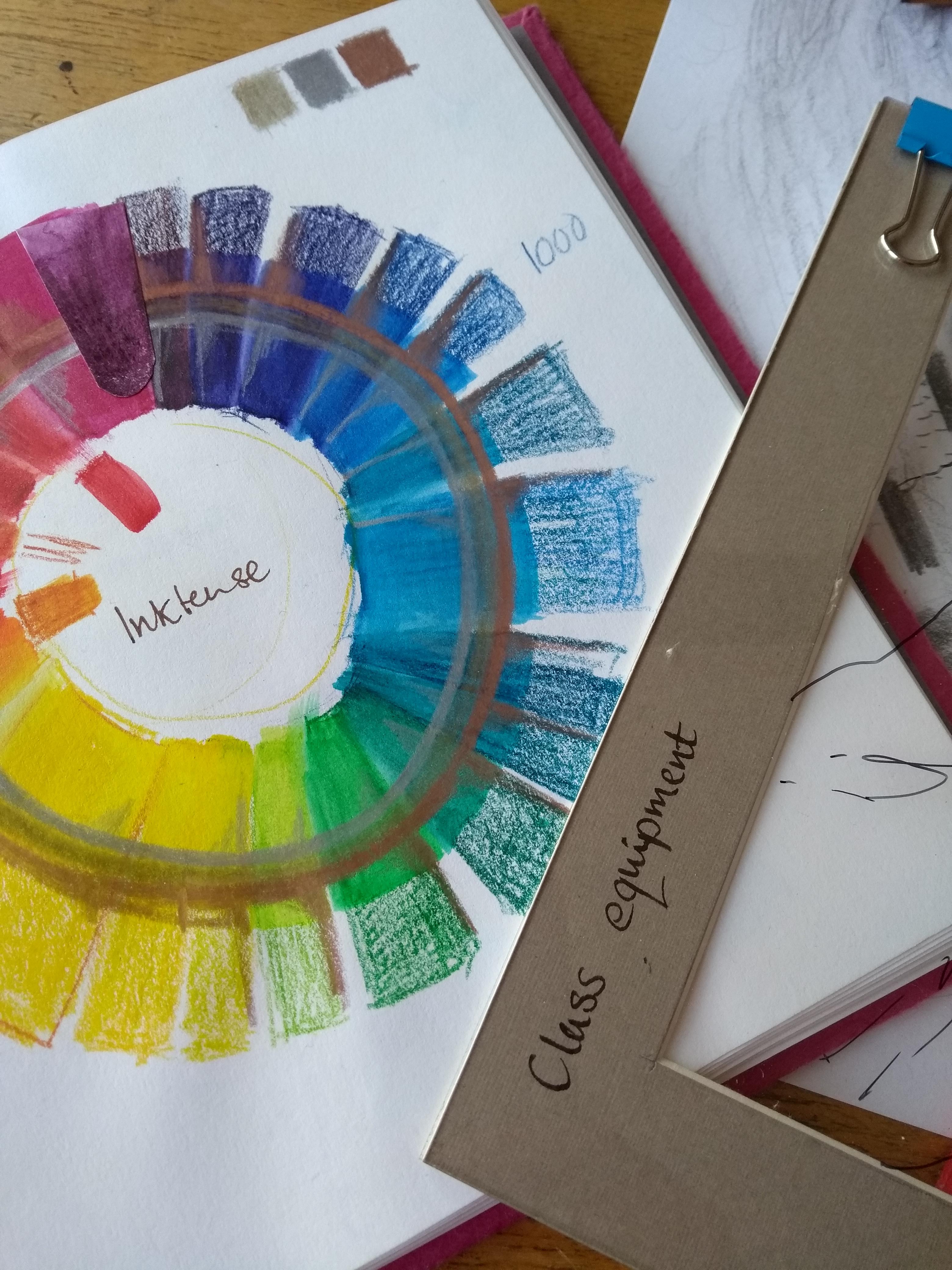
Using frames to choose a viewStudy of dandelionColour wheel experiments
Over the next few months I upgraded my tech to a visualiser with high quality definition, organised my space at home more carefully for teaching and redesigned the RSN drawing classes in the summer of 2020 into the current series of 4, which offer a drawing pathway right from the beginning. We ran a massive number of them through 2020. I think I ran the series twice in August, 8 classes in all, and about 4 of the RSN Drawing Flowers classes through May and June in 2020… I’ve lost count of how many classes I have run for the RSN since, and how many people have completed them.
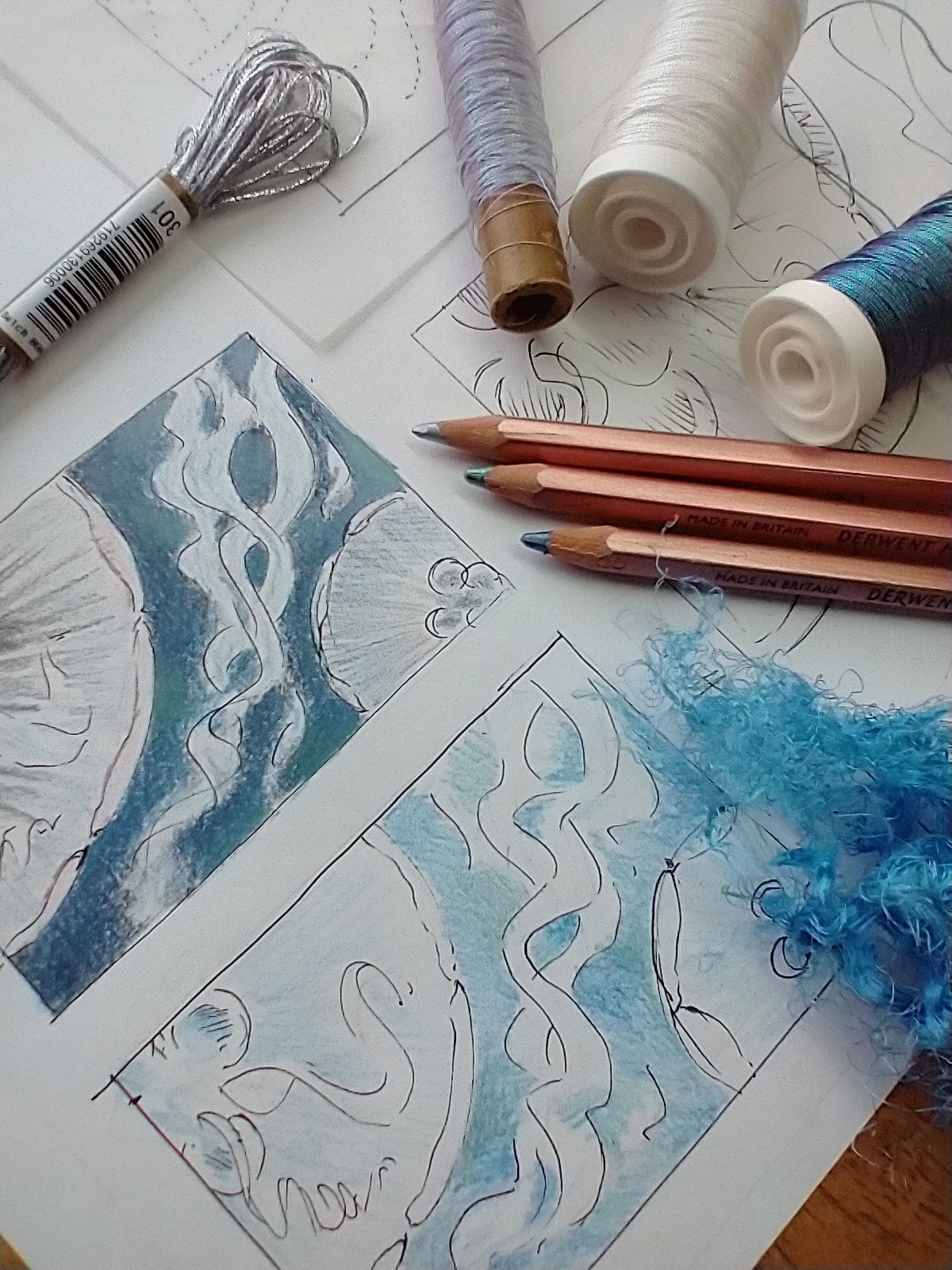
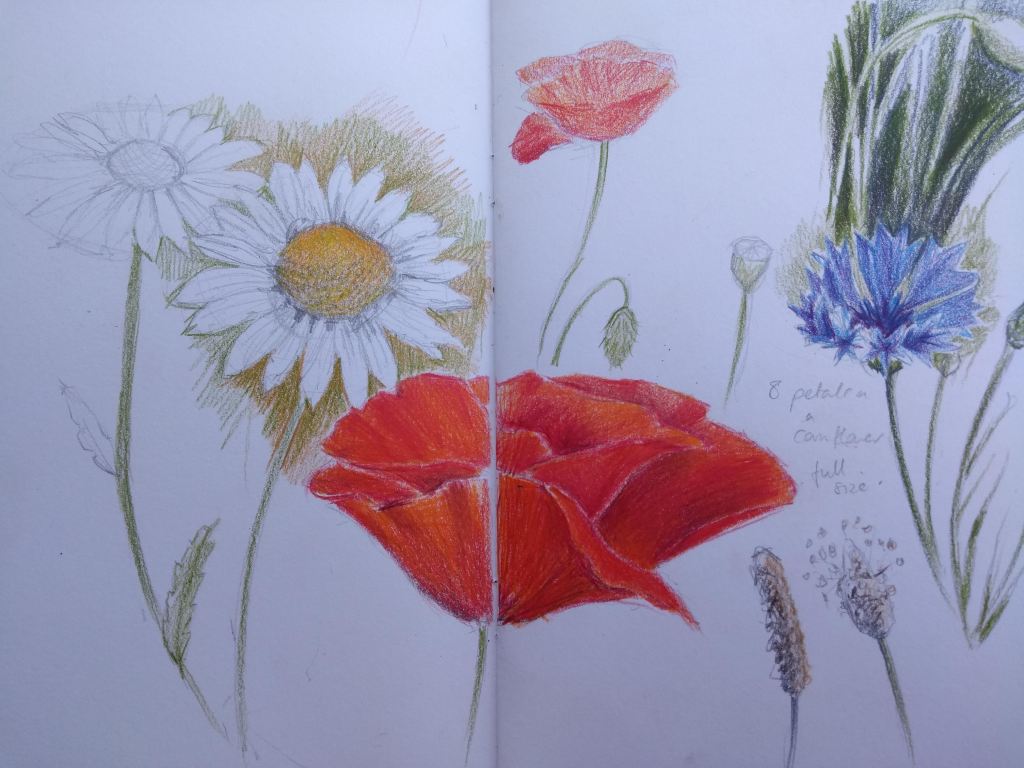
Looking at colourFlower study: developing toneWorking towards a design
It’s interesting to look back on it from this perspective; to remember that time and how strange it was, and what has become normal as a result. People have joined from many countries and continue to do so. I’ve counted students from the US, Canada, Australia, New Zealand, Spain, France, Belgium, Russia, and of course all over the UK and Wales, including a remote student in the Isle of Mull in Scotland.
Now, two years later, we are trying to find our way back towards normal life – but of course, some things have changed for ever. We can’t go back to the world we had before, but it turns out that the pandemic provided an opportunity as well as a crisis. One of those unforeseeable changes is that the RSN now has a permanent programme of online learning -for those who would never have come to Hampton Court in the UK, for those who can’t leave home very easily, and for those who are still shielding ‘online’ has opened up a new world.
For myself, my local class going online resulted in a community of students, who met in person at my Drawing weekend summer school in August 2021. I have another drawing weekend planned for this August, and it’s been great to come full circle – to finally meet in person those whom we’ve met and got to know online. More details about that here: https://carolinehomfray.co.uk/
Drawing practice has always been sustaining for me, but in recent months it has often felt like the most grounded, steadying and real thing I’ve been doing.
The reduction of stimulation which happened straight away on the implementation of lockdown restrictions made those things which were left feel very important. My sense of time changed, and what mattered to be done changed. It became easier to spend time scrutinising the structure of a flower, or watch the flight of an insect, and it also felt important in a way it hasn’t before. It has become very clear to me that people have relied on the arts and culture to occupy them and give their lives meaning, and as a teacher of arts it has re-affirmed my commitment to that. The value of culture and art to our society beyond simply the amount of money it brings in as a industry has become much clearer.
I know for some this time has been perceived as a reduction in opportunities. I’m very aware of having been lucky so far, having blessedly stayed well, and those around me have stayed well, and their jobs have been safe. People’s desire for the arts, for learning and for finding meaning has brought me new students, through online teaching. I’m really enjoying having students from Canada, America, Australia and elsewhere in the UK in my classes now. I can think and prepare demonstrations, make video recordings and have found ways to help me share their own images with me and each other for comment.
There’s a real sense in each class of choosing to focus on something with meaning and find ways to keep doing it, keep looking, keep seeing the beauty and keep sharing, no matter what obstacles lie in the way.
‘I feel like I have new eyes – when I’m out for a run I keep stopping to look at shapes and colours I didn’t see before’. ‘I hadn’t realised just how intricate that shell is and how many colours there are in it.’ ‘I really have to concentrate, to look’…. just a few of the things students have said to me in drawing classes over the last few years.
My sister Sarah and I have been running drawing classes for about 3 years at the Royal School of Needlework in Hampton Court, Surrey. Sarah had initially designed the course for embroiderers who wanted more confidence to design their stitched pieces; we offered it at Hampton Court with great success, succeeding in giving students confidence, tools and the courage to experiment and believe in their own vision.
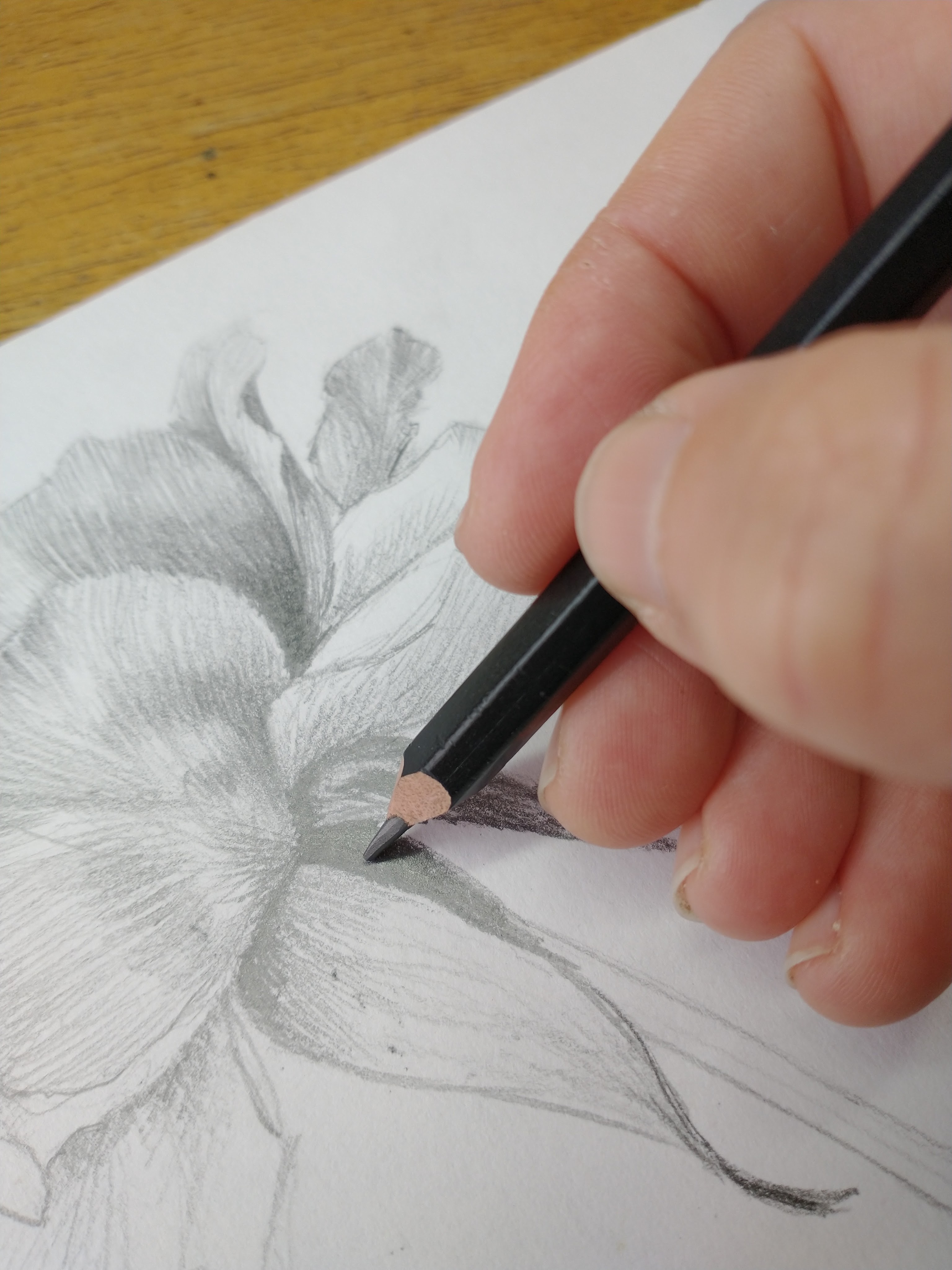
In the teaching I’ve bcome more aware find drawing has a great value for itself, for centring my focus, calming me and above all helping me to really pay attention: to the moment I’m in, to what’s in front of me right now, and following my observation down a path of curiosity and discovery.
The three-day classes are an intense blast of information and activity, and both students and ourselves as teachers are often exhausted by the end of it. It’s great fun but intense! I wondered what it would be like to run a class where we have time to relax into drawing, that anyone, whatever their background in art, can enjoy.
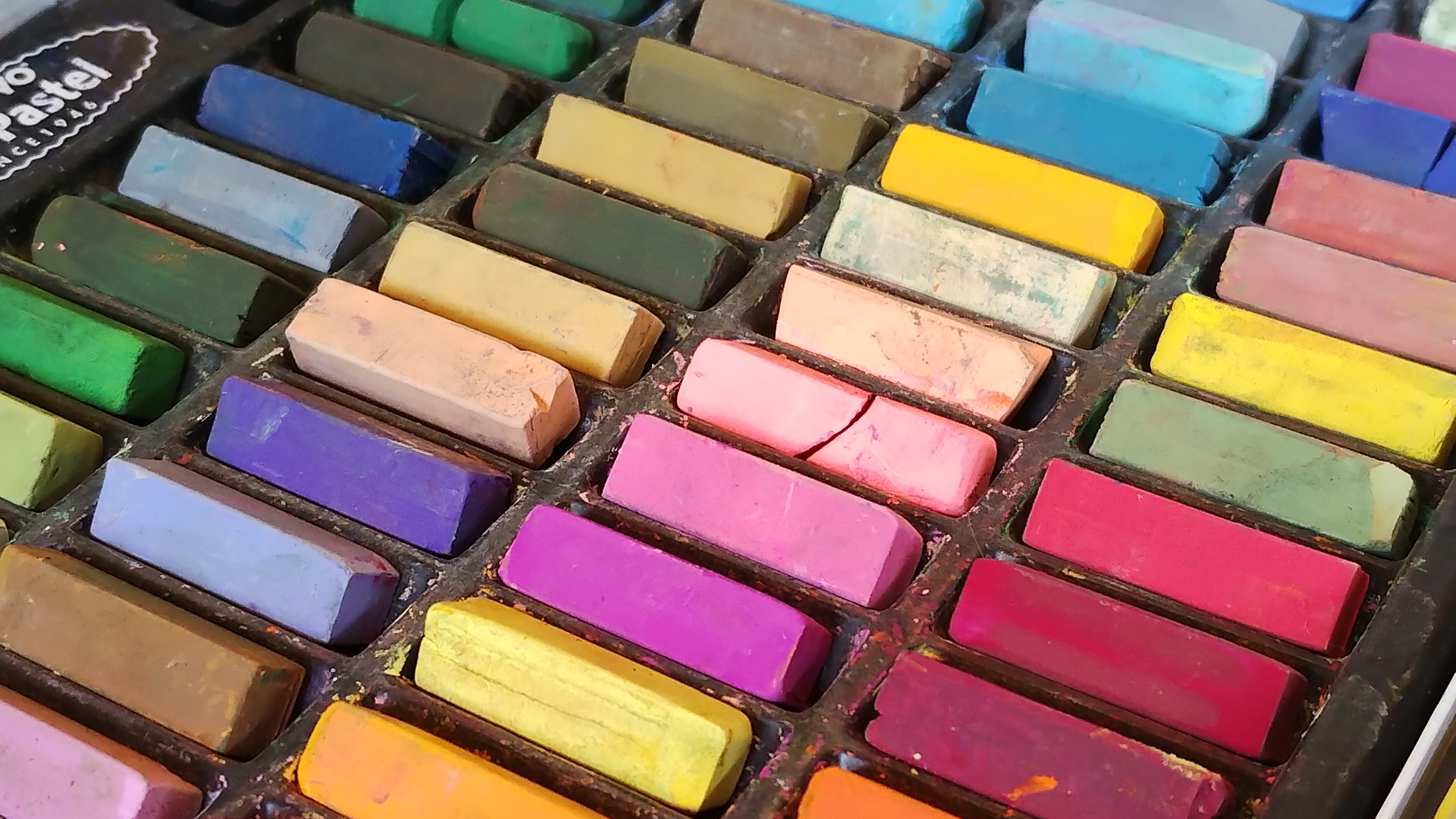
Now I’ve started running a class once a week in Godalming, for two hours of drawing in a very relaxed and supportive environment. There’s no aim other than this: to observe, to draw, to play with materials, to explore colour. There’s certainly no pressure to produce finished works. It matter because for me observational drawing is about connecting with the world, by trying to see as truthfully as possible what is in front of us and attempting to capture this. We normally see so little of what’s around us, being inundated with demands on our attention. Taking the time to pay close attention has really enriched my life; taking up some colours grounds me in times of stress and helps me to stay present in myself.
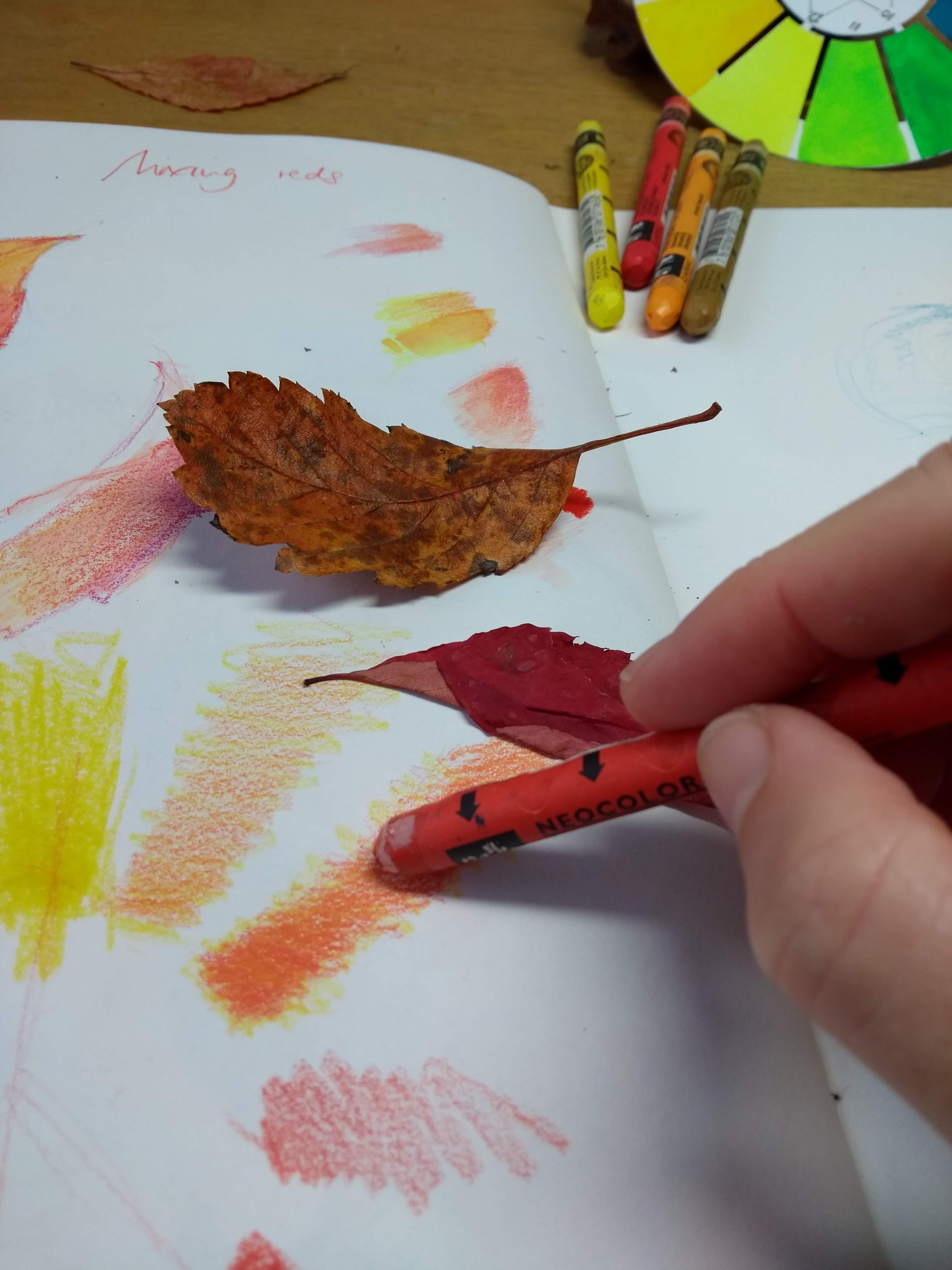
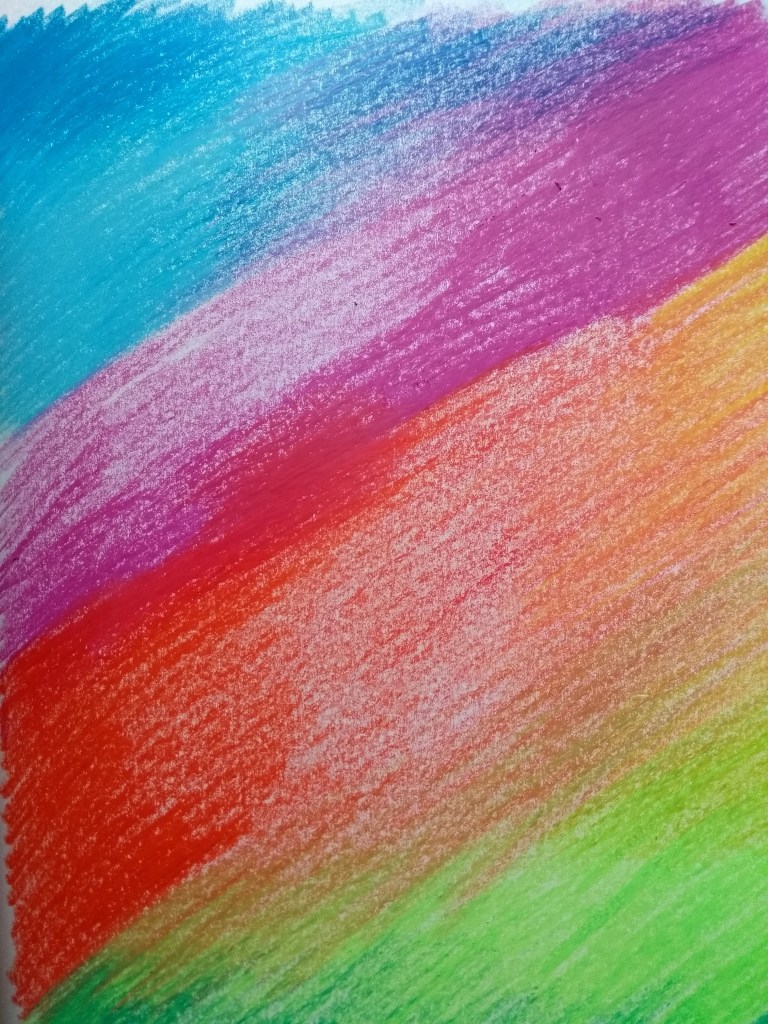
wax crayon colour play; studying a pine cone.
I also wonder if taking the time to be present, to overome visual assumptions about what the world looks like and to check in with our own response is connected to being able to ‘see’ more clearly in other ways as well. It’s a practise of gaining clarity, and can often show me something about what I’m thinking and feeling that nothing else can.
NEW! Drawing, once a week, Mondays 10-12 in Godalming. £27 a session, pay on the door. Please contact me if you’d like to come! it’s a small class.








 Caroline Homfray