A new place can be a fresh inspiration in art. It’s easier to see what’s really there and feel curious and interested in a scene which you’ve never seen before – there’ll be fewer existing assumptions or pre-conceived ideas about it. You can enjoy that child-like experience of exploring and discovering, and it’s also an opportunity to find out what you’re interested in, so that you can consciously pay more attention to that.
How to find out what interests you? Start by wandering, and absorb. Let yourself relax, let what’s there flood in without judgment. Be curious and playful and notice where you want to look more closely.
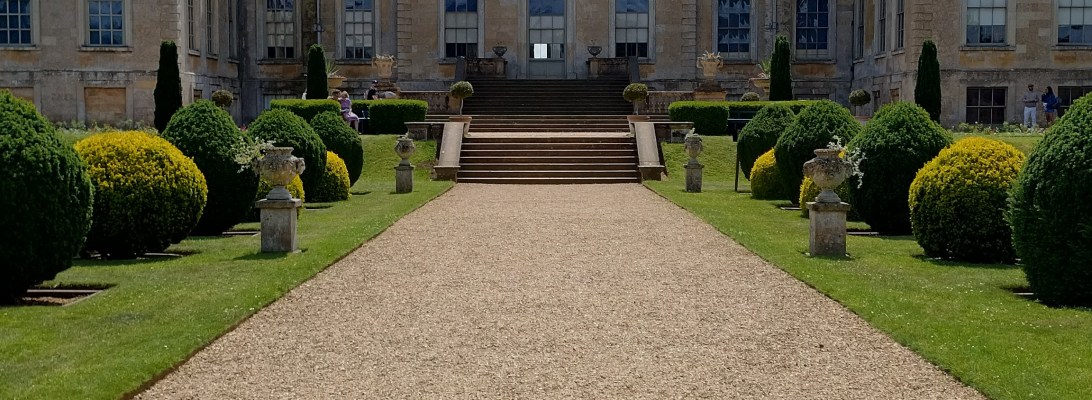
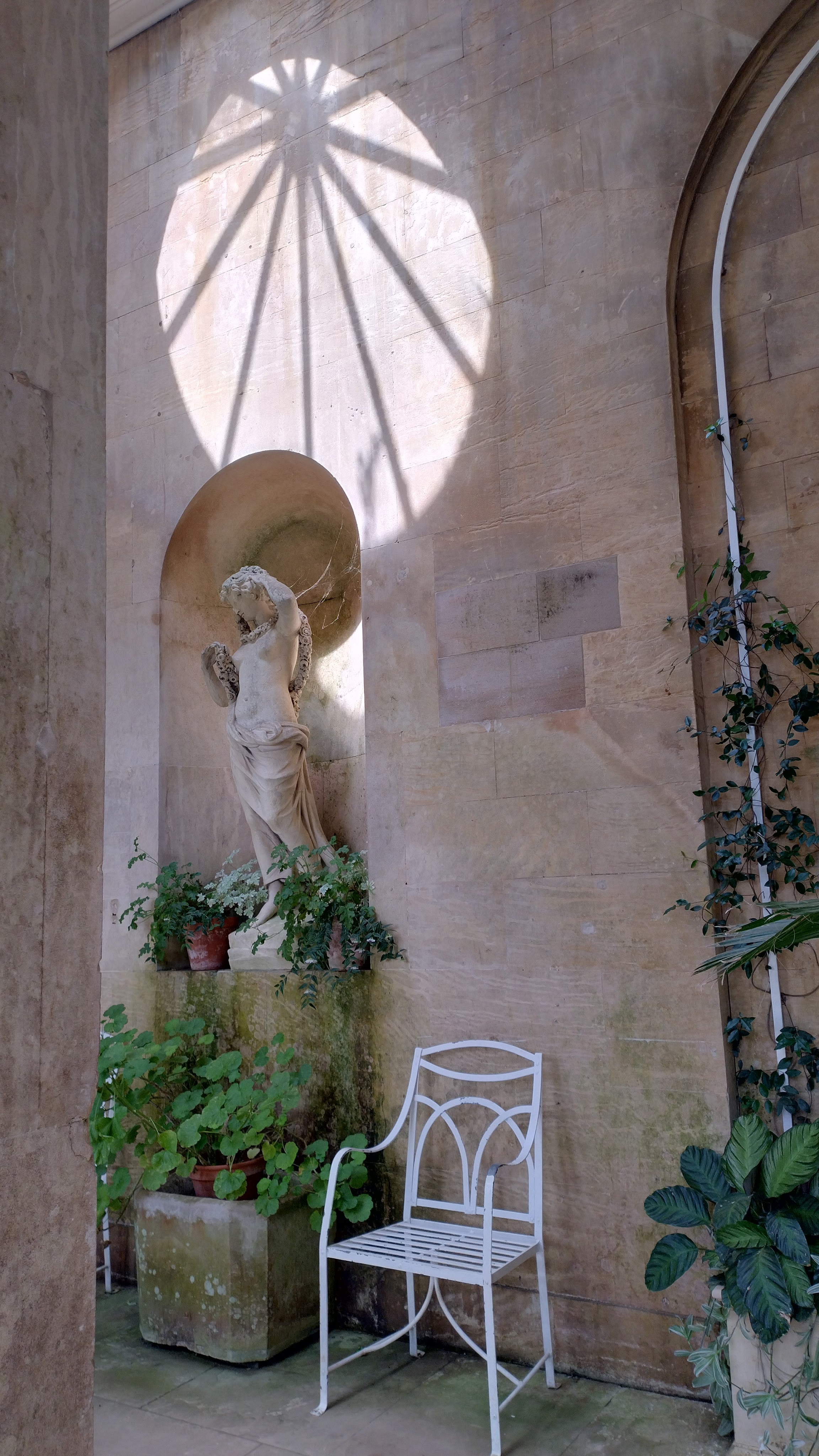
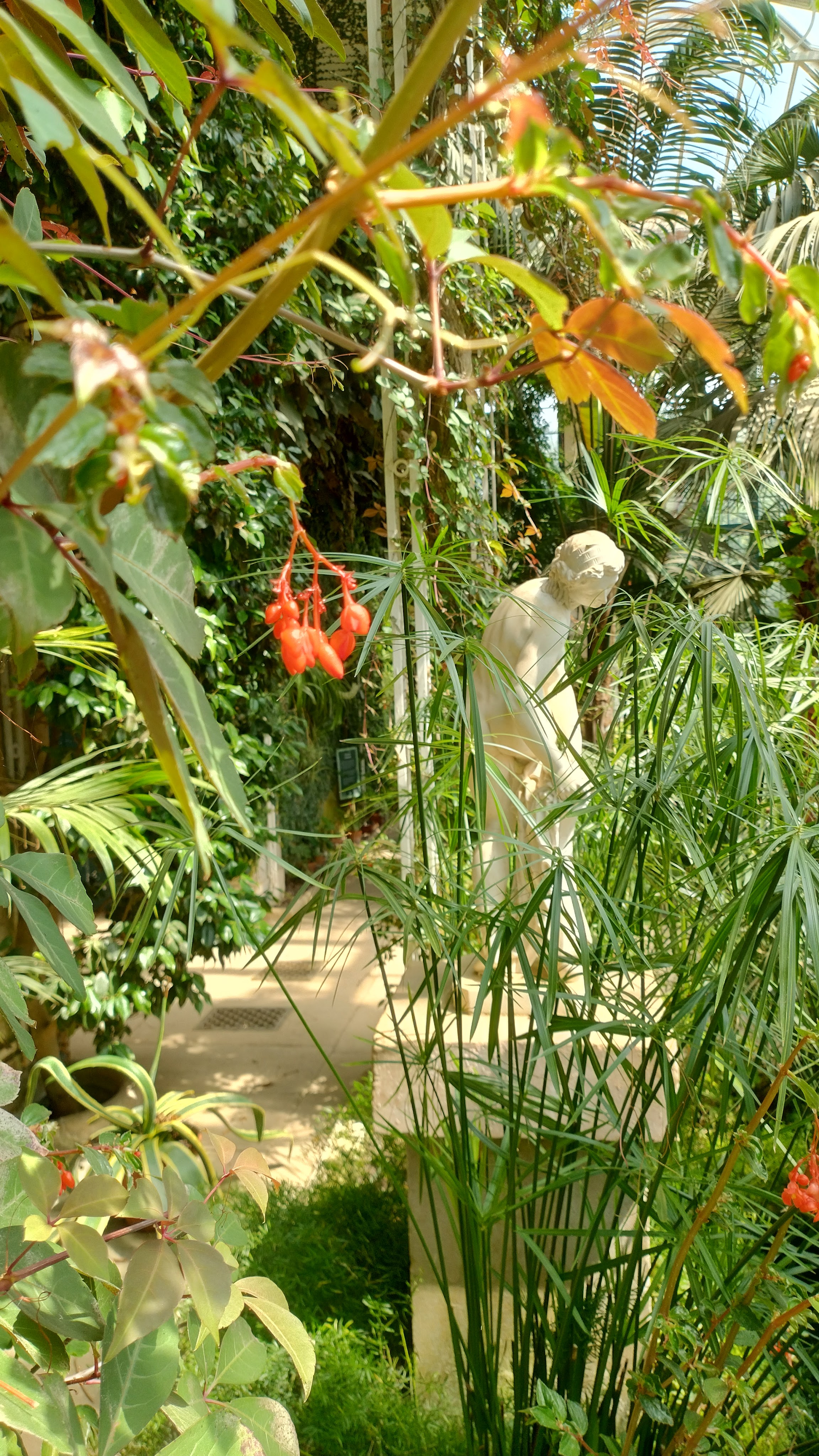
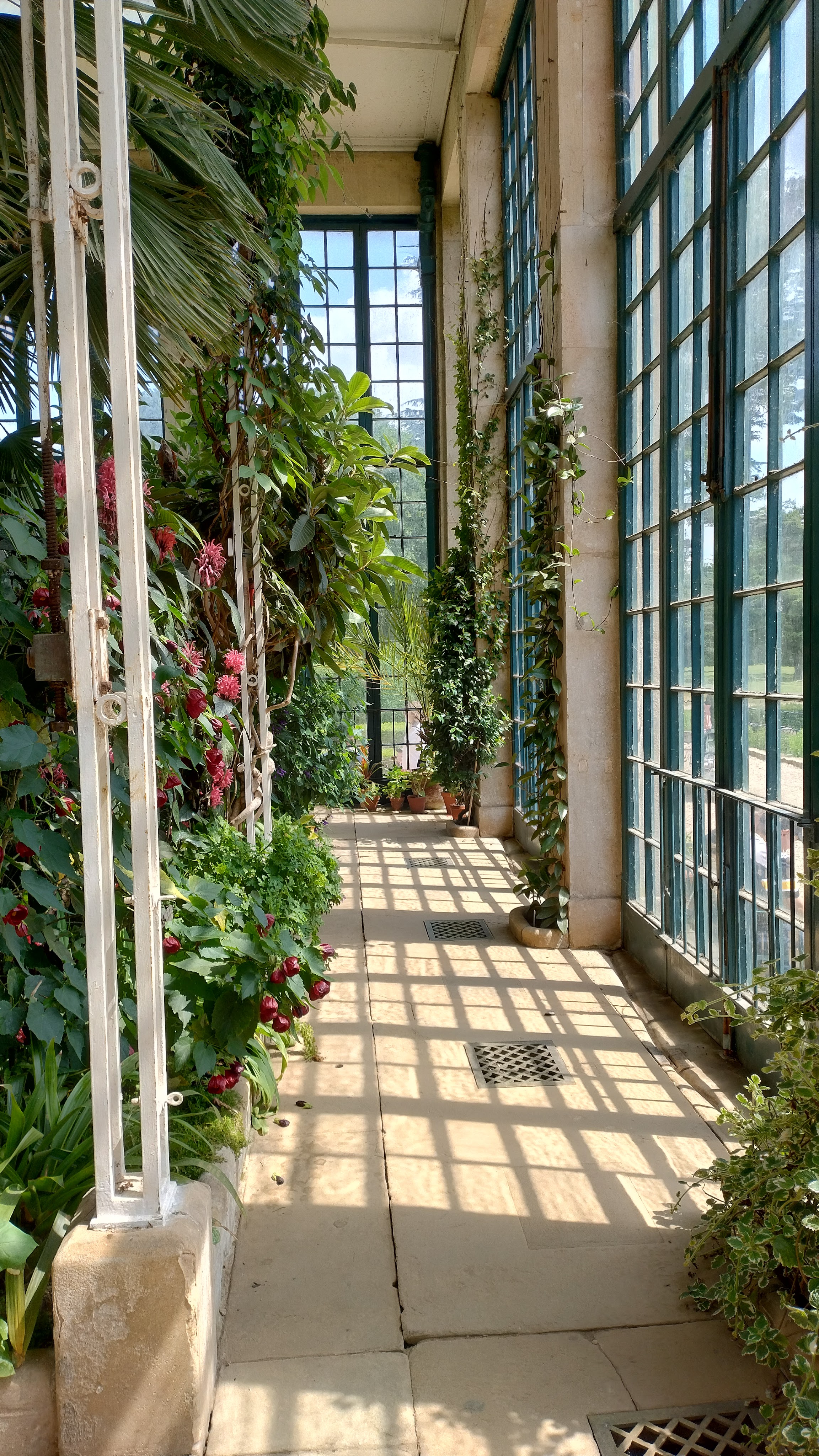
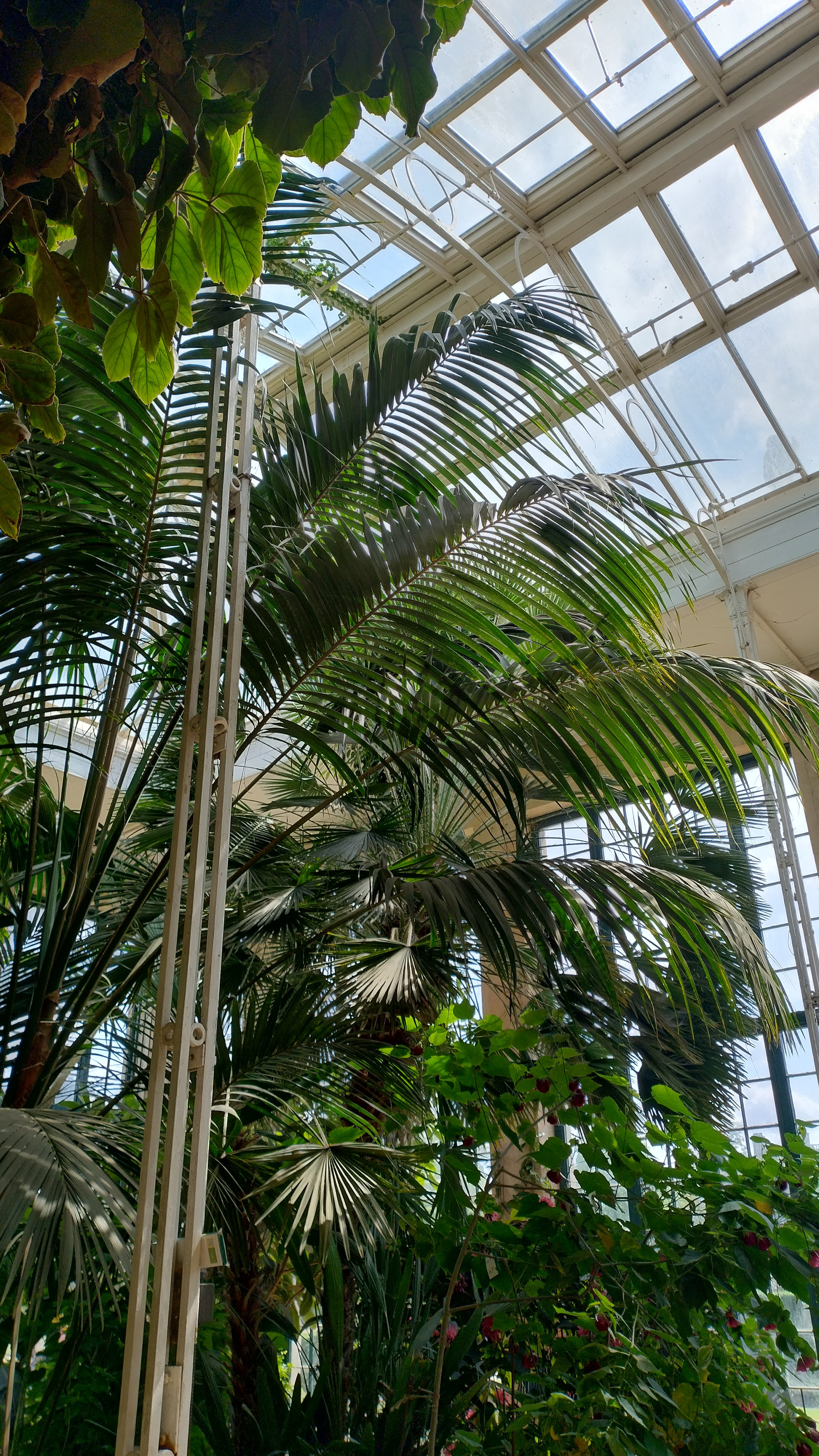
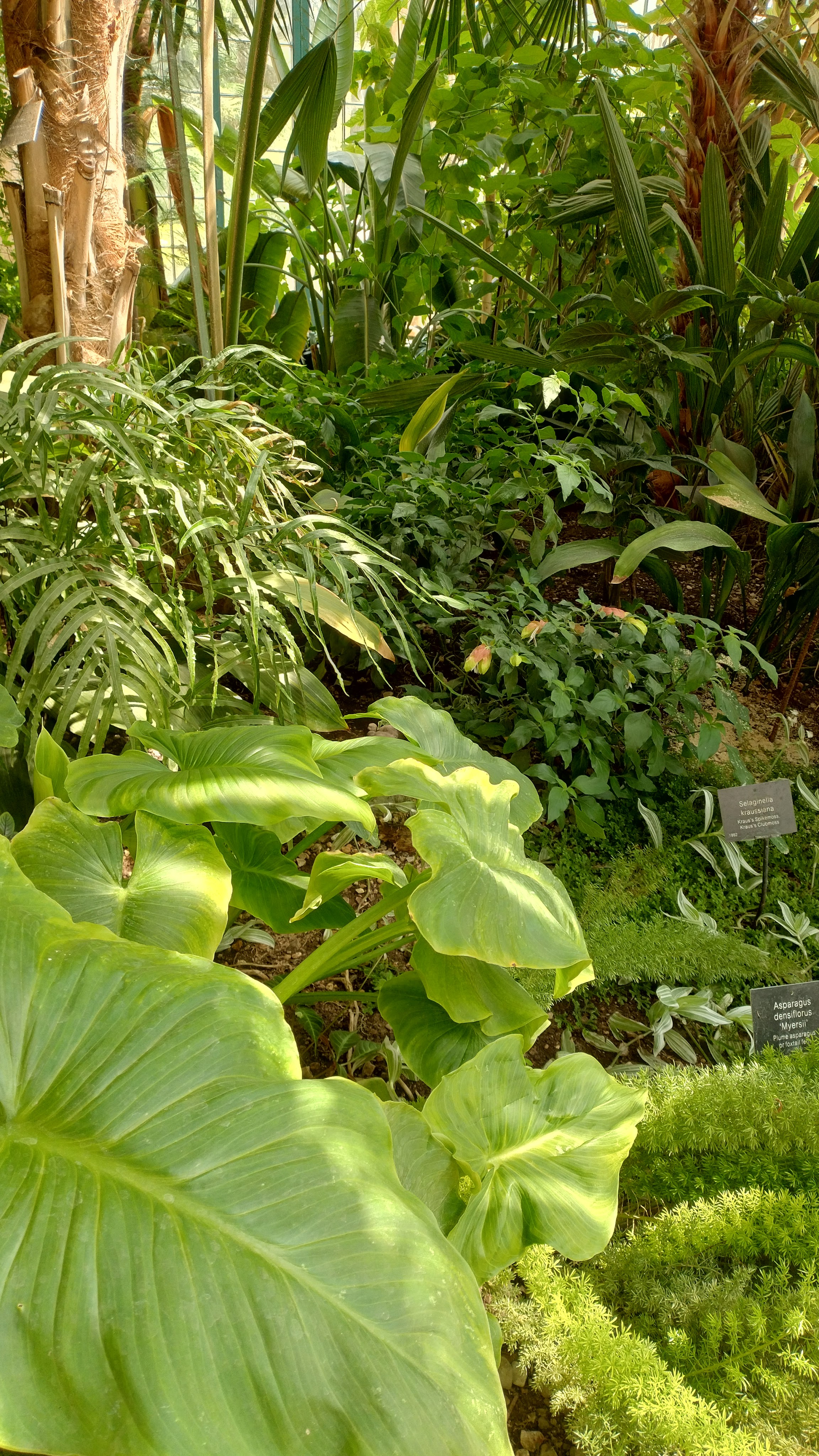
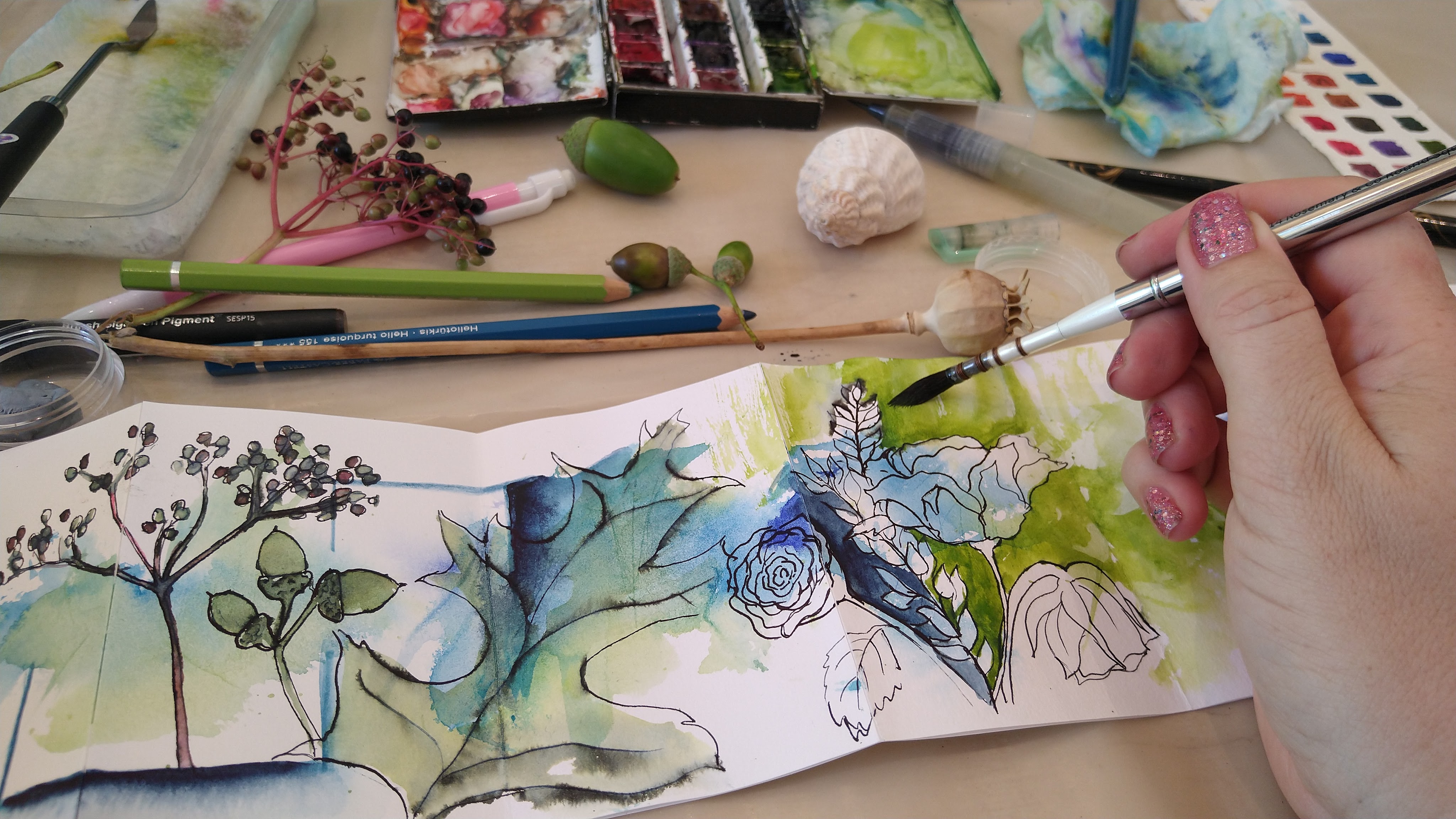
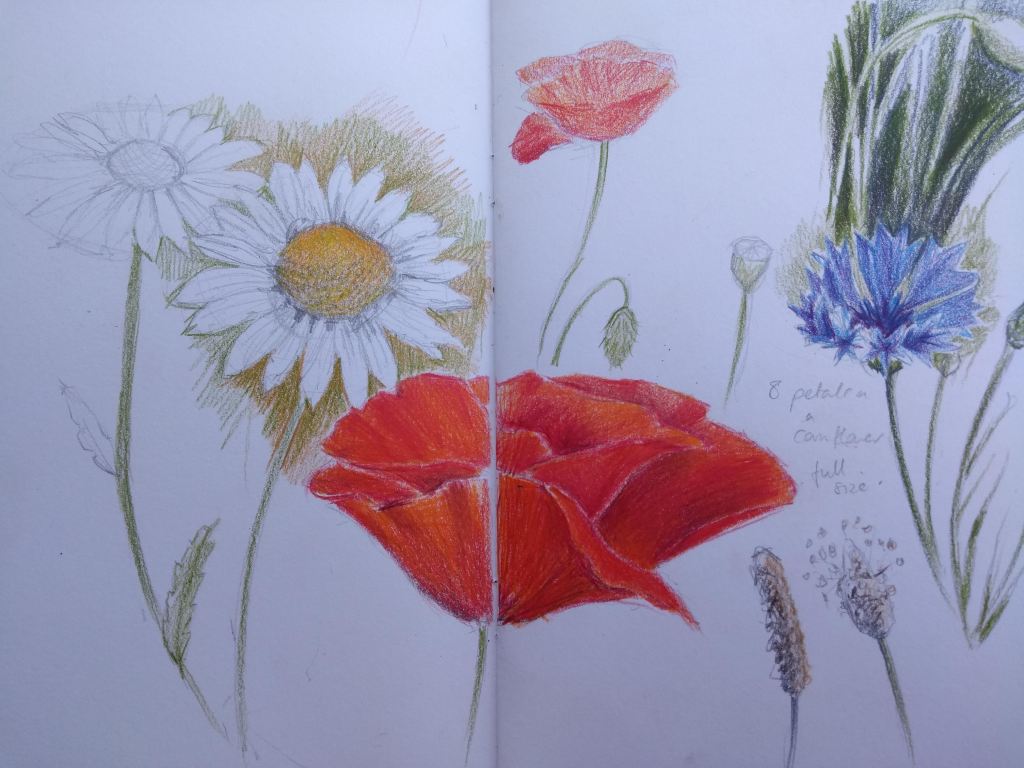
Wandering around the gardens at Belton, I found interesting contrasts and effects of light, patterns of foliage, shadows, different shapes, colours and strange things. The iron architecture of the conservatory gives structure to the green lushness and contrasts of the planting within. Windows give a frames work and let in light creating patterns on the walls and floor. It’s a sheltered indoor contained world of rare things, full of interest fro tiny details to how all the parts relate.
We will be playing with this process of drawing inspiration on the in-person drawing weekend I’m running in July. This year it’s located at Belton estate in Grantham, Lincolnshire. We’ll be based in the spacious and quiet venue of the old School in Belton village, and have access to the grounds and house of the estate.
Particpants in previous years have valued the time, space and supportive atmosphere of this yearly drawing event. It’s flexible so that your csan pursue your own interests throught eh weekend, but we will start together and you can get guideance on your develop through the weekend. There are opportunities to socialise as well.
To find out more, and register your interest, follow the link below.
This year I will be running my first retreat day, with Laura Murphy of mtc2. I will be publishing regular posts and other material about it, on my new blog ‘Reframe the View’. This blog will continue to be focussed on art making and learning. There’s an extract below from today’s post. If you enjoy it and would like to read about wellbeing and ways to nurture and support yourself, please go to ‘Reframe the View’ by clicking the button below.
The Stillness of Midwinter
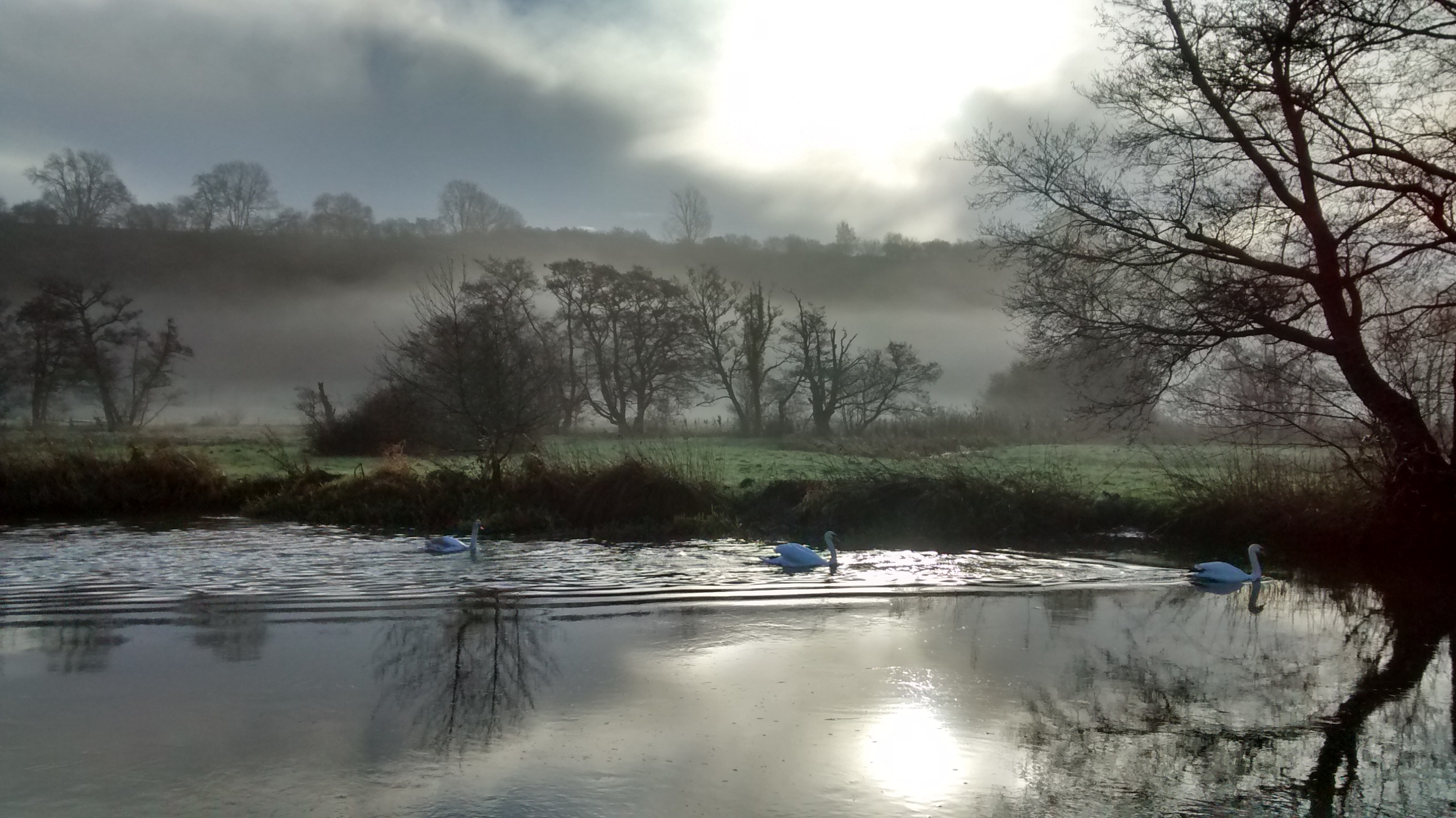
Today is a grey overcast day. It’s very quiet at home, with the sound of sporadic rain pattering against the glass and the ocasional breathy resonance of the windblown chimney. Not much is moving outside. Our feline neighbours are glimpsed darting across the garden and are gone -back home to curl up somewhere warm. Bulbs rest in the earth, their green spears nosing through when there’s a warmer day, but stopped when it’s cold and grey. Water is pooled on the meadows and lammas lands, with fleets of overwintering gulls, cormorants and the resident ducks and geese sailing in the shallow water. Twigs drip, tree trunks stained black with water. Their fat buds wait -for spring.
We are surrounded at the moment by stuff about renewal, reinvention, get fitter, get healthier and make resolutions. In the deep quiet of midwinter this increasongly feels out of step to me. Over recent years I’ve been paying more attention to the seasonal cycles and wondering how to align myself with them.
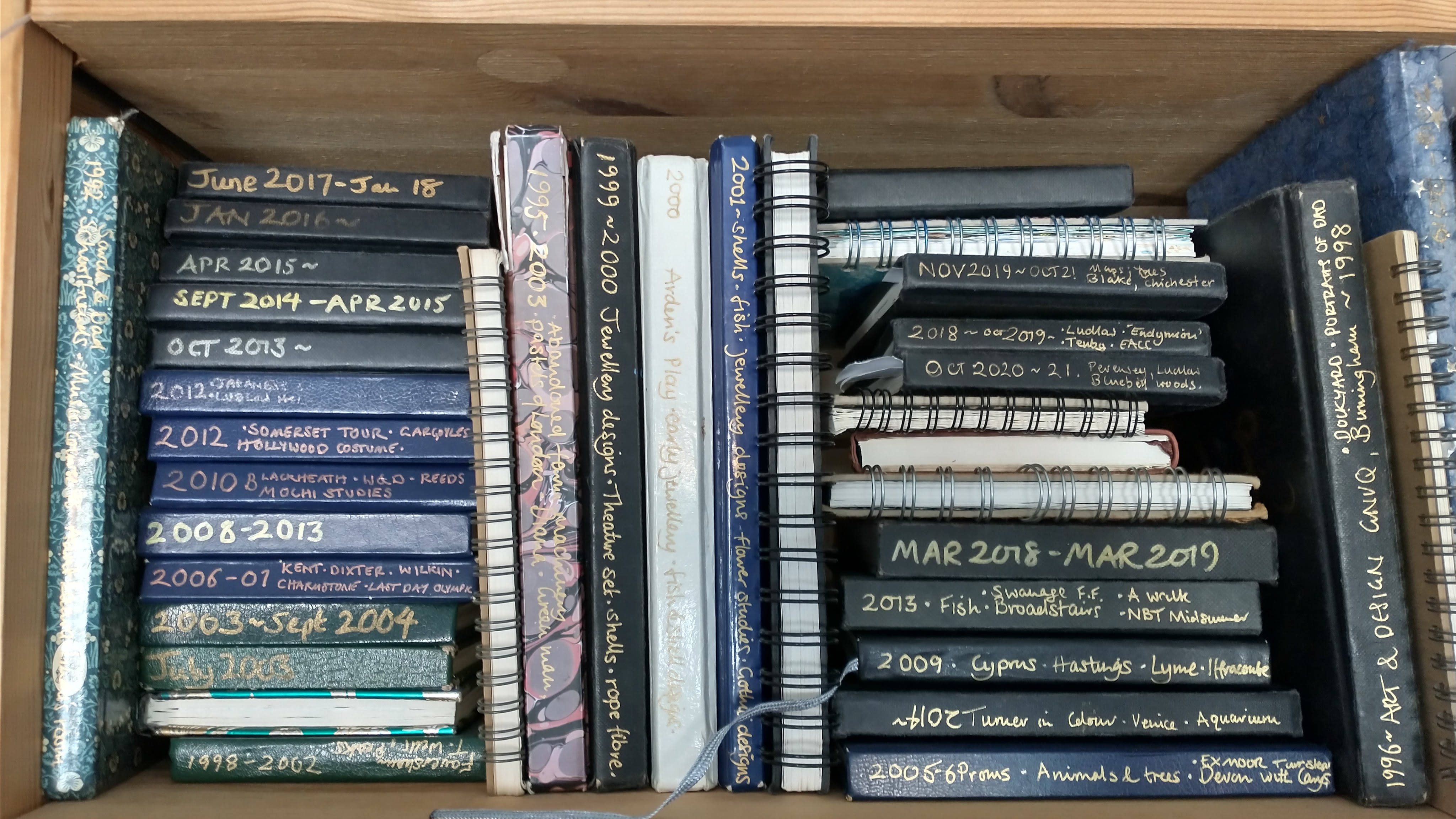
I effectively have two sorts of journalling: my sketchbooks which are very much drawn from and of the outside world, and written ones. There are lots more sketchbooks than written journals. The sketchbooks are on open shelves in my studio room, the journals are not. There are lots of drawings of places I’ve been, people I know (and sometimes people I don’t), some more detailed studies, rapid lines taken during a concert, studies made in museums, and sometimes written notes; it’s a place to record, remember and gather for future use. People look through my little sketchbooks sometimes but that’s ok because I don’t think they contain anything secret or controversial that I don’t want anyone to see. Most of the drawings were done in public anyway.
The journals are different. They are messy, written with no concern for spelling or grammar, not organised and sometimes illegible. These are not pretty journals; there’s no artwork or colour. Page after page of inky scrawl, which if you could unravel it, would be miles and miles of blue black thread which would probably go around the earth a few times. Often I write in a stream of consciousness which just goes wherever it needs to, and sometimes in more structured way around a question or a idea which has emerged. I write down reflections about my artwork: what I’ve tried and what I want to do next, which really helps me to pick it up again after a gap.
Sometimes I’m just dumping thoughts. I read them back later and that gives me some objectivity. It turns out that being able to do this for yourself has the added benefit of protecting your relationships from the strain of oversharing negative emotions (Kross, Chatter – The Voice in Our Head (and How to Harness It) p31, Vermillion 2022) without tiring the empathy of listeners.
I can then review it, giving myself the chance to consider it with some distance. Are there any negative assumptions underlying my reactions to something? Is there a different, more enabling way I could see it? What are the options for response, if any? Or do I need to just accept it?
Sometimes, on re-reading, I can find insights. if I repeatedly write about a problem, it flags up that there really is something I need to address. Coloured pencils come in for a bit of highlighting, things that pop out as important.
It’s also useful to write sometimes in a deliberate attempt to find the positive.What’s gone well today? what did I particularly enjoy, however small, or what am I grateful for? That can give me something to focus on when I wake up in the small hours ruminating.
Researchers are finding evidence of all these benefits in the practising of writing reflectively about one’s own experiences. It’s one of the practises being offered by Laura and myself on the Retreat Day we’re running next March. So if it’s new for you, give it a go and see how it changes things.
A few things to try:
setting a timer and writing in a stream for, say, 15 minutes.
writing down what you feel grateful for.
writing about an experience; who was there, what did you see, hear, smell, taste; what did you feel, what happened? Try writing it as if in the third person. Imagine you are observing yourself.
finding some affirmations and writing them down. This is very literally telling yourself that you’re worthy, deserving of love and affection, are capable, have talents – whatever it is that you need to hear to feel more safe, secure and supported, especially in areas where you feel vulnerable.
look up some journalling prompts. Specfic questions like: what behaviours do I want to grow? what do I want to stop doing? What new thing would I like to try? Who gives me support?
Research also shows that the benefit are felt over time, and that you don’t have to write every day to feel them. The important thing is to choose a way that suits you, and keep it private.
Working as an artist means a lot of time spent not knowing. I get an idea, or I carry out some experiments, but often I don’t know where they’re going, and whether the result will be something I’m happy with. There’s a lot of taking the next steps forward and remembering to trust the process, usually working in isolation, without knowing if anything of worth will come out of it – or whether it will be of interest to anyone else. There are still times when it can all feel rather uncomfortable.
As an artist and a teacher, I’ve had to get used to not knowing – my own, and other people’s.
The most important part of my role as a teacher is to support others through their uncertainty, vulnerability, and fears. To do this it’s crucial that I support myself – by taking time regularly: time out, and to reflect, and to consider if I need to do anything differently. This has similarities with how I assess a piece of artwork as it’s coming along. I need to pause every now and then, step back from the active making, and look at it.
I get relaxed, -sit back on my chaise long (it’s the guest bed futon really, but dressed up with blankets and my special cushion), with my tea, and the piece propped up. I allow myself to pay attention, in a soft focus sort of way, to what’s going on – with the piece, and in myself. It’s a sort of attentive waiting, allowing the space to see what pops up in response – to find out what’s going on under the noisy surface of the cerebral mind.
I can reflect on formal elements: colour, composition, proportion, balance, harmony. It might become apparent what needs adding, altering or taking away. More than one relaxing and looking session might be needed to arrive at the insights needed to move forward. That could be solitary time, musing and journaling, or it could involve talking it through with another. I like a mixture. It’s about creating the right conditions for the insights to arrive.
When the moment is right and the ideas appear, I feel a little surge of energy to take the next step, because I’ve got some clarity and confidence about what that should be. Quite often not beyond that, but the next step is enough. If, eventually, I am happy with what has appeared on my paper, canvas or fabric, then there’s the next step of putting it out in the world and finding out what others think. Putting myself out there, which is often scary.
Being an artist or maker of any sort has valuable lessons for living: in dealing with uncertainty, finding authenticity, finding out out what one wants to envision. It also involves dealing with fears that might block, and finding the courage to be fully oneself. Finding ways to cope – and to thrive- for myself has gone hand in hand with finding ways to support my students in whatever it is they want to achieve. It’s not possible to talk about art and not talk about life. Creativity is not only for artists. Those ideas and strategies for creating a vision and removing the block towards it are useful whatever you’re wanting to move towards
Finding ways to cope – and to thrive- for myself has gone hand in hand with finding ways to support my students in whatever it is they want to acheive. It’s not possible to talk about art and not talk about life. Creativity is not only for artists. Those ideas and strategies for creating a vision and removing the block towards it are useful whatever you’re wanting to move towards.
As a result, I’m bringing my experiences to a new venture. Next April, my friend Laura and I will be running a retreat day designed to give space, away from the noise of everyday life. We’ve chosen to set our day in the tranquil surroundings of a beautiful retreat house in Surrey. There’ll be time to relax, and settle into the beautiful surroundings of the studio. We’ll take time to reflect: with each other, talking, listening and journalling. There will be space to dream, using paper and colours. You will leave with tools to help you make choices and move forwards with whatever you want to grow in your life, as Spring surges into growth.
It’s just £60 to attend for the day. See below for more details and to register for a place.
It’s a common experience: there’s something you love doing, but you struggle to find the time, or the motivation, and you can get discouraged and then feel disappointed. There are some ideas from study about how people change which might help.
I learned recently that to change things you need to be consistent in what you’re aiming for, flexible in how you get there, and persistent in your efforts. There will be lapses and changes of direction, but continual steps and trying different ways of doing things will keep you moving forward, however small your actions are.
Of course, learning a skill is going to involve changing a number of things in your life. You’ll need to review and make decisions about in how you spend your time, perhaps change your priorities a little to make room for your interests, and if the skill involves a physical element like learning a musical instrument or making something, spending time developing it will create changes how you use your body .
So what is it you want to learn? How do you make space for it, and encourage it? And how do you keep motivated after the initial burst of enthusiasm or effort?
I’ve been learning to play the harp over the last 18 months. I had a burst of enthusiasm when I acquired it, and was less busy at the time (April 2021) so I did lots of research, found different teachers and resources online, and spent time getting to know it. I found a place to keep my harp to hand, so that I could just pick it up and play whenever I had a few minutes. Although I’m enjoying playing it by myself and experimenting, I wanted to check I was getting the basics right – you can hurt yourself playing an instrument if you dont take care about how you’re doing the repetitive actions. I decided to go on a weekend course. It was amazing to be in a great big room full of harps, talk to the owners, and hear very different styles of playing. That really opened up my eyes to the potential of this instrument. I came away with renewed enthusiasm and curiosity, still mostly playing by myself but now looking for ways to connect with other harp players.
I’ve realised more and more since the pandemic just how important it is to mix energy with other people, in positive, fun, friendly and supportive environments. It’s very important to me in my work too, and why I like to teach groups. We’re usually learning drawing and aspects of art together; the ‘together’ bit is really important. In a recent class for the Royal School of Needlework, we had a wonderful difference of interests and experiences, not to mention different cultural knowledge as well.
At the end of these classes I try to persuade people to think realistically about how to carry on with their learning. Set realistic goals: choose two or three short times a week to practise, keep your materials to hand and then review what happened after a few weeks. Have some intention about what you’re practising, which means think about it occasionally and choose what to practise baed on what you are most interested in and want to develop. Be prepared to change the timing, frequency and circumstances of when you practise. Accept that in busy times you may have to reduce or let go of your practice temporarily, and that’s ok. Return and renew the commitment when the time allows. Just don’t stop. Keep taking little steps. Consistent, flexible, persistent.
I run a regular drawing class online each week, for just this sort of encouragement. Short courses in drawing are also available, directly through me or oriented towards stitchers via the Royal School of Needlework. Click here to find out more: https://carolinehomfray.co.uk/drawing/
On 5th May 2022 it will be two years since I ran the first pilot Zoom session for the Royal School of Needlework – it was the last of a three-day drawing course, of which the first two days were delivered in person at Hampton Court.
Learning to mix and choose coloursThe Zoom classroomTonal study drawingTwo years on… my Zoom classroom in May 2022.
The virus moved fast. By 23rd March we were in lockdown, a word I had not been aware of before the arrival of Coronavirus. I had one final drawing session to run of that three day course, as well as a ragular class of my own and a monthly ukulele group session I was responsible for- so lots of things which I wanted to keep going if I could find a way. I ran the first ukulele group session on 24th March 2020, with quite a bit of anxiety and finding the lack of feedback strange – I remember it felt very one way, me projecting outward. But it was better than not meeting at all.
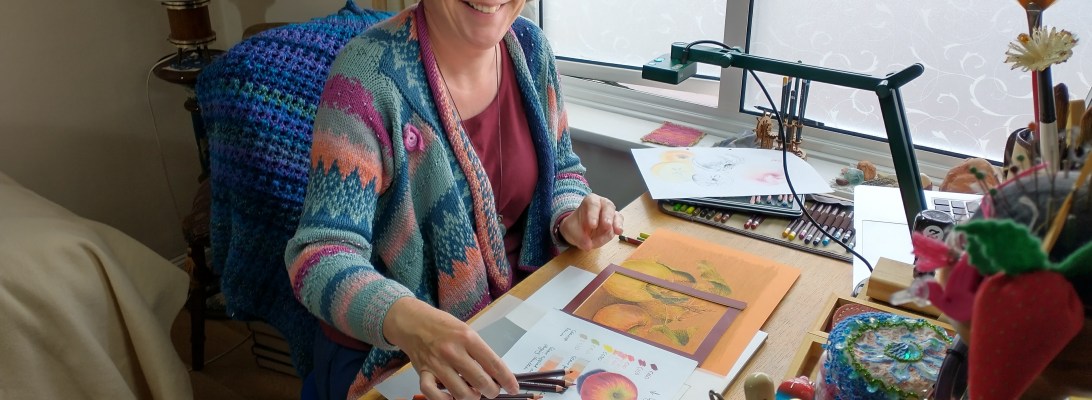
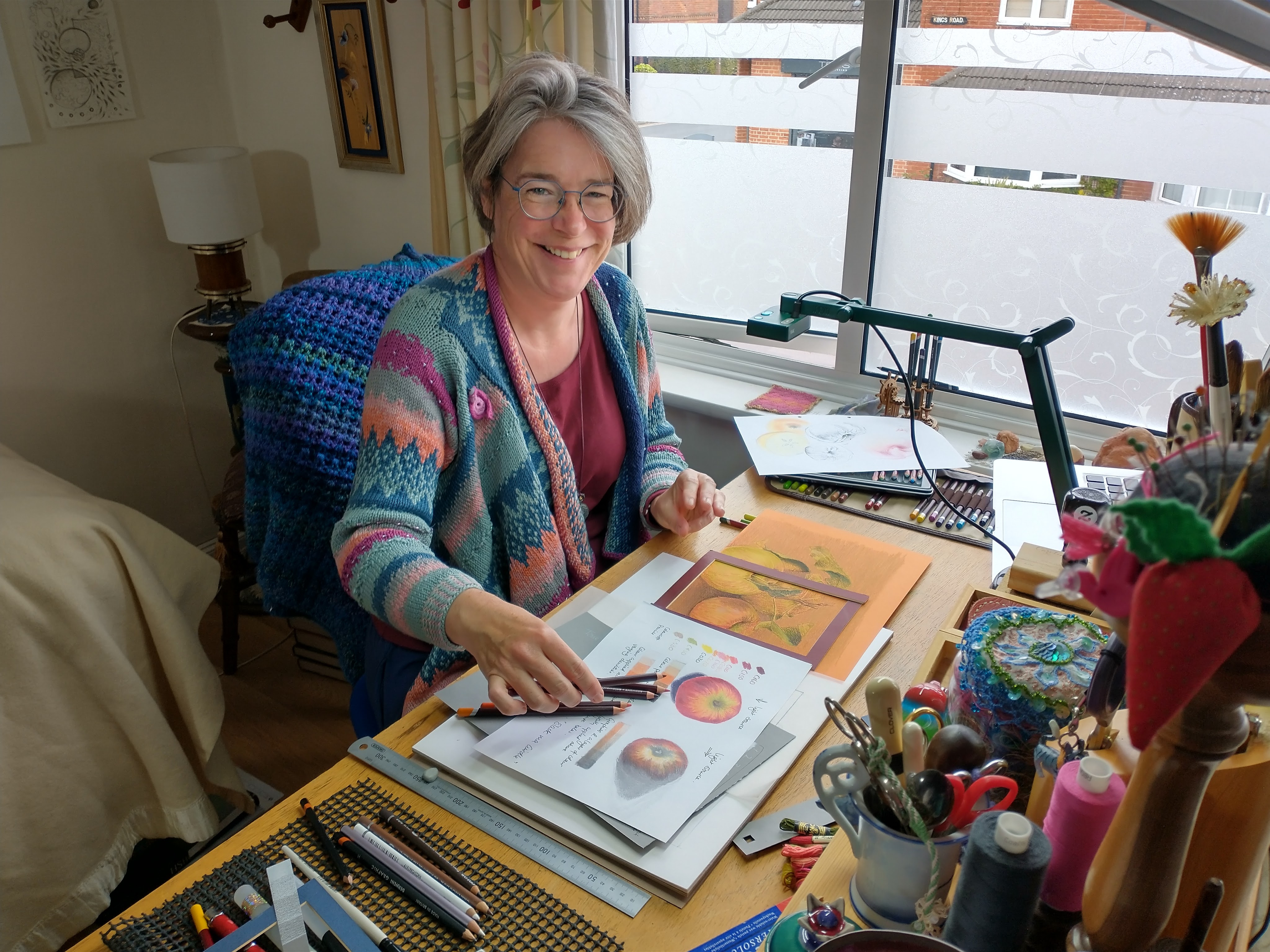
As I remember, I’d spent April getting used to Zoom and training my various students and ukulele group members how to work it. I got my own local drawing class going online on 30th March. I’d run a few sessions for the ukers and my own class weekly so I was in a good position to respond when Noleen, responsible for organising day classes at the Royal School of Needlework, asked me to try the remaining drawing session online on 5th May. I had an old webcam strapped onto an overhead lamp with a bit of masking tape, which I used to show my paper and the exercises during the session, and I used my facilitation skills to help everyone feel engaged and get them all interacting, which can be a challenge in Zoom. Students were so appreciative of the chance to go on learning online. Noleen was very enthusiastic and encouraging about trying it out, and very positive about the results.
The 5th May 2020 final drawing class session worked well enough on Zoom for the RSN to go forward with advertising and running online classes.
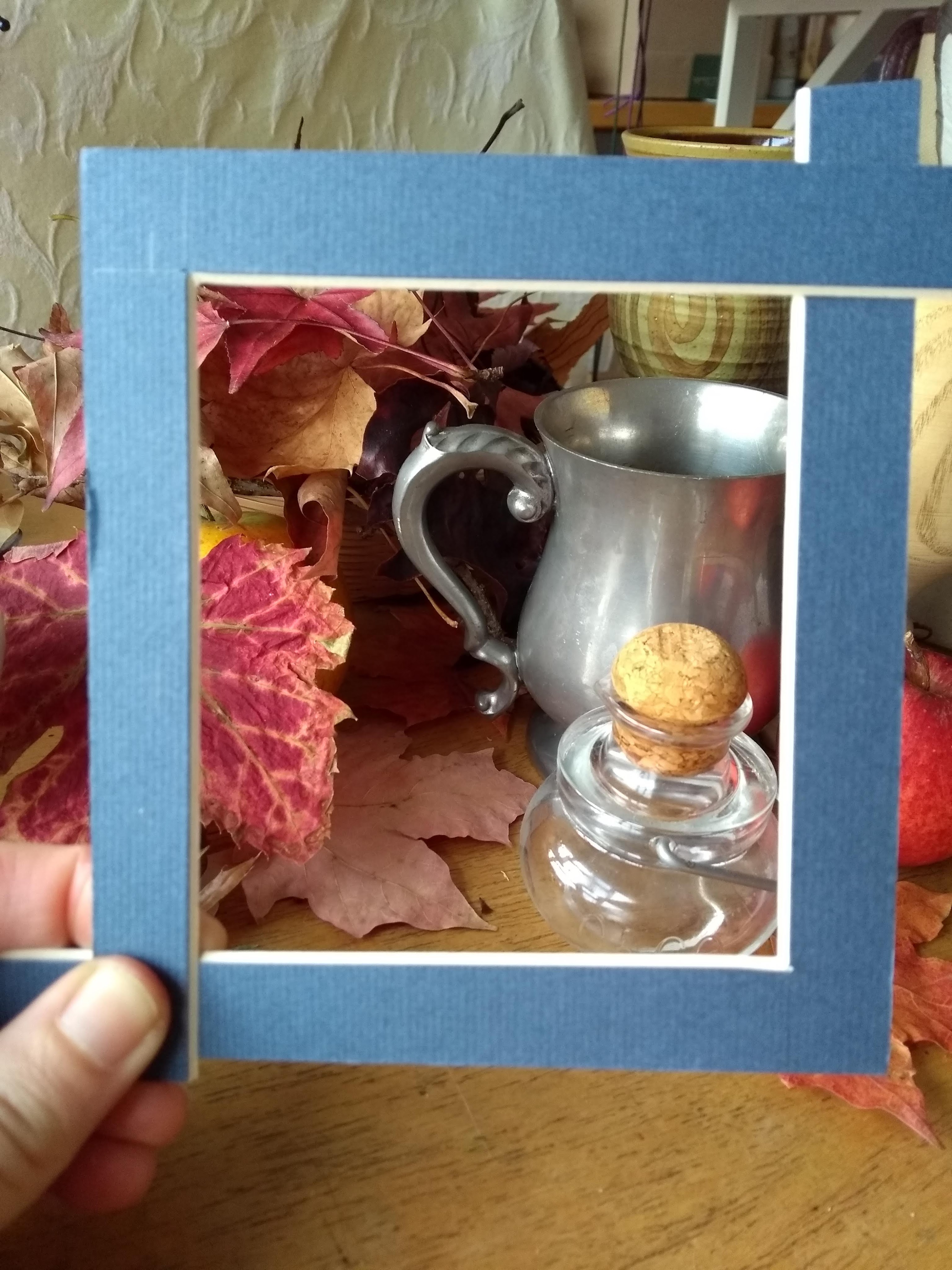
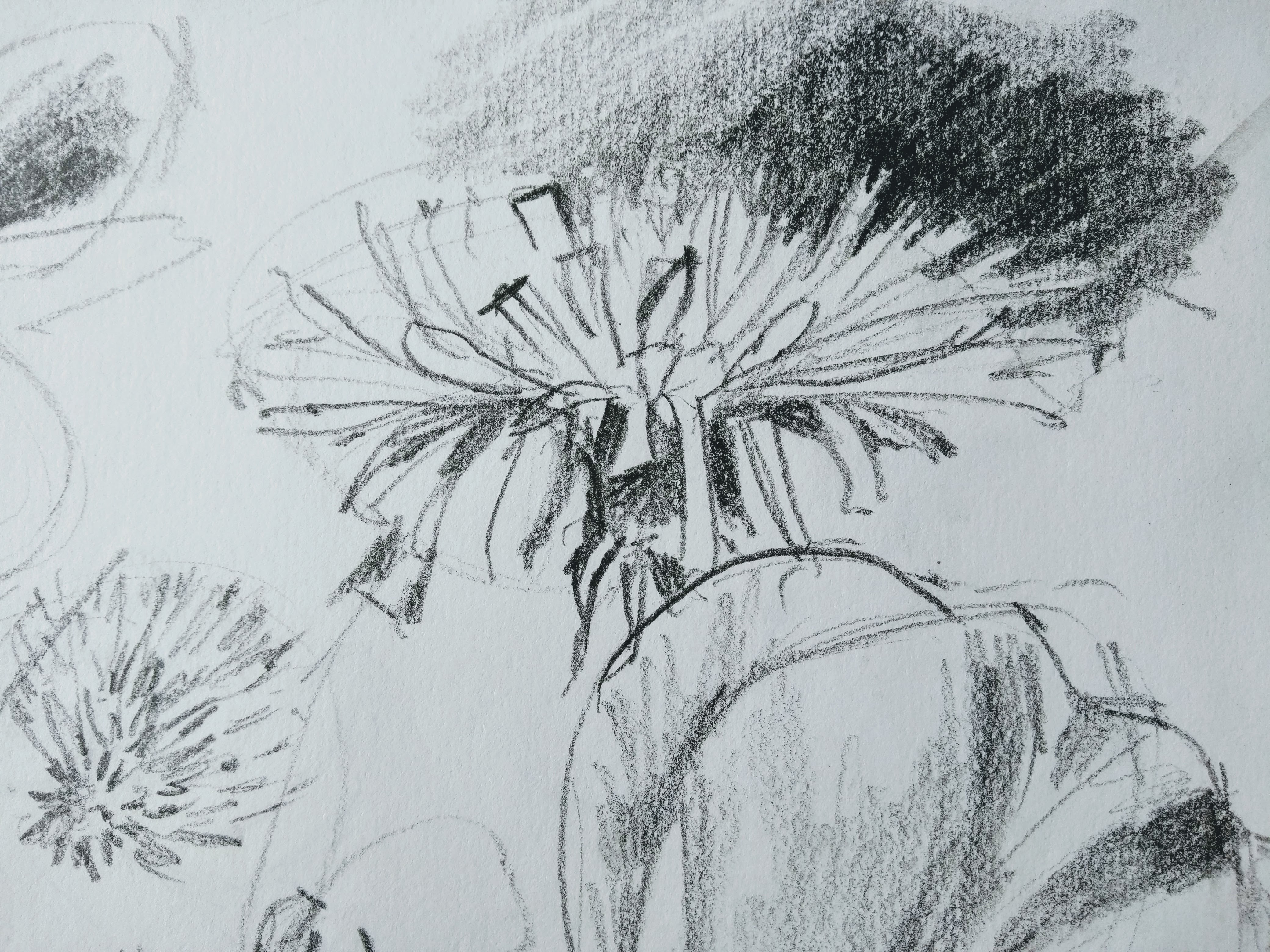
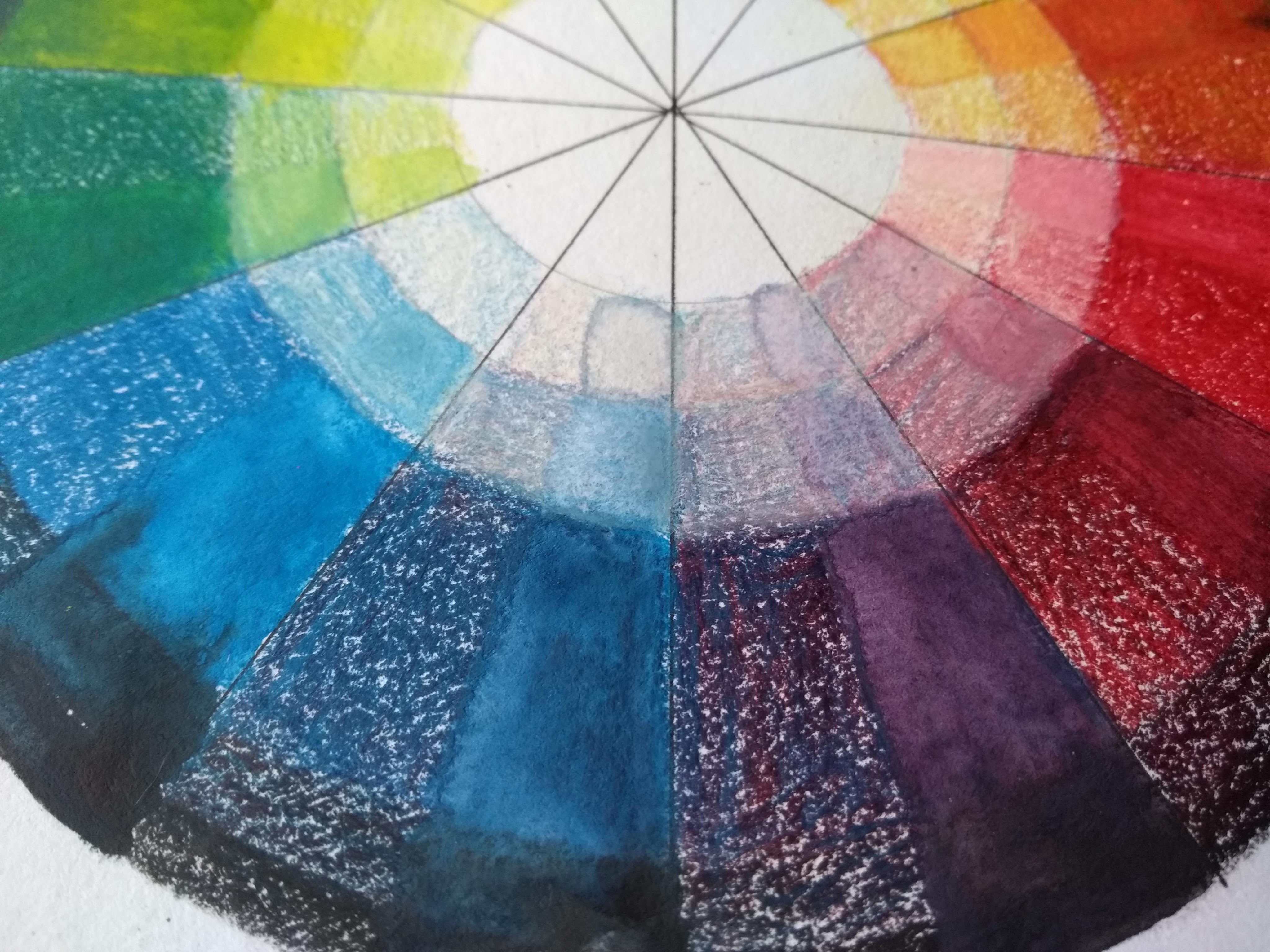
Using frames to choose a viewStudy of dandelionColour wheel experiments
Over the next few months I upgraded my tech to a visualiser with high quality definition, organised my space at home more carefully for teaching and redesigned the RSN drawing classes in the summer of 2020 into the current series of 4, which offer a drawing pathway right from the beginning. We ran a massive number of them through 2020. I think I ran the series twice in August, 8 classes in all, and about 4 of the RSN Drawing Flowers classes through May and June in 2020… I’ve lost count of how many classes I have run for the RSN since, and how many people have completed them.
Looking at colourFlower study: developing toneWorking towards a design
It’s interesting to look back on it from this perspective; to remember that time and how strange it was, and what has become normal as a result. People have joined from many countries and continue to do so. I’ve counted students from the US, Canada, Australia, New Zealand, Spain, France, Belgium, Russia, and of course all over the UK and Wales, including a remote student in the Isle of Mull in Scotland.
Now, two years later, we are trying to find our way back towards normal life – but of course, some things have changed for ever. We can’t go back to the world we had before, but it turns out that the pandemic provided an opportunity as well as a crisis. One of those unforeseeable changes is that the RSN now has a permanent programme of online learning -for those who would never have come to Hampton Court in the UK, for those who can’t leave home very easily, and for those who are still shielding ‘online’ has opened up a new world.
For myself, my local class going online resulted in a community of students, who met in person at my Drawing weekend summer school in August 2021. I have another drawing weekend planned for this August, and it’s been great to come full circle – to finally meet in person those whom we’ve met and got to know online. More details about that here: https://carolinehomfray.co.uk/
Drawing practice has always been sustaining for me, but in recent months it has often felt like the most grounded, steadying and real thing I’ve been doing.
The reduction of stimulation which happened straight away on the implementation of lockdown restrictions made those things which were left feel very important. My sense of time changed, and what mattered to be done changed. It became easier to spend time scrutinising the structure of a flower, or watch the flight of an insect, and it also felt important in a way it hasn’t before. It has become very clear to me that people have relied on the arts and culture to occupy them and give their lives meaning, and as a teacher of arts it has re-affirmed my commitment to that. The value of culture and art to our society beyond simply the amount of money it brings in as a industry has become much clearer.
I know for some this time has been perceived as a reduction in opportunities. I’m very aware of having been lucky so far, having blessedly stayed well, and those around me have stayed well, and their jobs have been safe. People’s desire for the arts, for learning and for finding meaning has brought me new students, through online teaching. I’m really enjoying having students from Canada, America, Australia and elsewhere in the UK in my classes now. I can think and prepare demonstrations, make video recordings and have found ways to help me share their own images with me and each other for comment.
There’s a real sense in each class of choosing to focus on something with meaning and find ways to keep doing it, keep looking, keep seeing the beauty and keep sharing, no matter what obstacles lie in the way.
I get great comfort and encouragement from the spiral. So often it seems like I am circling around the same things, confronting the same issues. I remind myself though that this time is not in fact the time before, however similar it may appear.
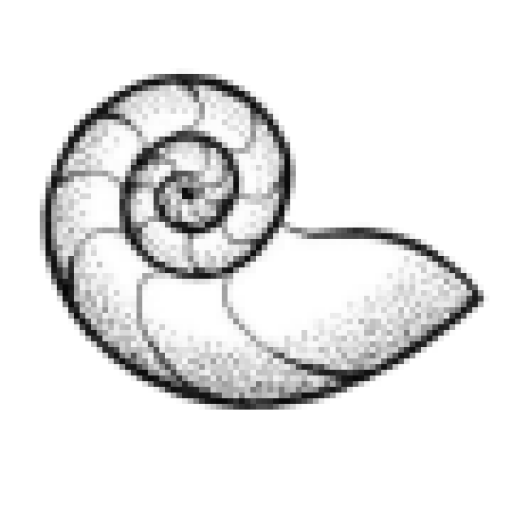
The nautilus grows its shell one chamber at a time, moving every so often into a slightly larger space than the previous one. It gives itself room to grow, increasing the spiral as it adds a new chamber.
Regularly reflecting on what is happening in my life and what I need to do next is a bit like building a new chamber for my self, or allowing the space I live in to gow and expand a little. As I realise a blockage and remove it, or change a habit to something more beneficial, I grow a little. There’s always a new thing around the corner, or even a similar thing around the corner, but I can take some time to think. What have I tried, why didn’t it stick last time, is there somthing else I haven’t seen which is affecting me?
The regular meetups I run for Evolve Leadteam, in our local community, give me that steady, regular application of thought to my life. I started running this monthly event, which we carry out on Thinking Environment® principles, to share with others the benefits of a space to thin well for oneself. one step at a time, little by little, I stop doing the things which don’t work. Slowly it changes my life.
Our necxt Magic Meetup in Farncombe, Godalming is on 10th July at Hucklberry’s cafe.
Over the last four years I’ve been learning and then training as a Thinking Environment® facilitator. The cornerstone of the Thinking Environment is the principle that people can think well for themselves, given the right conditions. They involve being in the presence of a listener whose attention and encouragement is wholly yours, and who trusts completely that you are creative, altruistic, intelligent and can think for yourself.
That work, and delivering Thinking Environment and training for the NHS, researchers, undergraduates and local people at a regular community event I run with a colleague, has been slowly informing my teaching of embroidery, something else I fnd very rewarding. I’ve been pondering how could I make my classes more about the student discovering and exploring for themselves, and less about me leading from the front.
I started to introduce rounds, and ask people to share what’s going well, what’s their favourite sort of embroidery, what’s a project they’re proud of. Then, after a student volunteered some very useful feedback about what had been most helpful for her in learning the technique, I started to ask, what have you learned this morning that was most useful? what went well about today? what else would you like to see in the course?
Now I’ve started to ask myself, ‘how can I give them the experience of exploring and learning for themselves? How little information do I need to give, and what questions will stimulate their learning?’
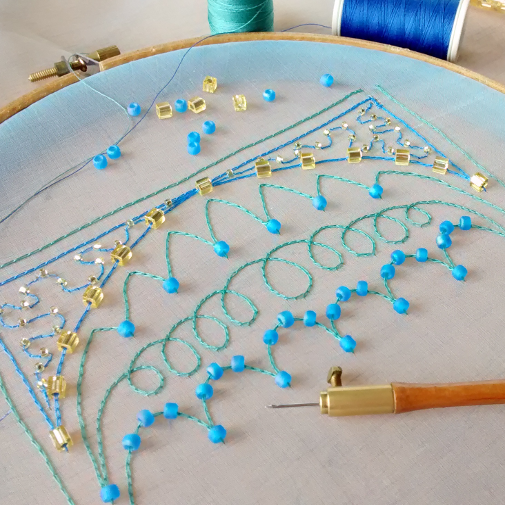
On Sunday I was teaching tambour embroidery at the Royal School of Needlework. We had a really fun, collaborative day with a relaxed atmosphere and everyone sharing their learning, questions, and tips from their own considerable textile experience. It felt easy as the teacher; I wasn’t tired or drained, but energised by the day. The participants reflected that they’d enjoyed the warm, friendly environment, and left with smiles and thanks.
So now I’d like to ask you. What are your best experiences of learning? what works for you? Please leave your comments below.




 Over the last four years I’ve been learning and then training as a Thinking Environment® facilitator. The cornerstone of the Thinking Environment is the principle that people can think well for themselves, given the right conditions. They involve being in the presence of a listener whose attention and encouragement is wholly yours, and who trusts completely that you are creative, altruistic, intelligent and can think for yourself.
 Caroline Homfray